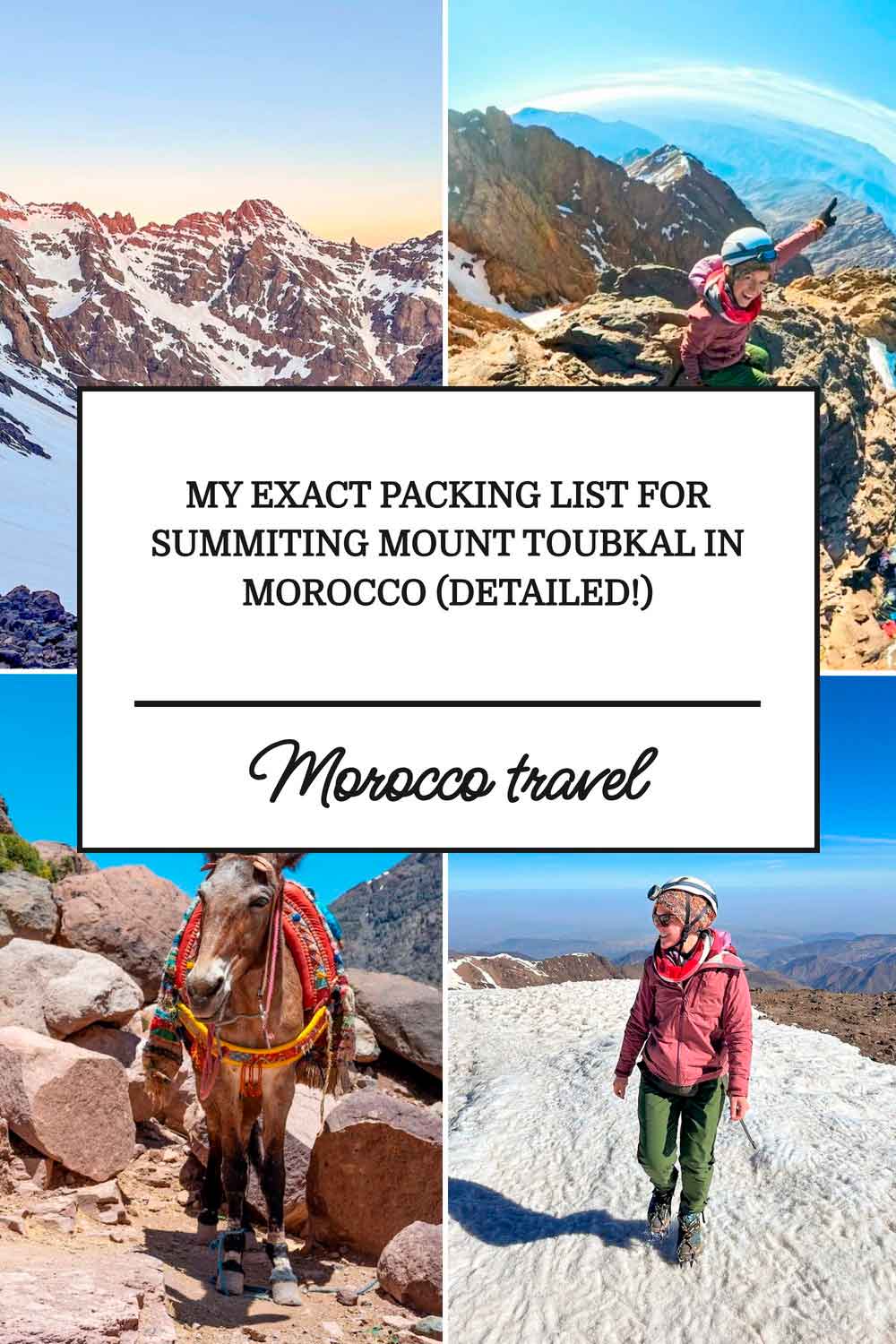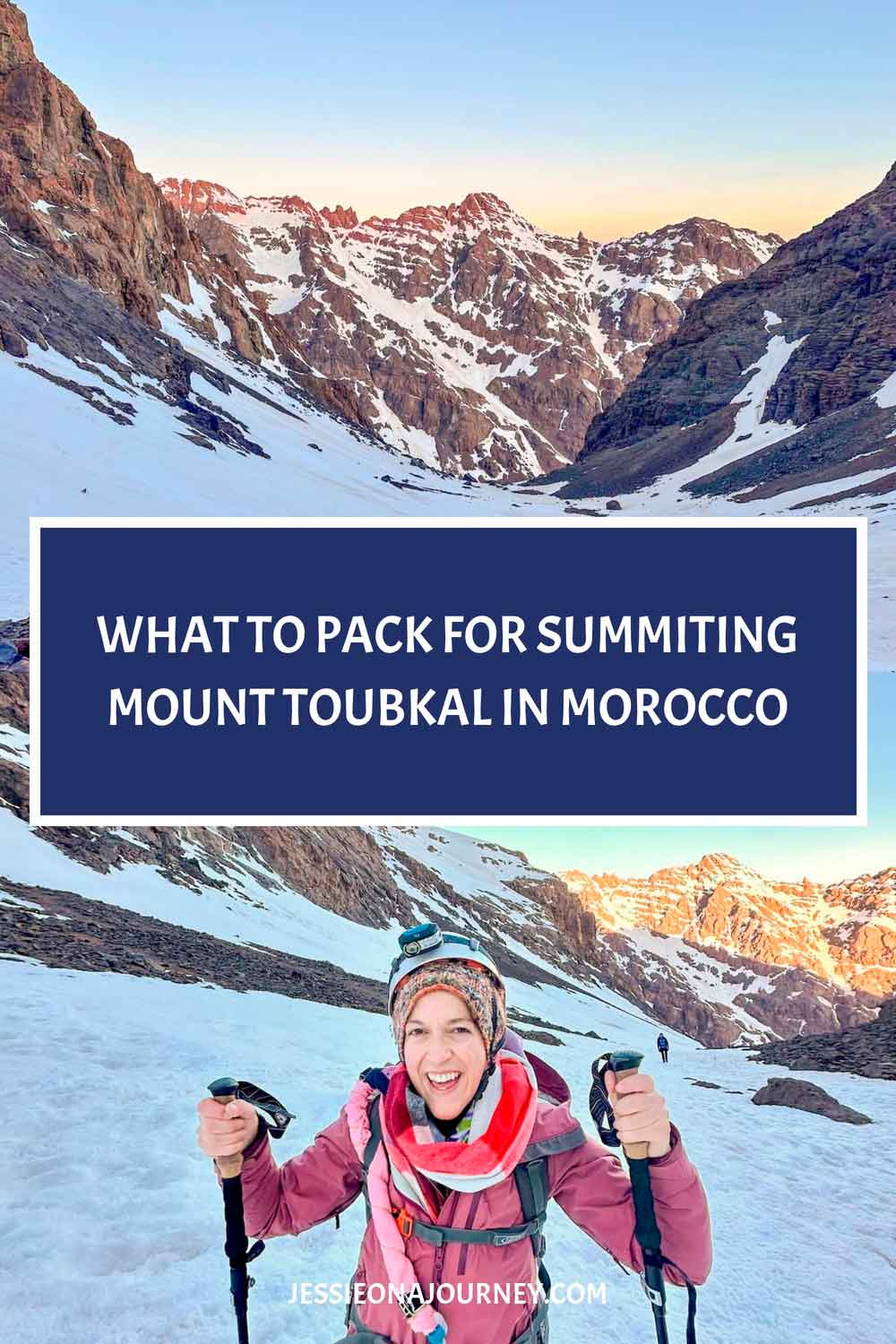
Mount Toubkal Packing List: The Exact Gear You Need To Summit
This post contains affiliate links, including Amazon affiliate links. If you purchase through these links, I may earn a commission at no extra cost to you. As an Amazon Associate, I earn from qualifying purchases. Thank you for your support!
If you’ve decided to summit Morocco’s Mount Toubkal — the highest mountain in North Africa — one of the most important things you need to plan is what to pack.
It’s very different from packing for a city or beach trip where you don’t need special equipment. To trek Mount Toubkal, you’ll need very specific gear and clothing if you want to safely and comfortably make it to the top.
(Trust me, you don’t want to get all the way to basecamp and realize you don’t have the right boots or warm enough layers.)
As an avid high-altitude hiker and someone who has successfully summited Mount Toubkal, I’m here to help. This guide shares exactly what I packed during my spring Toubkal trek, which items are especially essential and why, and what conditions you need to prepare for.
🔗 Note: This guide contains affiliate links to the exact items I genuinely use, love, and packed for my Morocco hiking adventure.
Mount Toubkal Quick Facts
- Location: Morocco, Africa.
- Overview: This trek is usually done in 2 days, hiking from Imlil to Toubkal Refuge on Day 1 and Toubkal Refuge to the Mount Toubkal Summit and then back to Imlil on Day 2.
- Recommended Company: Toubkal Guide. Note: It is required by Moroccan law to hire a guide to summit Mount Toubkal.
- Summit Altitude: 4,167 meters (13,671 feet).
- Toubkal Refuge Altitude: 3,207 meters (10,522 feet).
- Trail Distance: Approximately 29 kilometers (18 miles) round-trip from Imlil.
- Elevation Gain: Around 2,427 meters (7,963 feet) of total climbing.
- Difficulty: Strenuous. While it isn’t necessarily technical, the steep scree and snow slopes (especially in winter and spring) require excellent physical fitness and additional gear like crampons and an ice axe.
- Free Planning Resources: Get my free Travel Planning Toolkit with budget calculator, Google Maps, planning cheat sheets, and more
Mount Toubkal Weather
Spring (My Trek)
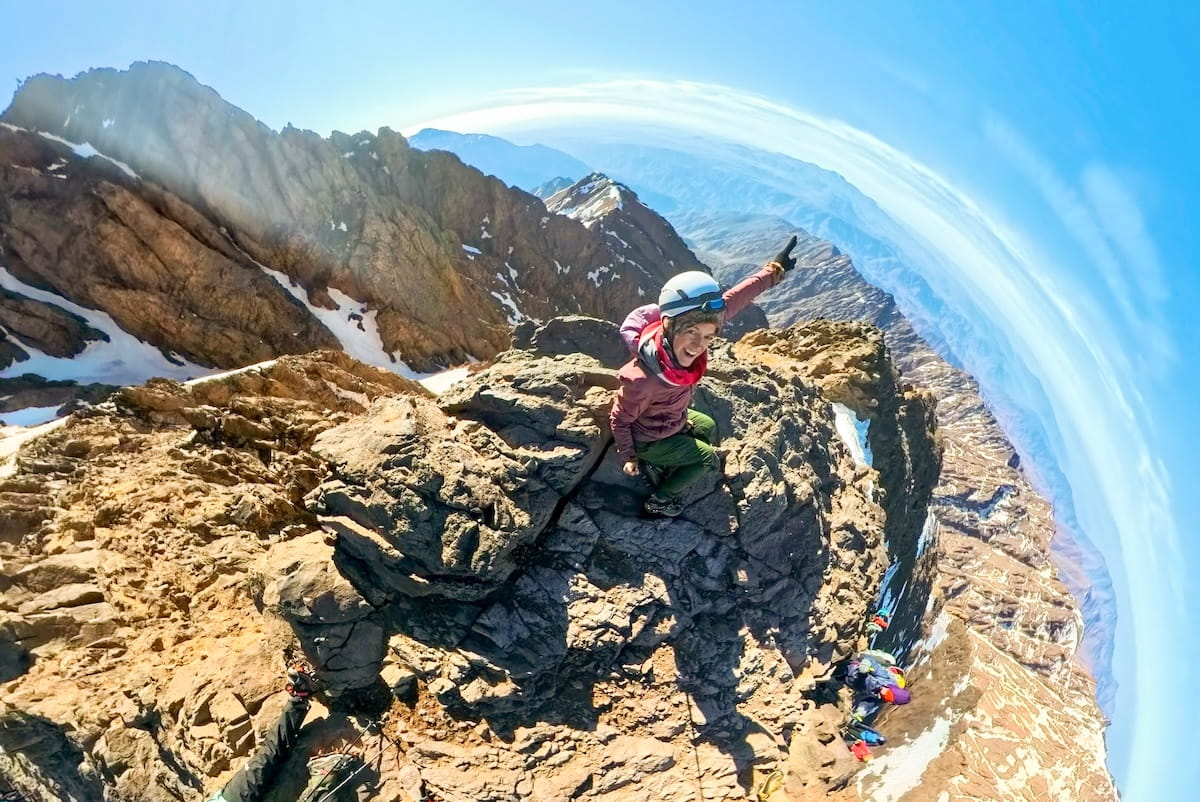
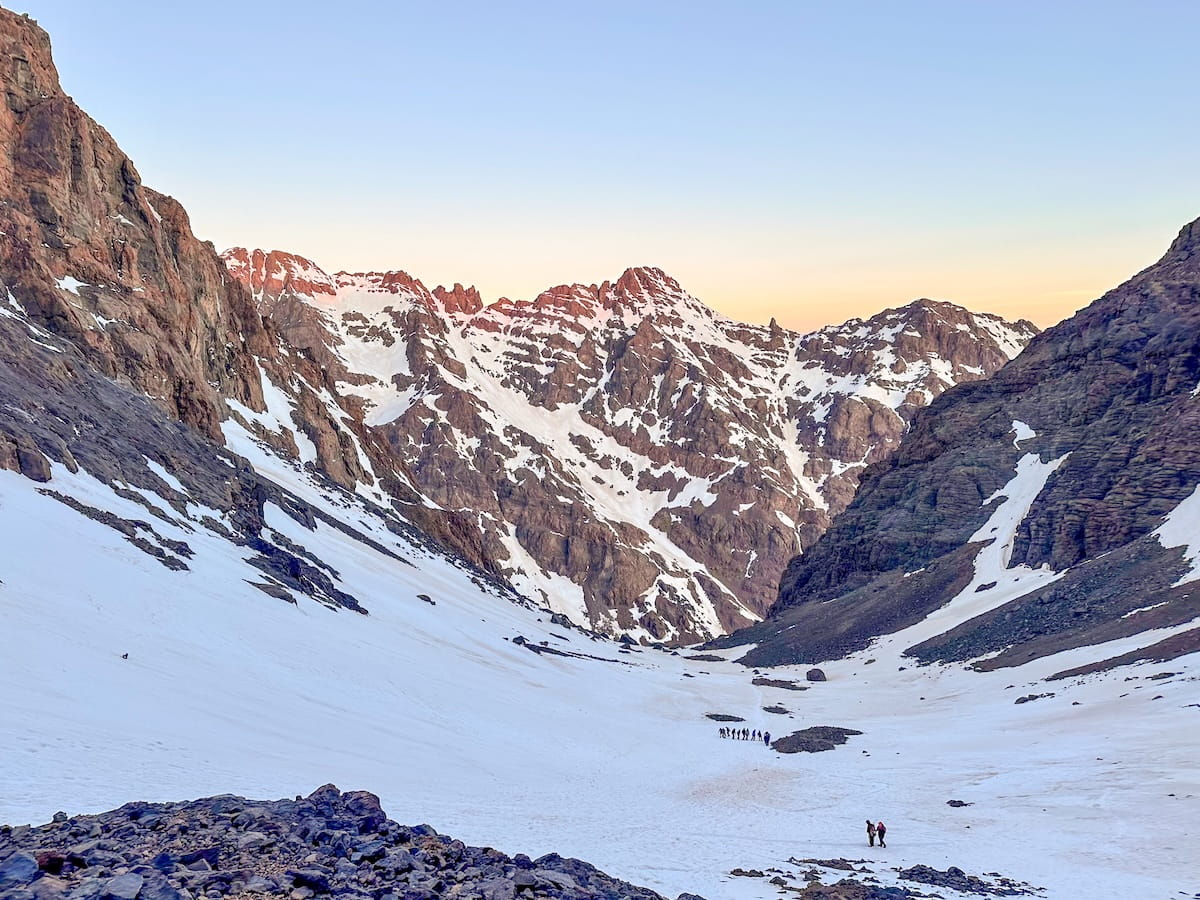
My Mount Toubkal trek was the first week of May. On average, daytime temperatures were between 15°C and 20°C (59°F to 68°F) in the valleys like Imlil; however, as you climb higher into the High Atlas Mountains, you need to be prepared for much chillier conditions and even snow.
The summit was about 14°F (-10°C) during my hike, and there was deep snow for more than half of the summit push.
Not only that, but high-altitude weather can change in an instant — and it’s even possible to experience multiple seasons in a single day.
Other Seasons
If you are planning your trek for a different time of year, here is how the weather shifts and how you should adjust this packing list:
- ☀️ Summer (June to August): Expect very hot temperatures of about 30°C to 35°C (86°F to 95°F) in the valleys, while the summit hovers between a comfortable 5°C and 15°C (41°F to 59°F). If summiting Toubkal in summer, you can ditch the heavy winter gear and crampons and focus on staying extra hydrated.
- 🍂 Autumn (September to October): Valleys sit around 10°C to 25°C (50°F to 77°F), while the summit ranges from -5°C to 10°C (23°F to 50°F). You can pack almost identically to the list below, but you can usually leave the crampons behind unless an early winter storm dusts the peaks in late October.
- ❄️ Winter (November to March): A true high-altitude mountaineering expedition with freezing valleys at about 0°C to 10°C (32°F to 50°F) and brutal summit temperatures plunging to -10°C to -15°C (14°F to 5°F). This requires heavier layers, crampons, an ice axe, and a 4-season sleeping bag.
Note: These are general guidelines. Check with your tour company for the latest forecast, and keep an eye on Mountain-Forecast.com.
Luggage Transfers On The Trail
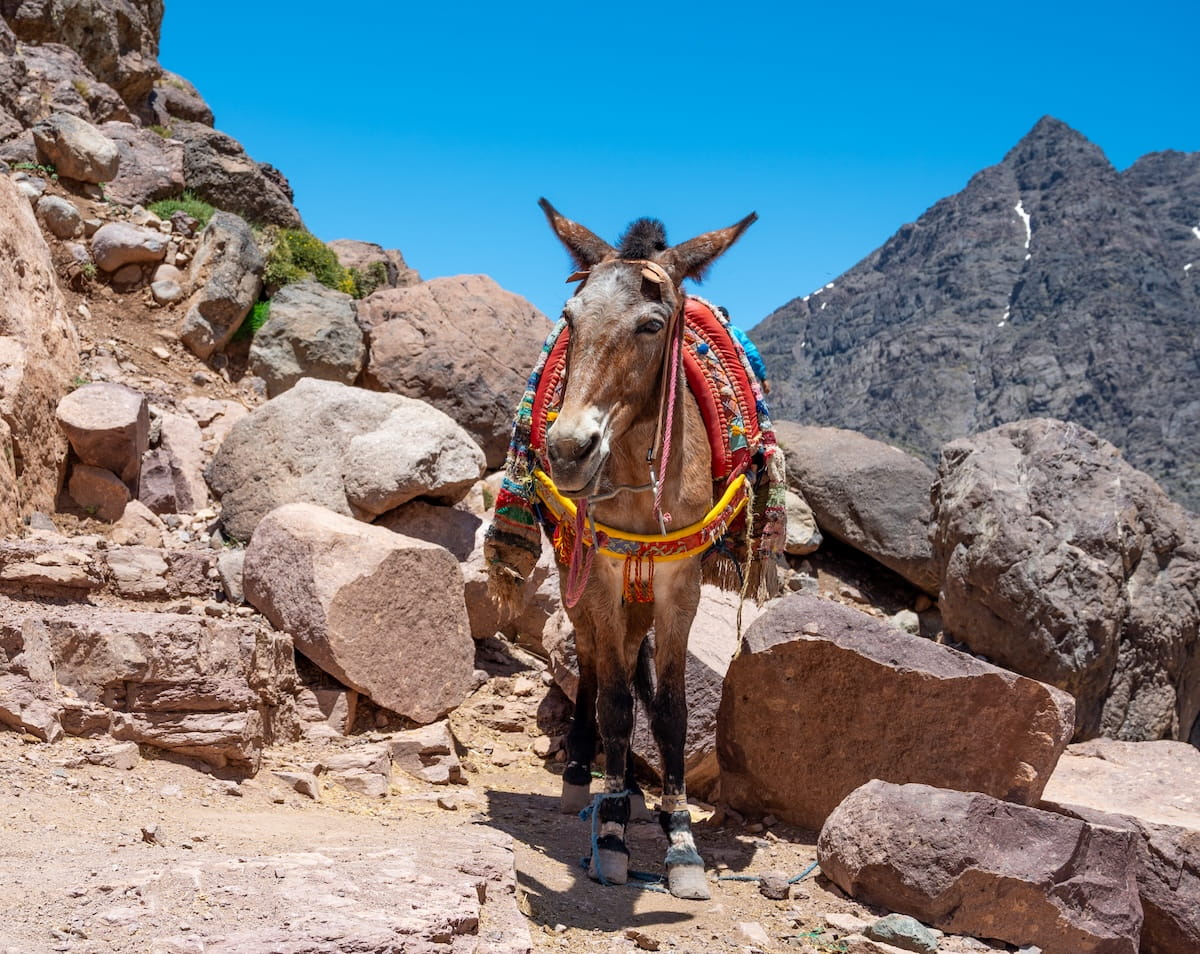
Understanding how your gear gets up the mountain is key to packing efficiently. On a guided Mount Toubkal trek, your main luggage is carried by mules, who are steered by local muleteers.
With that in mind, here are some important things to know:
Bring soft luggage only: Mules cannot safely carry rigid suitcases, so you’ll want a water-resistant duffel bag (like the North Face Base Camp Duffle) or a large, frameless backpack that can be securely strapped to the mule’s pack saddle.
Keep it under the weight limit: Most trekking companies enforce a strict weight limit of 15 kg (33 lbs) for your main duffel bag. If they don’t, I’d reconsider booking with them as they may not consider the mule’s safety.
Leave excess luggage behind: You’ll likely stay in Imlil the nights before and after the 2-day Toubkal summit trek. Most lodges in Imlil (like Atlas Imoula Guest House) or your tour operator can store your non-hiking luggage for free until you return from the summit.
You will carry your own daypack. This should contain your water, rain gear, warm layers, camera, and snacks for the day. Once the mules depart in the morning, you won’t have access to your main duffel bag until you arrive at the refuge.
My Recommended Toubkal Trek Layering System
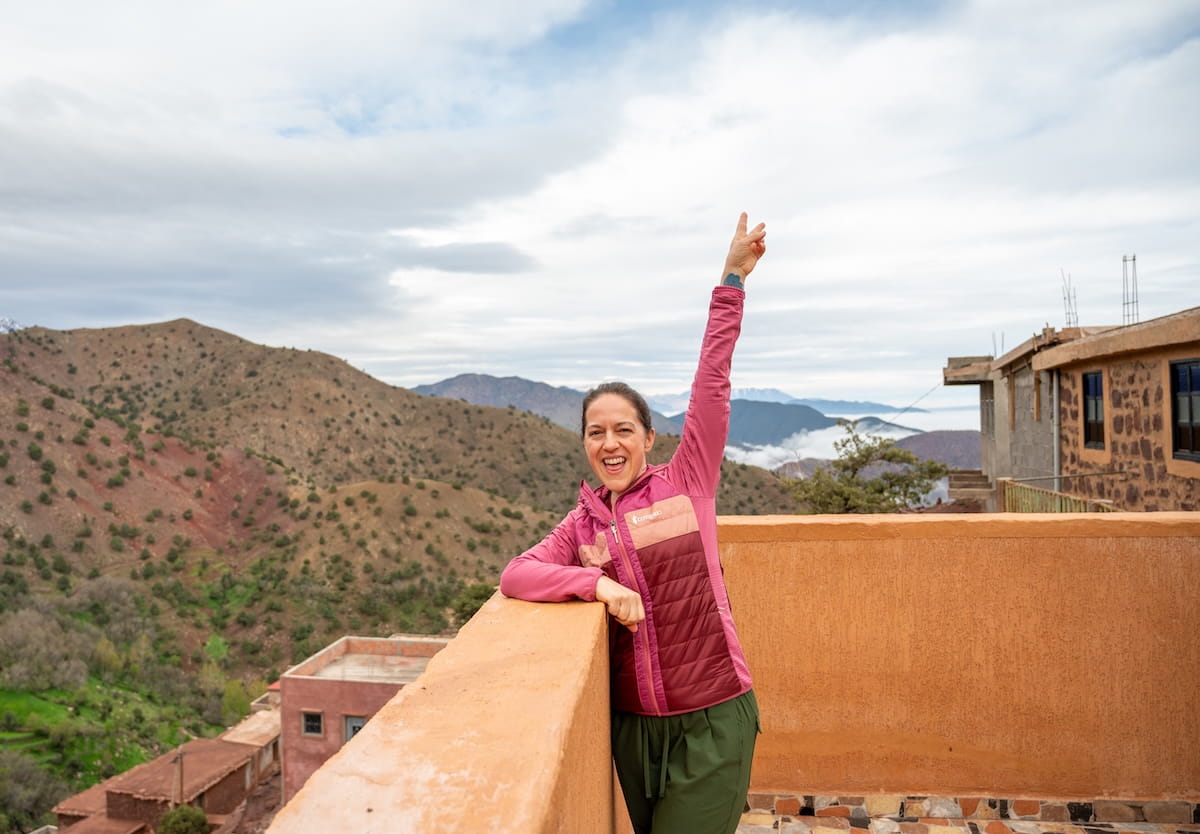
When trekking, you want to utilize a structured layering system to keep warm and dry. Usually it’s a 4-layer system, but because it was very cold on Mount Toubkal’s summit in spring I used 5 layers:
- Moisture-Wicking Base Layer: Keeps sweat away from your skin (Merino wool long-sleeve shirts work best).
- Bonus Mid-Layer: I brought my insulated Cotopaxi Capa Hybrid Jacket as an additional layer for summit day.
- Fleece Mid-Layer: Traps body heat while remaining breathable.
- Packable Down Puffy: Provides maximum insulation while packing down tiny into your daypack.
- Weatherproof Outer Layer: Protects you from biting mountain winds, rain, sleet, or snow.
Detailed Mount Toubkal Packing List
On that note, here is the exact packing list I recommend for trekking Mount Toubkal in spring. In case it’s helpful, I’ve also included links to the brands I used.
To help you avoid needing to shop on 101 brand websites, I’ve linked almost everything to Backcountry (my preferred outdoor gear store) and Amazon (for the Prime shoppers).
🧳 Luggage
- 1x spacious duffle bag. I use the highly durable and waterproof North Face Base Camp Duffle in medium. I’ve literally used this bag as a sled on a snowy downhill trail and everything inside stayed bone dry!
- 1x 20-35 liter day pack. I’ve used the G4Free 35L Day Pack for years now, which has essential features like padded and adjustable hip and shoulder straps, a chest strap to distribute weight more evenly, 7+ different pockets and compartments, a water bladder exit on the top, and a rain cover.
- Carabiners. I hook a few of these Rhino Lightweight Snap Carabiner Clips to my daypack so I can secure my water bottle, hiking poles, etc.
- 1x tote bag with zipper. I love this tear-resistant foldable bag that packs down small. It came in handy for keeping muddy boots (wrapped in bags) separate from my main luggage.
- 1x hiking fanny pack. Not essential, but helpful for quick front access to things like sunscreen, snacks, chapstick, and your phone. The Cotopaxi Allpa 1.5L Hip Pack is a spacious and sustainably-made option.
💦 Hydration
- 3L water bladder. I have used the 3L Platypus Big Zip EVO Water Reservoir for years. You will want a lot of water for summit day!
- Reuseable water bottle. I like to have a bottle on hand to add my daily electrolyte mix in — plus having extra water for summit day is a smart idea. My go-to bottle is the LifeStraw Go, as it also allows you to filter tap water to reduce plastic use.
- Electrolyte mix. I’m a fan of FITAID Hydrate, which works great and isn’t overly sweet.
🧥 Clothing
The following list of hiking attire is specifically for the 2-day Mount Toubkal trek. You can adjust the amount of shirts and underwear you’ll bring if your trek is shorter or longer. I actually added a few extra days of hiking the High Atlas to my Morocco trip itinerary and highly recommend it.
- 1x moisture-wicking t-shirts. You likely won’t wear this, but I always like to have a t-shirt just in case. Choosing merino wool t-shirts helps regulate your body temperature and reduces odors.
- 2x long-sleeve moisture-wicking base layers. I used one for hiking and one for a clean warm layer at the refuge. You can then wear the clean one on summit day.
- 1x insulated mid-layer. As mentioned above, I packed my Cotopaxi Capa Hybrid Jacket as a bonus layer for summit day.
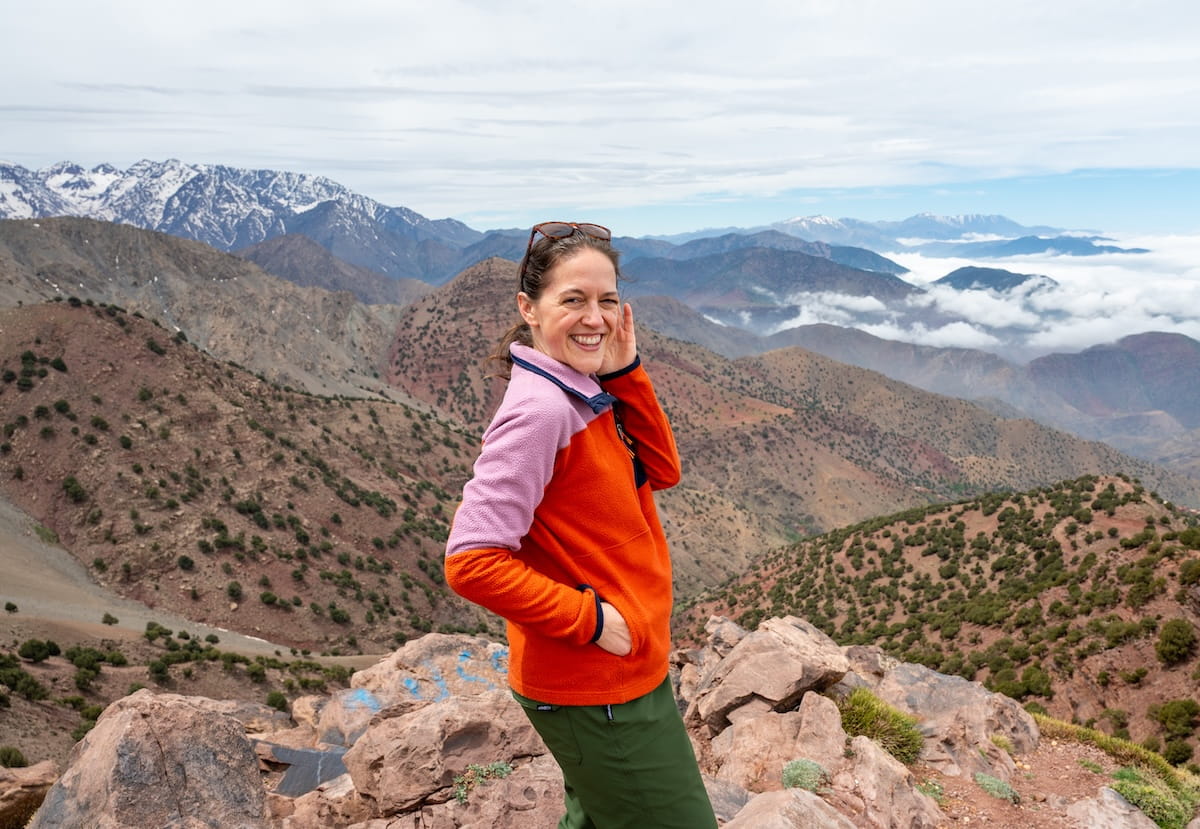
- 1x fleece. I never travel without my Cotopaxi fleece, which can keep you warm on summits and mountain passes — plus it’s cozy to wear at guesthouses.
- 1x packable puffy. This should be something warm and lightweight that easily packs down into your daypack. Personally, I’m obsessed with the Big Agnes Larkspur Jacket.
- 1x rain- and wind-proof jacket. The jacket I currently wear (Backcountry Unita Shell) has been discontinued, but another top-reviewed option is the Columbia Arcadia II Jacket.
- 1x hiking pants. I like the Coalatree Trailhead Hiking Pants.
- 1x rain-proof pants. I love the 33,000ft Packable Rain Pants, which keep you dry and pack down small. When it rains, you can pull these out of your pack and put them on over your hiking pants.
- 1x moisture-wicking legging. A pair of Merino Wool Leggings provides an extra layer of warmth on summit day. You can also wear these around the refuge the night before.
- 1x-2x neck gaiter. I’m a big fan of BUFF neck gaiters, which can be used as sun, wind, and cold protection. They’re also versatile and can be used as a scarf, hat, headband, and more — which is why you might want to bring more than one.
- 1x scarf. This will be essential for summit day. I wore a wool scarf over my neck gaiter.
- 1x winter hat. This will be essential for summit day.
- 1x warm gloves. These will be essential for summit day. Just make sure you choose a pair that also allows you to hold onto your trekking poles.
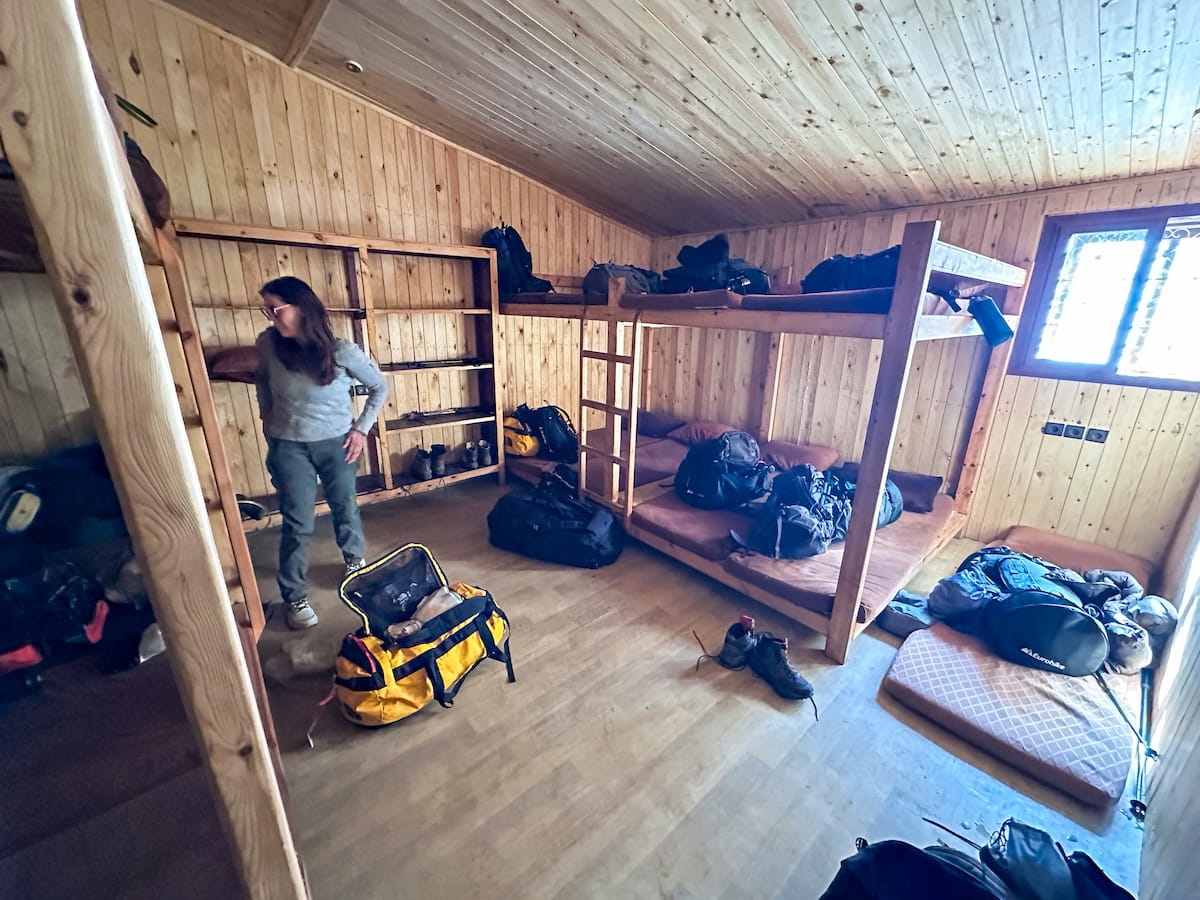
- Pajamas. Even though it was cold outside, I got very warm in the Toubkal Refuge dorm and ended up in a t-shirt and shorts. That said, it may be chillier when you visit.
- Tip: Do not wear your summit day base layers as pajamas, as if you sweat in your sleep they will be damp.
- 2x underwear. I recommend packing bamboo underwear as they’re soft and moisture-wicking.
- 2x sports bra. Use 1 pair for hiking, and keep 1 to have something dry to change into at the refuge.
- 1x sock liners. Optional, but my OrrinSports Toe Socks Liners have helped me avoid blisters on treks around the globe.
- 2x hiking socks. Bring 1 midweight pair for hiking from Imlil to the refuge and 1 heavyweight pair for summit day. You can also wear the heavyweight pair as your clean guesthouse socks the night before summit day.
💊 Health & Wellness
- Travel insurance. I use SafetyWing — which offers affordable, comprehensive, and straightforward plans (no waiting for a quote!).
- Tip: You should get the “Adventure Sports Add-On,” as once you wear crampons or carry an ice axe, the activity is considered mountaineering.
- Prescription medications. These should go in your carry-on in case your checked bags get lost, and should be kept in their original pharmacy-labeled containers. Consider asking your doctor about Diamox, which helps prevent altitude sickness by speeding up your body’s natural acclimatization process.
- Over-the-counter medications. Be prepared for regular high-altitude and travel ailments like headaches, sinus issues, diarrhea, gas, and upset stomach.
- Relief for sore muscles. My go-to is White Tiger Balm, which I use for everything from achy muscles to headaches.
- Sun protection. This includes SPF 30+ broad spectrum sunscreen, polarized sunglasses, a sun hat, and SPF lip balm.
- Toilet paper. Toubkal Refuge does not provide this, so bring your own.
- Soap. Toubkal Refuge also doesn’t supply this. I used these biodegradable soap sheets that take up almost no space.
- Toiletries. When trekking in the High Atlas, guesthouses don’t typically supply much, if anything, so bring everything you’ll need to shower and refresh. My personal toiletry kit included deodorant, travel toothbrush, mouthwash, toothpaste, floss, Vaseline, shampoo, conditioner, body lotion, bar soap, razor, comb, face wash, and moisturizer.
- Note: Toubkal Refuge has cold showers, so I used the plant-based WONDERFUL Travel Flushable Wipes to freshen up. These can also double up as toilet paper, though avoid flushing them as plumbing can be fragile.
- Hair ties and headbands. You’ll want to keep your hair out of your face while trekking. For something stylish and multi-functional, I’m obsessed with these K’lani Hair Tie Bracelets.
🥾 Hiking Gear
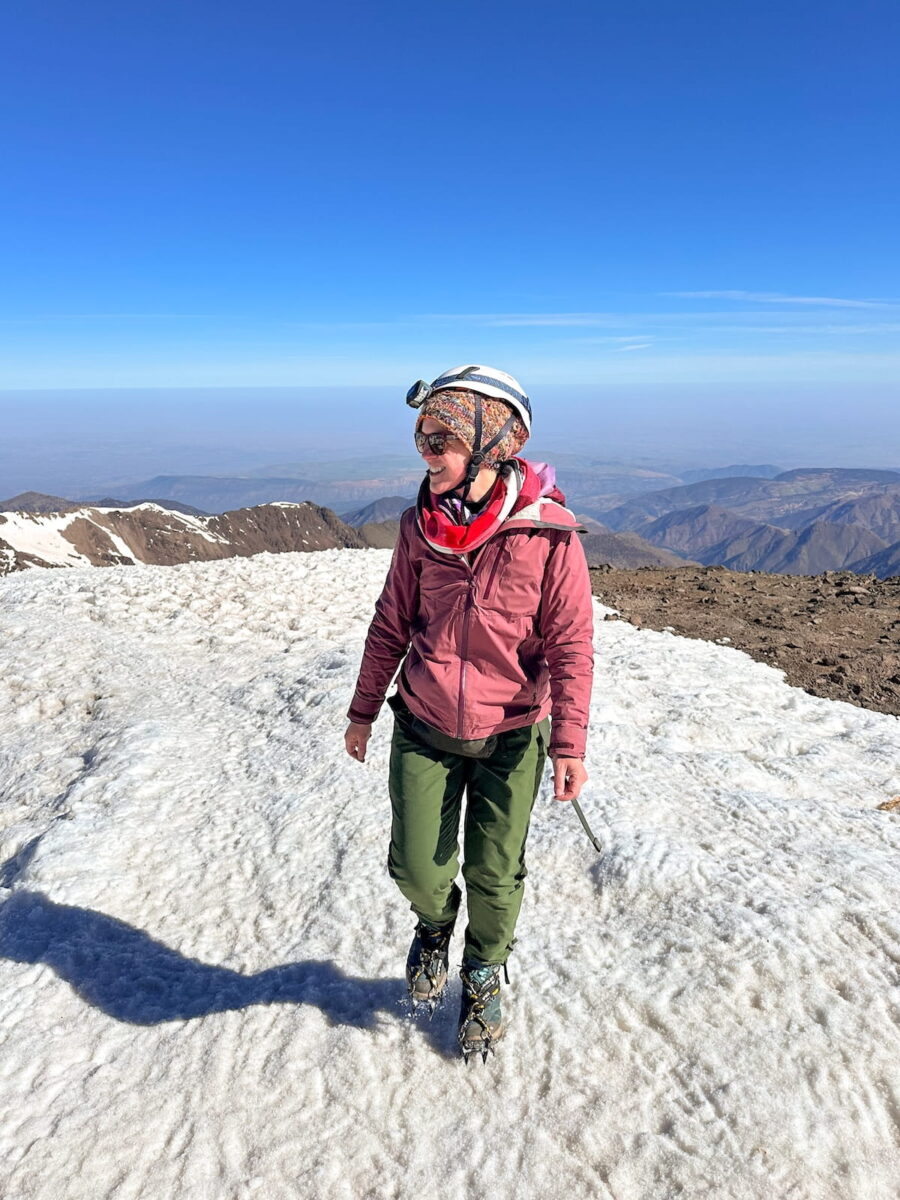
- Crampons. These are essential for snowy sections (people who weren’t wearing them fell a lot!). If you don’t own them, you’ll be able to rent them through your tour company.
- Ice axe. This is to self arrest if you slip and fall on the mountain’s steep slopes. Your guide company will let you know if this will be needed and can help you rent it.
- Helmet. This will be provided by your trekking company.
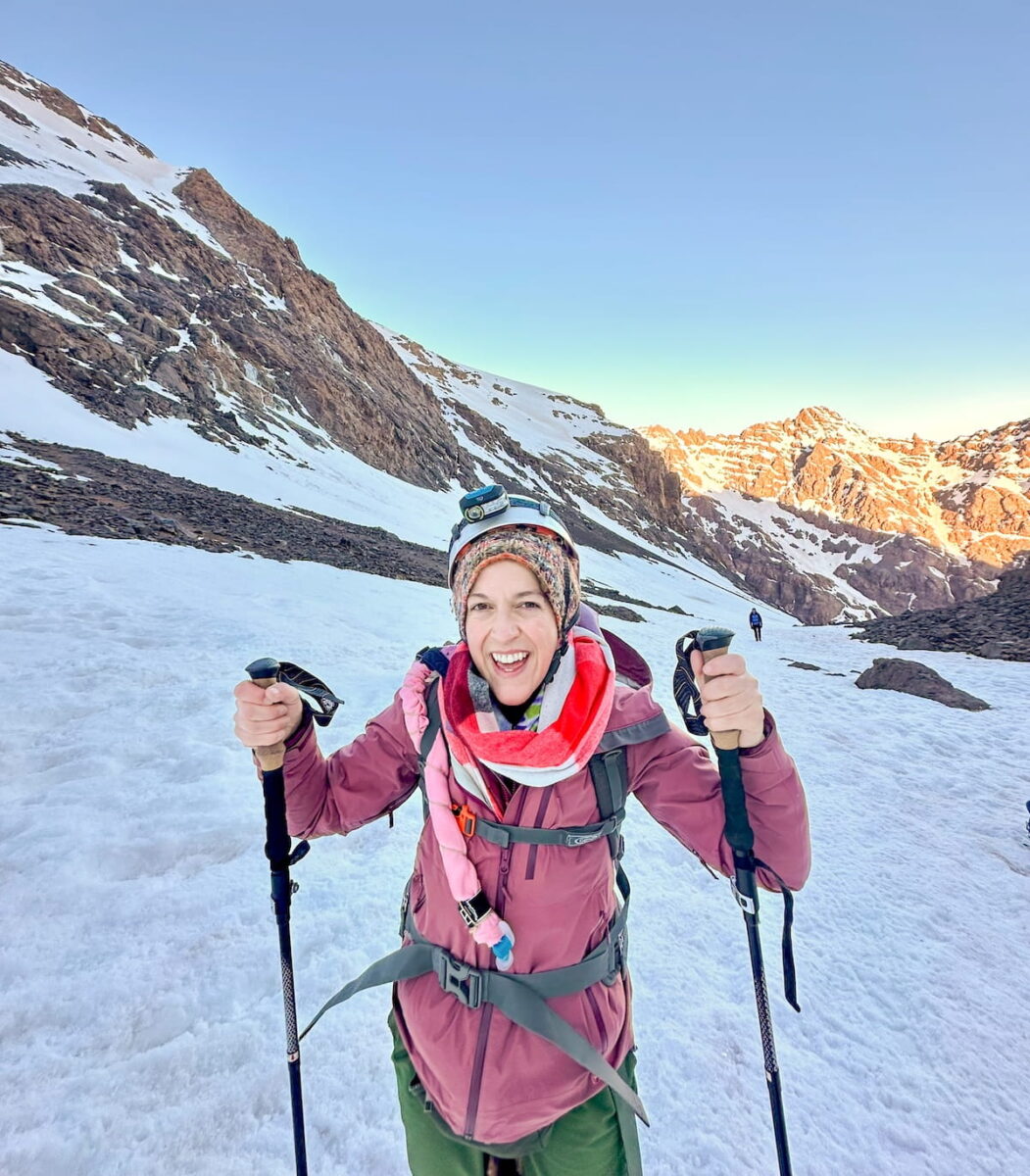
- 2x headlamp. You will need this both for navigating Toubkal Lodge at night when they shut the electricity off, and for summiting Mount Toubkal itself as you’ll start before sunrise. Because of this, I brought a backup Lepro Rechargable Headlamp just to be safe.
- Waterproof hiking boots. My go-to is the KEEN Targhee 4 Mid Height Waterproof Boots, which are roomy and help you avoid painful “toe bang” on Toubkal’s extremely steep downhill section.
- 1x pair of sandals. After taking my hiking boots off, I wore these with wool socks around the refuge. Plus, you won’t want to go in the Toubkal Refuge bathroom barefoot (trust me!).
- Hiking poles. The Mount Toubkal trek is steep, so you’ll definitely want these. I recommend a foldable pair from Hiker Hunger Outfitters, which fold up quickly and fit right in your backpack’s side pocket.
📱Electronics
While there are outlets at Toubkal Refuge, the electricity is only on for a few hours. With this in mind, make sure to pack:
- Phone. You’ll want this to stay connected and take photos. Tip: Download a white noise video (like this 31-fan white noise video by Randall’s Relaxation) for sleeping and blocking out people snoring in your refuge dorm room.
- Headphones. Again, to block out noise in your dorm. These noise-cancelling headphones are perfect for side sleepers.
- eSIM. Airalo eSIM worked great at the Toubkal Refuge.
- Power bank. Like the LOOPEAK 50000mAh 22.5W Fast Charging Power Bank to juice up your phone, camera, and headlamp.
- Travel adapter. If you’re coming from the USA or another country with different outlets, something like the NEWVANGA Universal Travel Adapter Fast Charger allows you to charge multiple devices without issue.
- Camera. I brought my lightweight mirrorless Nikon Z6ii with 24-70 f/4 lens and Insta360 with invisible selfie stick and mini SD for easy solo and 360 shots.
🥜 Food
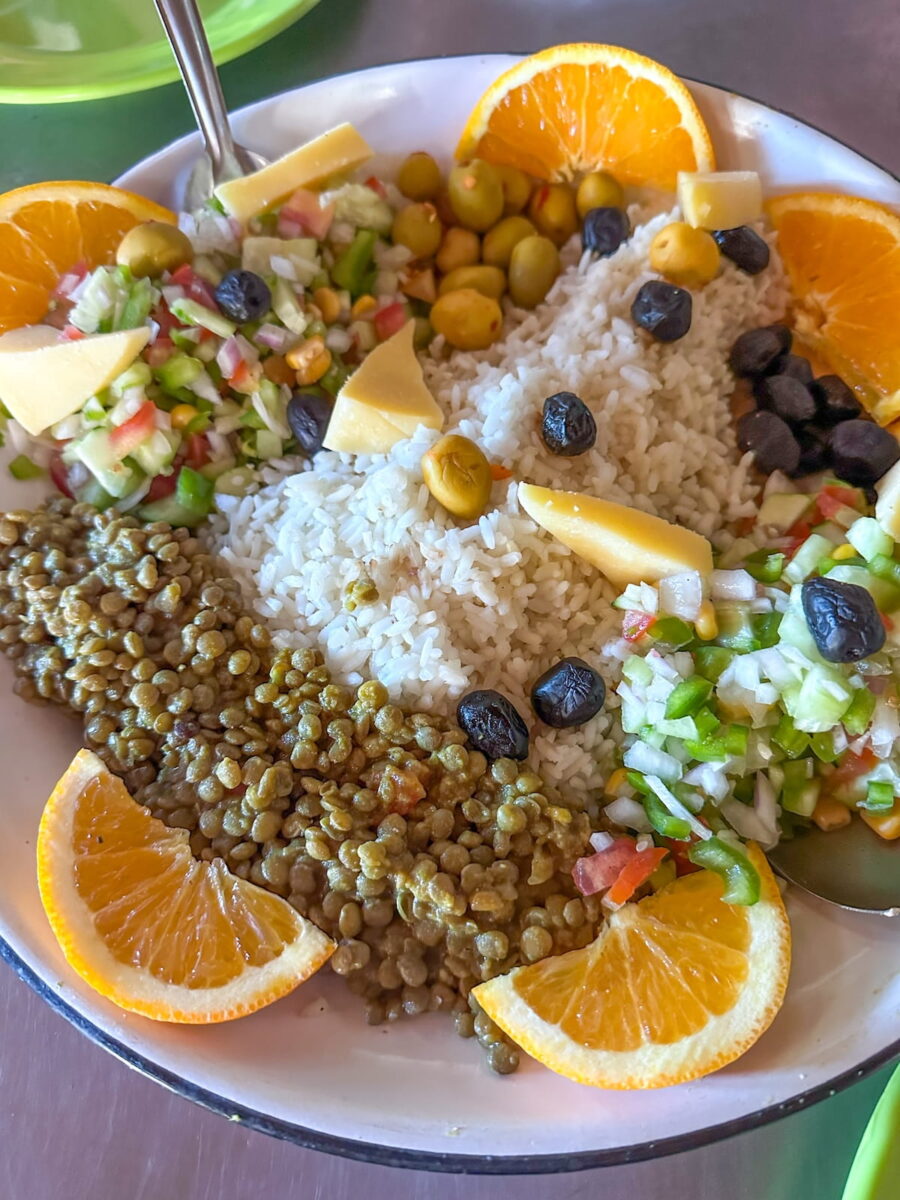
While your tour company will provide a trail chef who will cook daily meals, it’s also smart to bring snacks for extra fuel. My go-tos:
- Cliff Bars (the Oatmeal Raisin Walnut is my favorite!)
- Cheeze-Its
- Pretzels
- Trail Mix
- Cookies
🏔️ Extras
- Cash. To buy bottled water and snacks in Imlil and at the Toubkal Refuge. Bring small bills and coins, as vendors may not be able to make change.
- Sleeping bag. Or you can rent this at Toubkal Refuge. A 3- or 4-season sleeping bag is recommended, though honestly I was pretty hot in a 4-season one during spring.
- Travel-sized Febreze. Optional, but if you’ll be re-wearing hiking clothes it can help keep them smelling fresh.
- Eye mask. You’ll likely be sleeping in a dorm, so if you go to bed before lights out, this will be helpful.
- Ear plugs. These will be essential to block out snorers in your dorm room.
- Tape & bandages. Optional, but heavy-duty Leukotape P can help you avoid blisters — plus you can use it to patch torn gear, support joints, alleviate clothing rub, and more! I also always pack Ourmed Hydrocolloid Gel Bandges, which are a lifesaver for alleviating pain once you’ve gotten a blister.
- Biodegradable trash bags. These are great for wrapping up muddy boots, throwing trash in, really anything! Getting a biodegradable option avoids adding plastic waste to the landfill, especially in rural areas.
- Hand sanitizer. You never know when you’ll end up with dirty hands and no way to clean them. I love these simple Purell hand sanitizers that clip to your backpack.
Things You Don’t Need To Pack For Trekking Mount Toubkal
Now that we’ve gone over what to pack for summiting Toubkal, here are some things you won’t need:
Cute outfits. Everyone at the Toubkal Refuge is dressed strictly in functional hiking gear. Save your stylish clothes for your time exploring Marrakech and store them in Imlil during the trek.
Sleeping pad or pillow. The rooms at Toubkal Refuge feature raised wooden platforms lined with standard bunk mattresses and pillows.
Cooking gear or stoves. Your guiding company prepares all your hot meals, so you can safely leave backpacking stoves, fuel canisters, and heavy cooksets at home.
What would you add to this Toubkal trek packing list?
Enjoyed this post? Pin it for later!