How Hard Is Mount Toubkal? An Honest Guide To Summiting Safely
This post contains affiliate links, including Amazon affiliate links. If you purchase through these links, I may earn a commission at no extra cost to you. As an Amazon Associate, I earn from qualifying purchases. Thank you for your support!
This article is about the realities of summiting Mount Toubkal in Morocco. It’s meant to help you decide if this high-altitude adventure is right for you.
Before hiking Mount Toubkal, I’d consistently read online that it was a great beginner hike and was relatively easy.
After summiting myself, I’d argue that this isn’t true.
While it certainly isn’t the hardest trek I’ve ever done, it is high altitude and technically demanding. In fact, most travel insurance plans will consider this “mountaineering” rather than standard hiking once you are strapped into crampons — which you’ll absolutely need if you go in the winter or spring.
When I asked my guide, Omar, if he ever gets inexperienced hikers, he said, “All the time, and they often don’t make it to the summit.”
Now, the point of this article isn’t to deter people who aren’t regular hikers from taking on Mount Toubkal; however, I want to give you a reality check and let you know what the experience is actually like.
By the end, you’ll have full clarity on whether a Mount Toubkal hiking adventure is right for you — and how to properly prepare!
🎁 Bonus: Get my free Travel Planning Toolkit with budget calculator, planning cheat sheets, hiking personality quiz, Google Maps (including for Morocco), and more!
Mount Toubkal Quick Facts
- Altitude: 4,167 meters (13,671 feet) — it’s the highest mountain in Morocco, the Atlas Mountains, and North Africa!
- Is That High? Yes! Anything above 2,400 meters (8,000 feet) is considered high altitude, meaning you may experience altitude sickness symptoms like trouble breathing, nausea, and headaches.
- Toubkal Trail Length: Approximately 29 kilometers (18 miles) round-trip from Imlil.
- How Long Does It Take To Summit Toubkal? The final summit push from the refuge usually takes about 5.5 to 6 hours round-trip—though it can take longer depending on your fitness level and how you’re feeling.
- Do I Need A Guide For Toubkal? Yes, under Moroccan law, you are required to hire a licensed guide to summit Toubkal. You’ll want one anyway, as they handle all of the heavy lifting, logistics, and safety for you. I highly recommend Toubkal Guide!
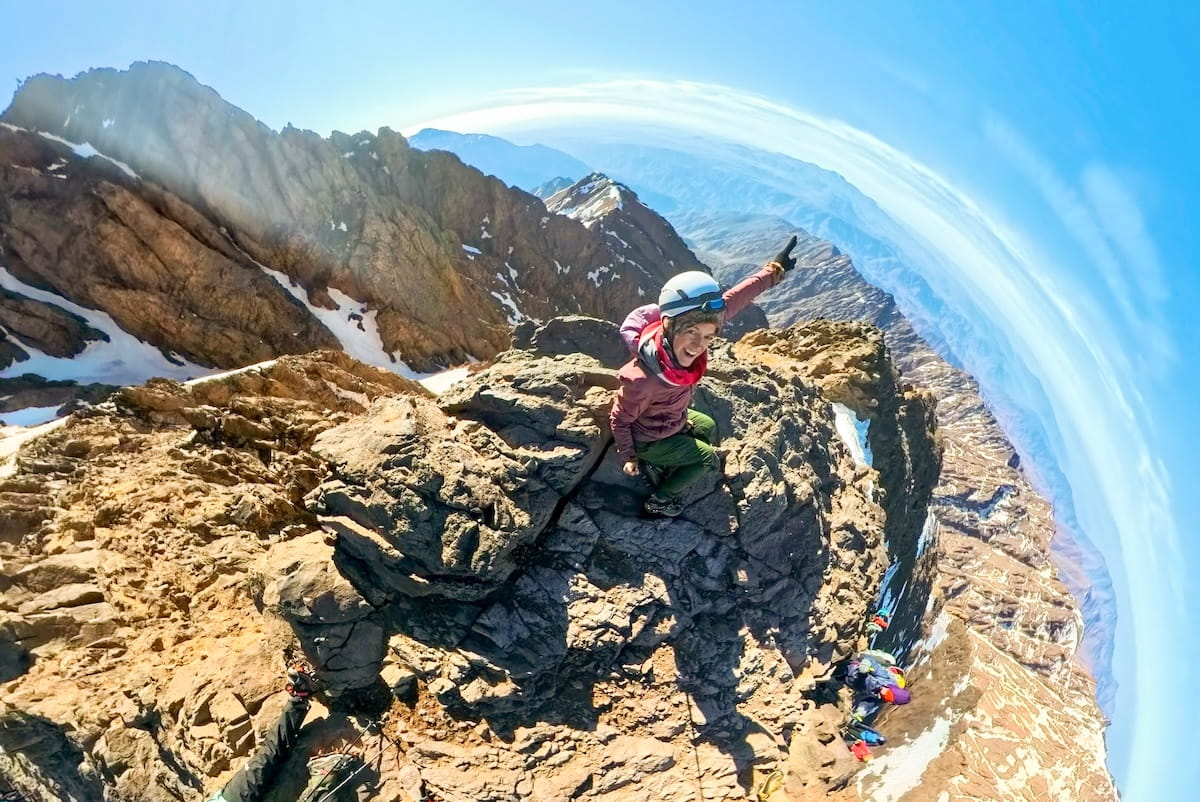
Risks Of Hiking Mount Toubkal
Before we get into what the trek is really like, I want to make some of the risks clear.
The challenge with Toubkal isn’t necessarily how physically demanding it is. For instance, I found Mount Agung in Bali to be much harder and steeper.
However, Mount Toubkal’s high altitude and rough terrain include risks that go beyond how physically fit you are:
1) Altitude sickness
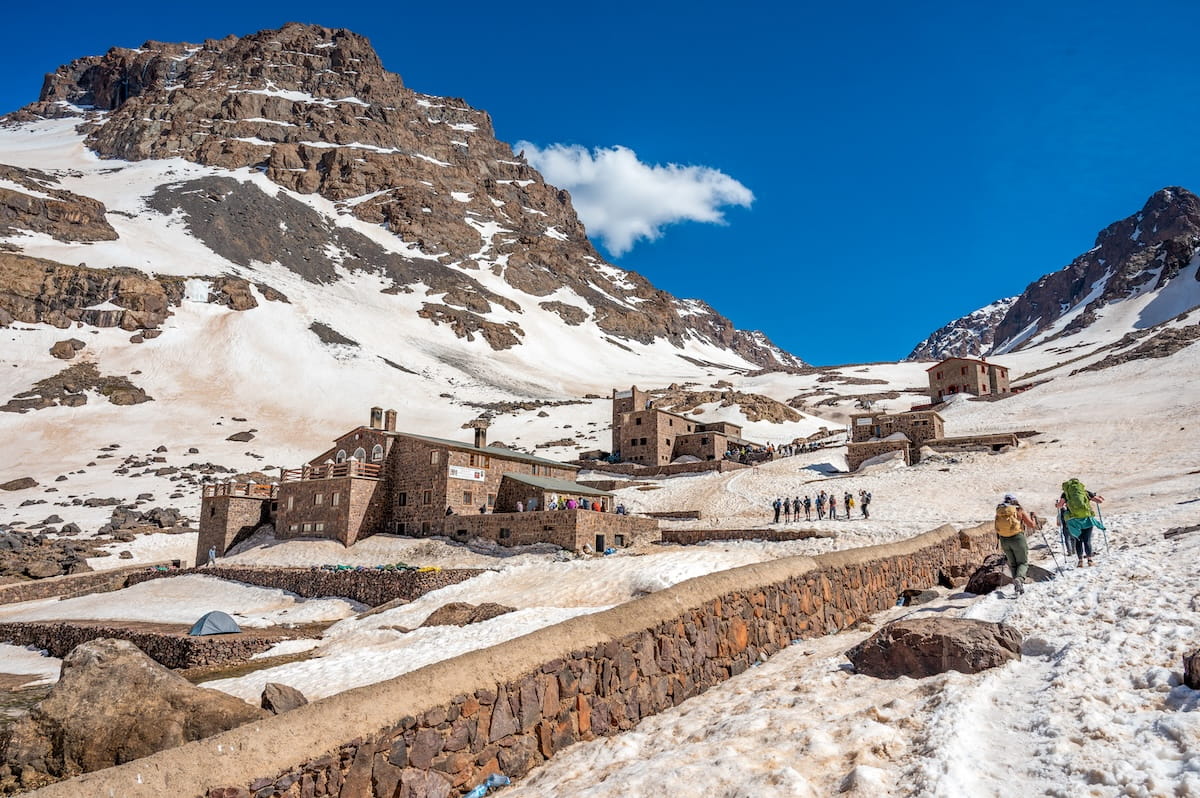
Because the air is significantly thinner up there, your body has to work twice as hard to get the oxygen it needs. While resting at the Toubkal Refuge (3,207 meters) the night before summit day, I heard multiple people throwing up from the altitude.
To combat symptoms:
- Drink plenty of water.
- Eat high-carbohydrate meals (even if you temporarily lose your appetite).
- Pack over-the-counter remedies like Pepto-Bismol (for upset stomach), ginger chews (for nausea), and ibuprofen (for headaches).
- I also love to have White Tiger Balm with me to rub on my temples for quick headache relief.
Additionally, you may want to consult your doctor about getting a prescription for Diamox, which chemically prompts your body to breathe deeper and acclimate faster. Note: I am not a doctor, so please talk to your doctor to see if this is right for you!
2) Altitude-related emergencies
While rare, there have been fatalities on Mount Toubkal. Typically, these accidents occur from slipping and falling on steep, icy slopes at altitude. Altitude sickness can trigger dizziness, exhaustion, or a loss of coordination, directly increasing the risk of a dangerous slip on the trail.
This is why having an experienced guide is both mandatory and lifesaving.
Always listen to your body and follow the golden rule of altitude safety: if you develop a severe, worsening headache, start vomiting, or experience extreme lethargy and loss of coordination, you should immediately descend to a lower altitude.
3) Injury / broken bones
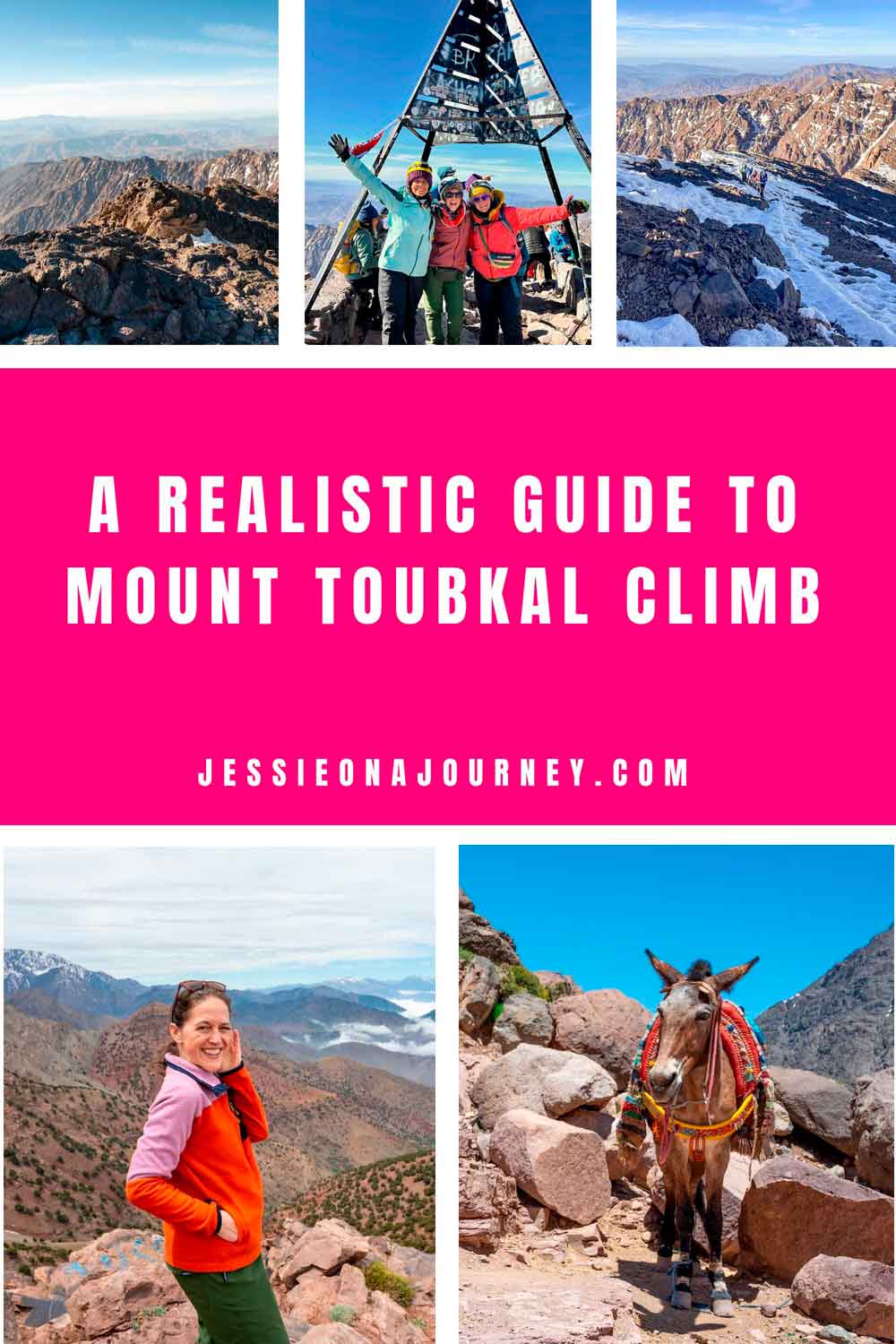
I summited Toubkal in early May, and there was still deep snow covering more than half of the summit push. To keep me safe, my guide, Omar, outfitted me with crampons — metal spikes that strap to your boots to bite into the slick ice — and a helmet.
On early-season spring treks, you also have to watch out for “post-holing” — which is when the snow softens and your leg suddenly plunges knee-deep or higher into the snow without warning. Outside of these patches, the snowy portion felt quite safe and surefooted.
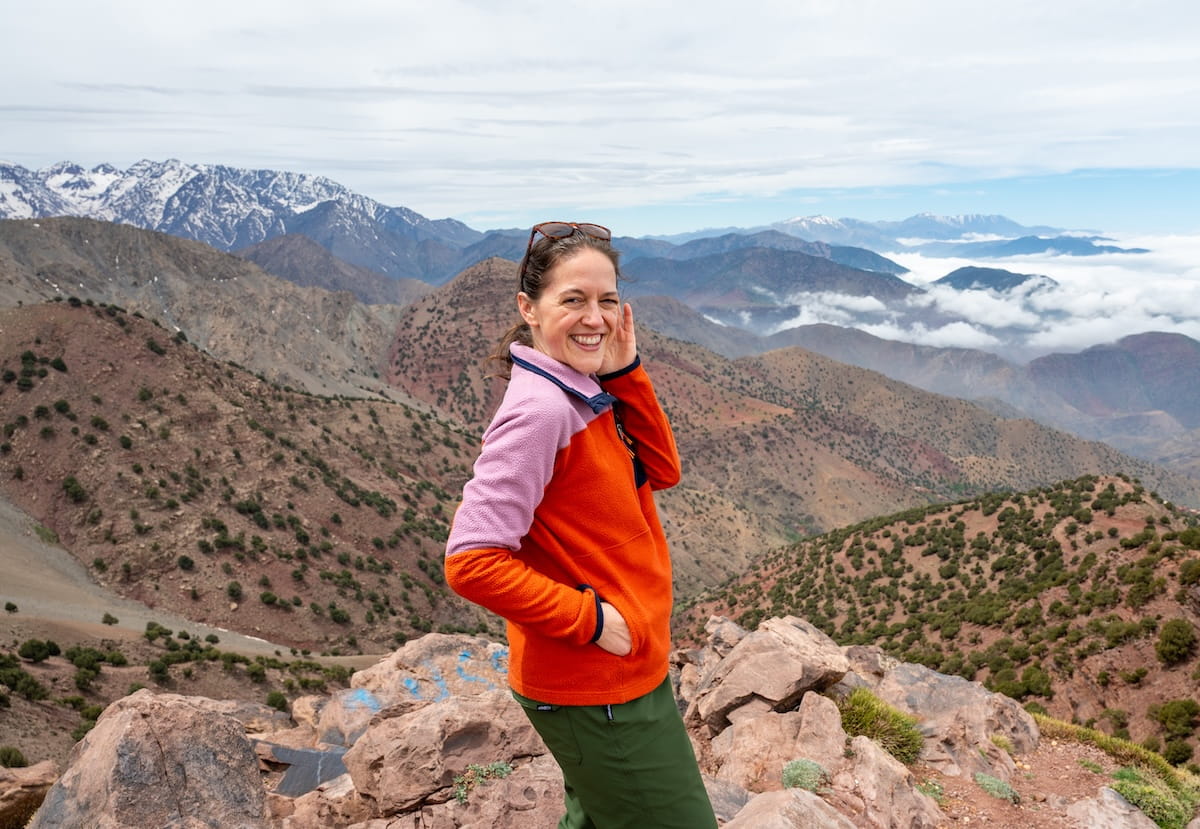
It’s once you reach the Toubkal Pass at 3,940 meters (12,927 feet) that the terrain drastically changes into loose, sliding scree and an almost vertical climb. I had to use my hands to help scramble up the rock at times.
This section is tough going up, but in my opinion, it’s even harder to navigate on the descent. Take your time, as placing your foot on a loose rock can easily lead to a twisted or broken ankle!
Choosing A Mount Toubkal Guide
There are two main guide options for Toubkal:
1) Book a group tour. Many travelers to Morocco book 2-day guided Toubkal group tours departing from Marrakech, which is the more budget-friendly option.
- 🏔️ Click here for a top-rated 2-day guided trek.
- 🏔️ Click here for a top-rated 3-day guided trek. If you want more time to explore and acclimate in the beautiful High Atlas Mountains.
2) Book a private tour. Personally, I booked a private trek through Toubkal Guide and it was fantastic! While it costs more than a public tour, I appreciated the personal attention. My guide, Omar, ensured I knew exactly what to expect, helped me adjust my packing list, and kept me comfortable every step of the way.
What The Mount Toubkal Trek Is Like
Summiting the highest mountain in North Africa is a rewarding adventure experience! While most people opt for a quick 2-day Mount Toubkal trek, I opted for a 5-day route — which is detailed in this Morocco itinerary.
This slower pace allowed me to trek through the gorgeous Ousertik Valley (1 night), the Imnane Valley (1 night), spend a night in Imlil (1 night), hike up to the Mount Toubkal Refuge (1 night), and then tackle the summit push and return to Imlil.
Taking those extra days in the valleys gave me my “mountain legs” and let my body acclimate, which is why I was feeling so strong on summit day!
Whether you go slow or fast, the 2-day portion of the trek is where things get challenging. Here is what to expect:
Day 1: Imlil to Toubkal Refuge
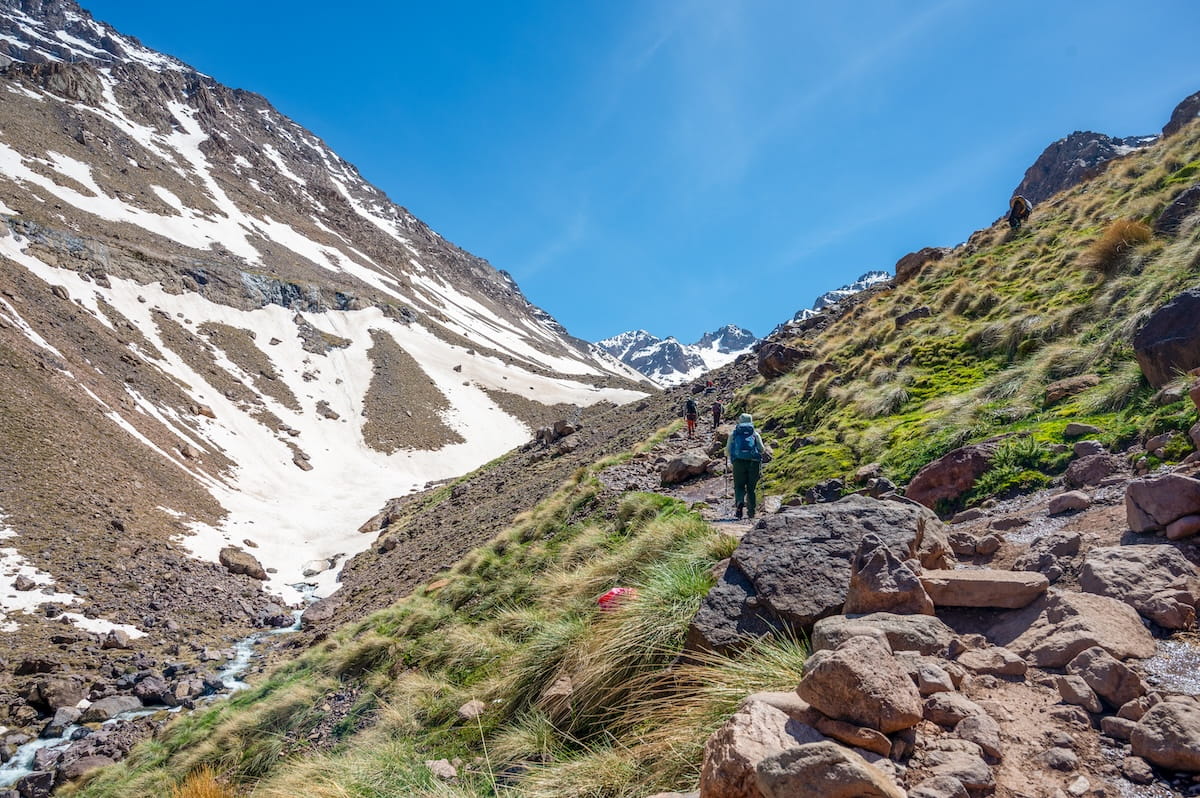
You’ll begin trekking from the mountain trailhead town of Imlil, which sits at 1,740 meters (5,709 feet). Imlil has a lovely backpacker atmosphere with gear rental shops, cafes, and gorgeous views of the valley.
🏨 Most people overnight in Imlil the night before. If you organize your own accommodation, I highly recommend Atlas Imoula Guest House. My room was huge and clean with a comfortable bed, hot rain shower, and balcony — plus the food they serve is delicious!
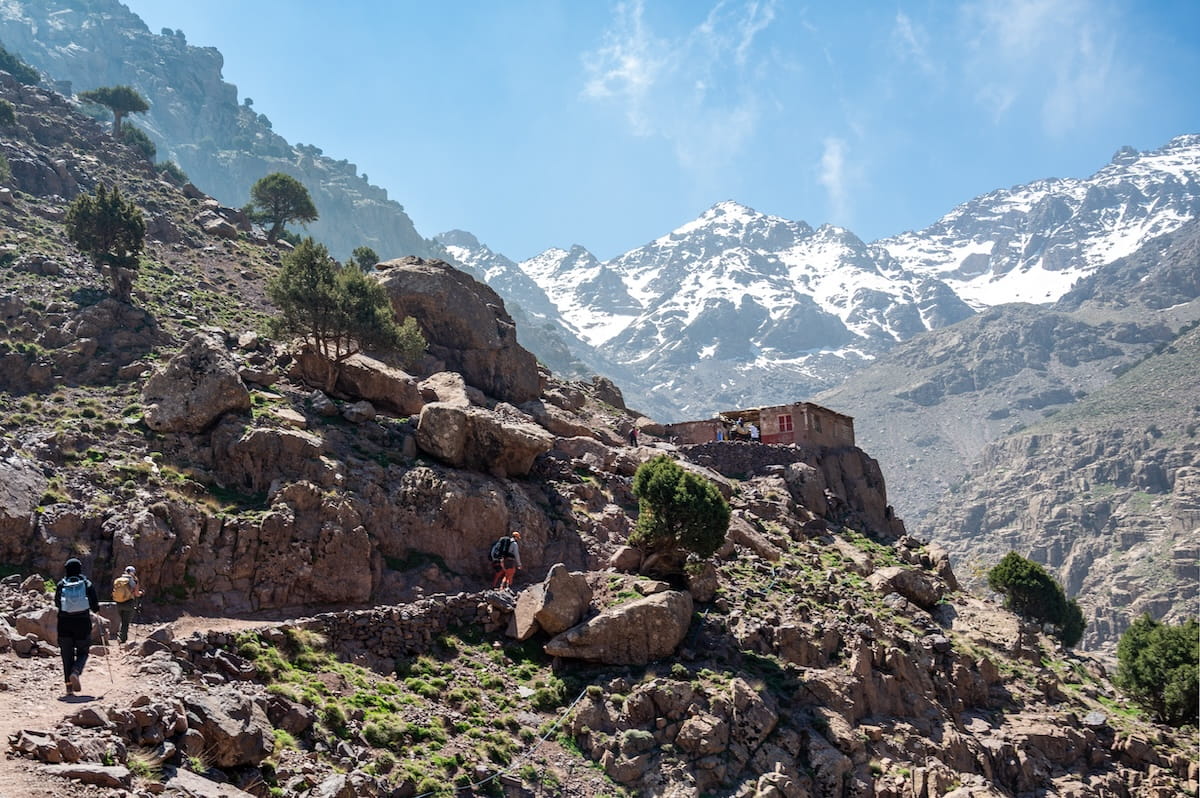
From Imlil, you’ll hike up the dramatic Mizane Valley, passing the small Berber settlement of Aremd and the famous religious shrine of Sidi Chamharouch, which is where trekkers often stop for lunch. During my hike, the shrine was very crowded, so we hiked about an hour further to a quieter, covered lunch spot with proper tables to enjoy a delicious meal cooked by our trail chef, Mohammed.
After lunch, you’ll finish the trek up to the Toubkal Refuge at 3,207 meters (10,522 feet).
At the refuge, you’ll share a rustic dorm room with other hikers (unless you can snag one of their limited private rooms). Your guide company will arrange your meals — including dinner, a very early pre-dawn breakfast, and a post-trek lunch.
💡Tip: The refuge only turns on the electricity for a few hours around 7:00 PM. Use this short window to lay out your summit clothes and pack your daypack, as you will be getting ready in the dark the next morning!
Because of this and the fact you’ll be trekking before sunrise, you’ll also want a headlamp. My go-to is the Lepro Rechargable Headlamp.
Day 2: Toubkal Summit Push
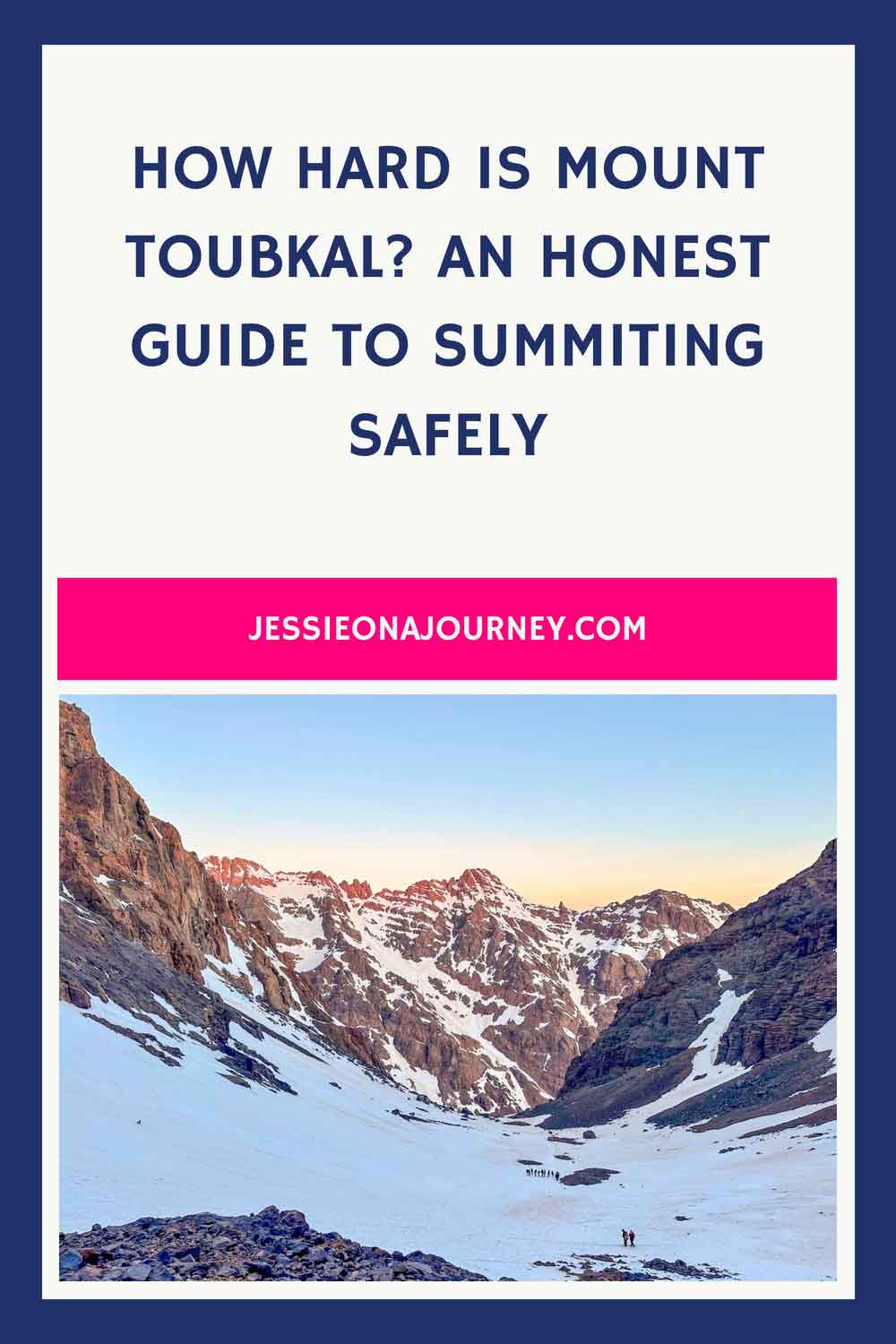
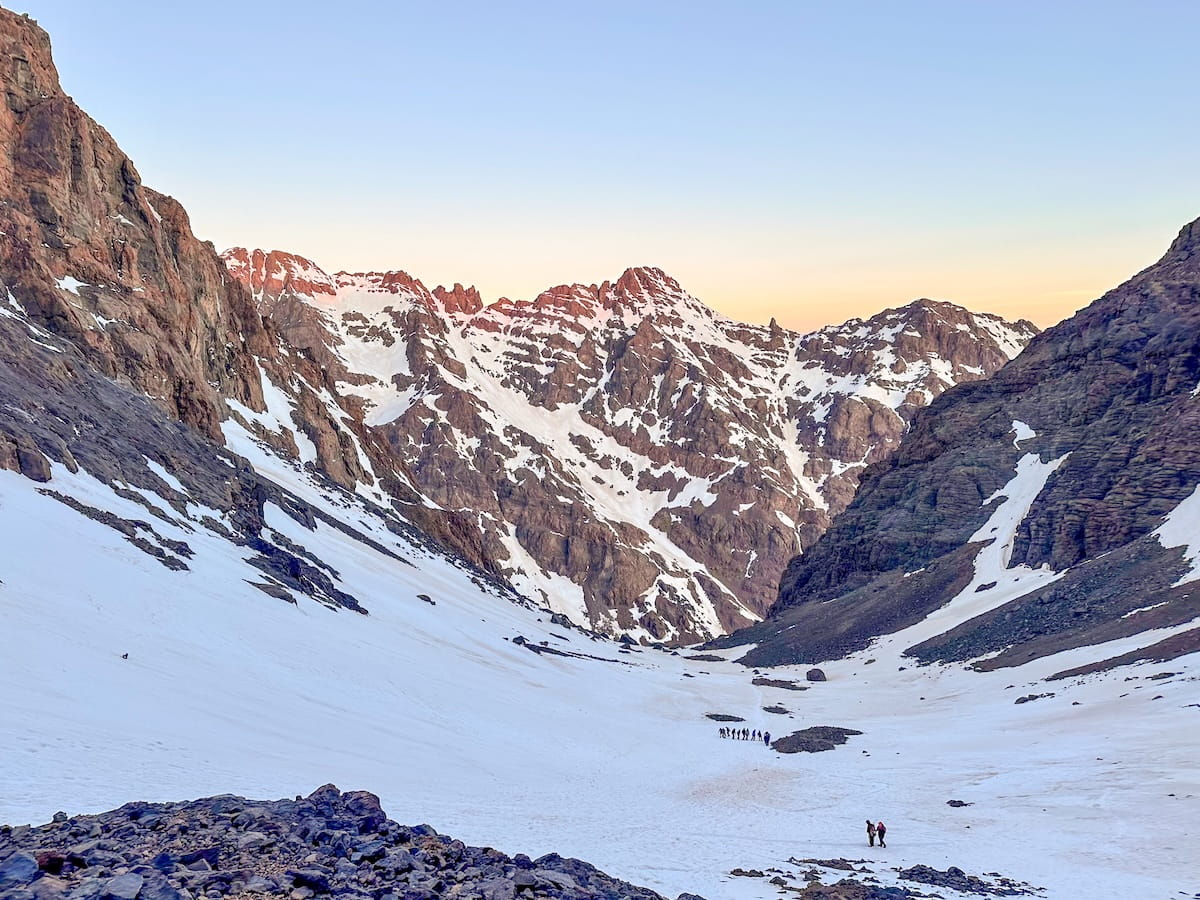
My group woke up at 2:00 AM, ate breakfast, strapped on our crampons, and hit the dark trail by 4:00 AM. Walking up a steep snow slope in the pitch black is incredibly meditative as you watch the rhythm of the headlamps in front of you and gaze up at the stars.
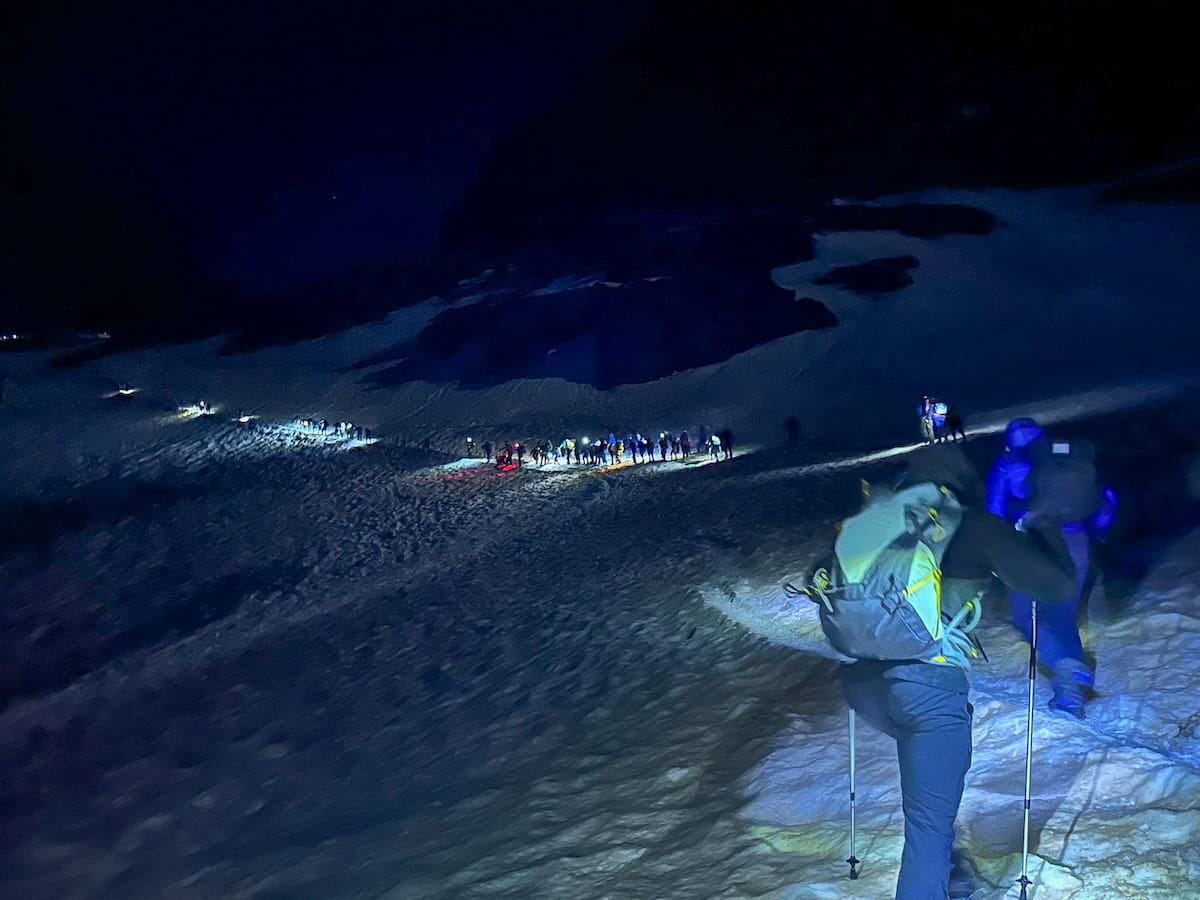
Within a few hours, the rising sun begins to cast a gorgeous orange glow on the peaks surrounding you.
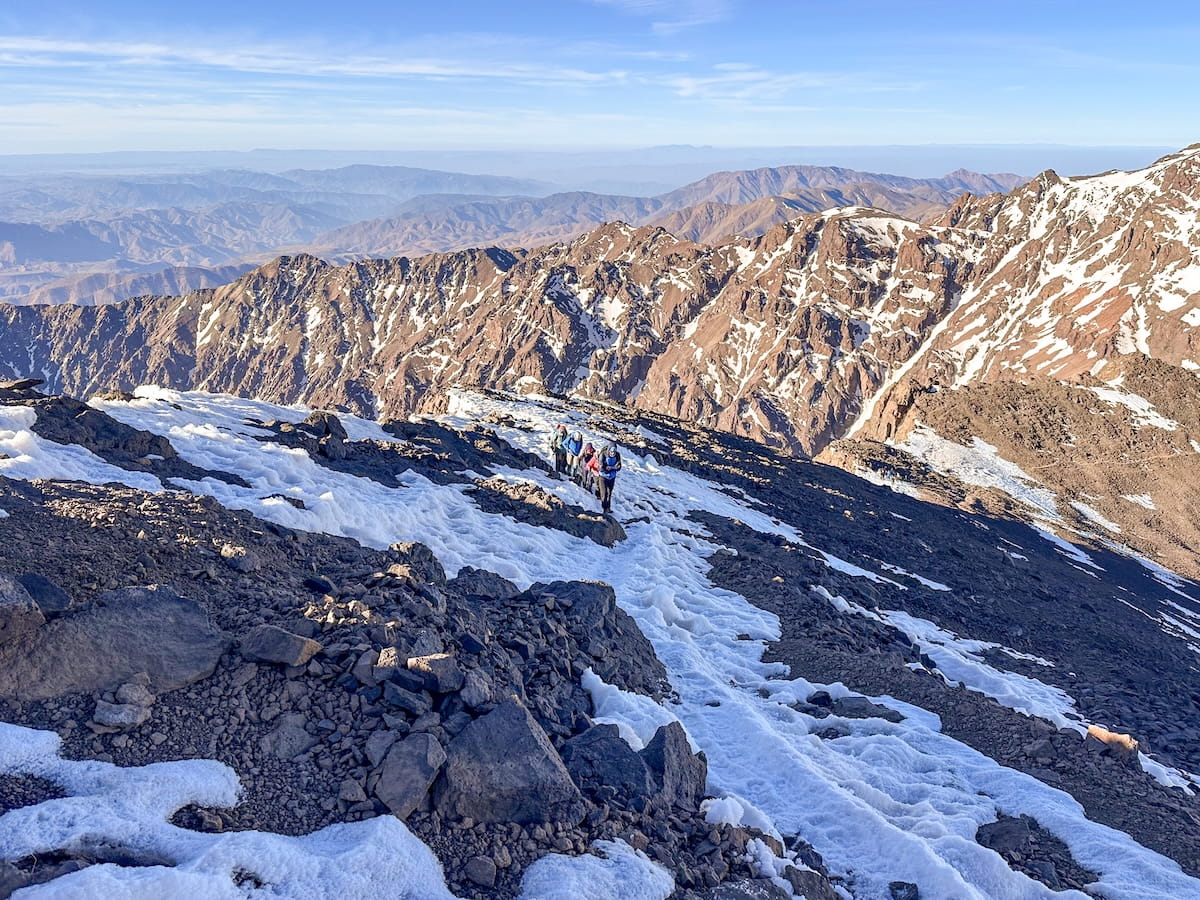
After about 3 hours of steady climbing, we reached the spectacular Toubkal Pass at 3,940 meters. While the view of endless peaks is spectacular from here, this is also where the trail turns into steep scree.
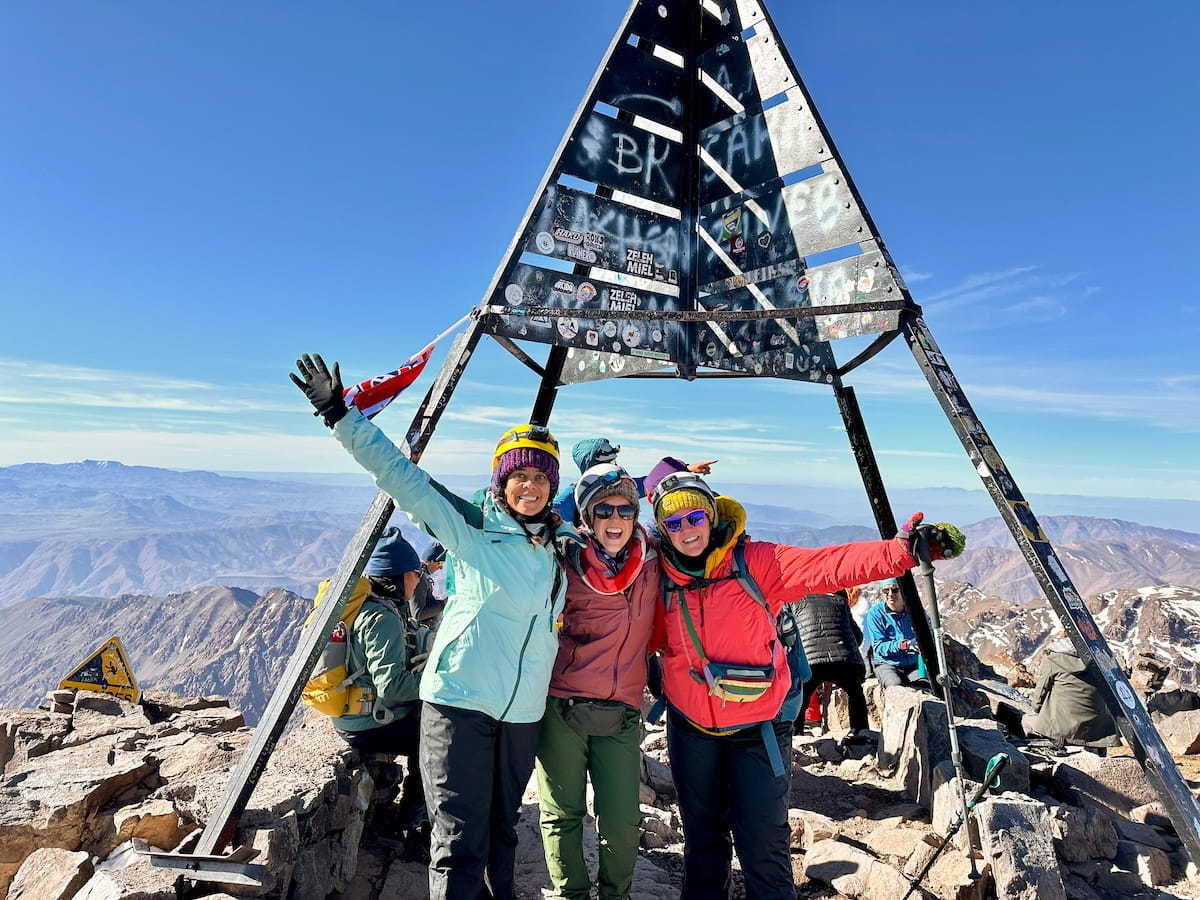
From here, it’s a grueling 45-minute hike and scramble up loose rock to the official Mount Toubkal Summit at 4,167 meters.
The good news:
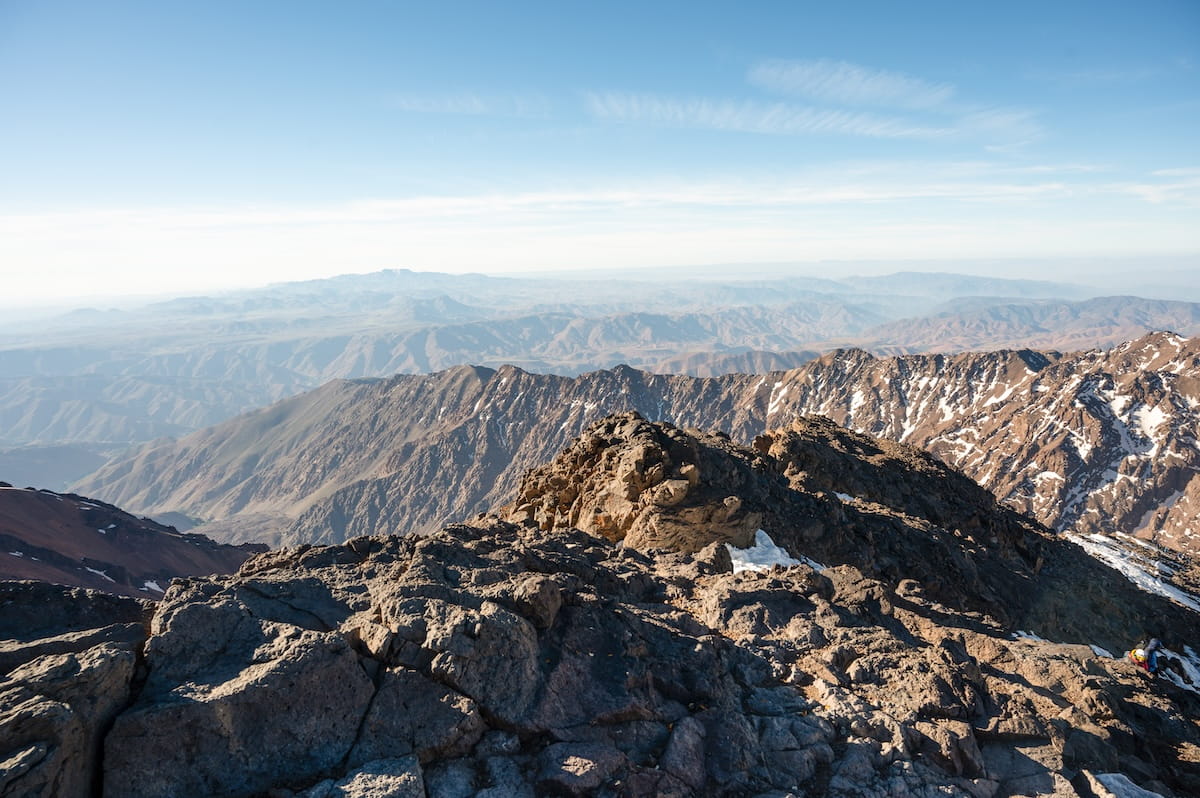
The summit views make every single step worth it! Standing atop Mount Toubkal, I felt like a tiny dot in a vast sea of granite peaks stretching on forever.
On an exceptionally clear day, you can see all the way north to the Marrakech Plain and south across the Anti-Atlas Mountains to the sand dunes of the Sahara Desert!
Preparing For Your Mount Toubkal Trek
To successfully reach the summit, you’ll want to prioritize physical training, clean eating, and proper acclimatization before your climb.
Training: While physically fit travelers can show up and summit, you will have a much more enjoyable experience if you prepare. To train, I increased my running mileage and added 20-30 minutes per workout on the Stair-Master. If you live near hilly terrain, practice hiking steep elevation gains with a weighted pack.
Eat Clean: Fueling your body with whole, nourishing foods is a great way to build muscle efficiency and stamina in the weeks leading up to your trip.
Acclimatizing: Coming from flat NYC, I made sure to spend a few days adjusting to the timezone in Marrakech first. I also highly recommend adding a few days to your trek like I did. By the time it was summit day, I felt comfortable and strong as I’d already been hiking for 4 days!
Packing Tips For Mount Toubkal
While your exact Toubkal trek packing list will depend on the season, keep these essential rules in mind:
1) Invest in a high-quality daypack. Look for a comfortable 20L to 35L pack with heavily padded shoulder straps, a thick hip belt, and a chest strap. These features are crucial for distributing the weight off your shoulders and keeping your spine comfortable during long, steep ascents. My personal pick is the G4Free 35L Day Pack.
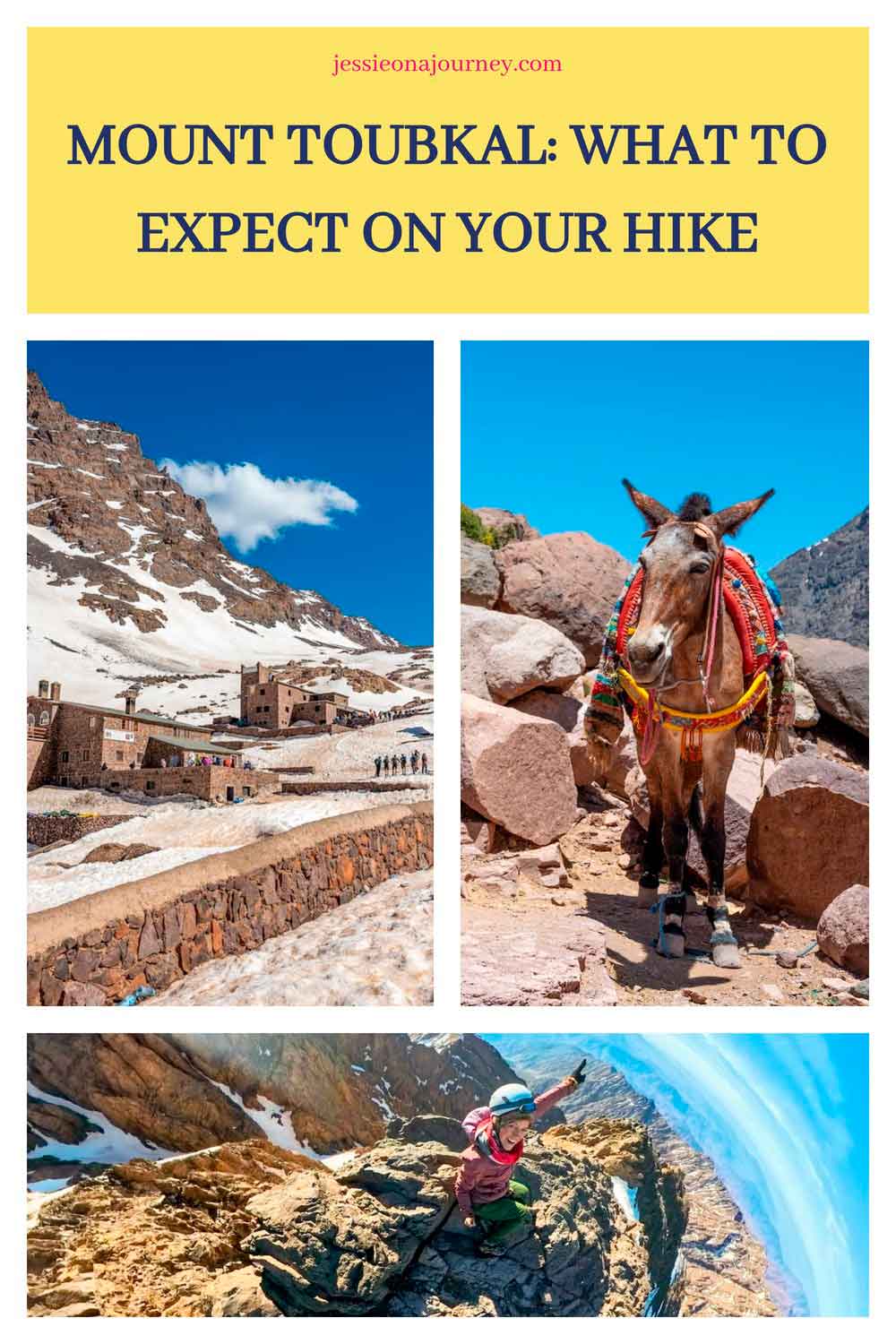
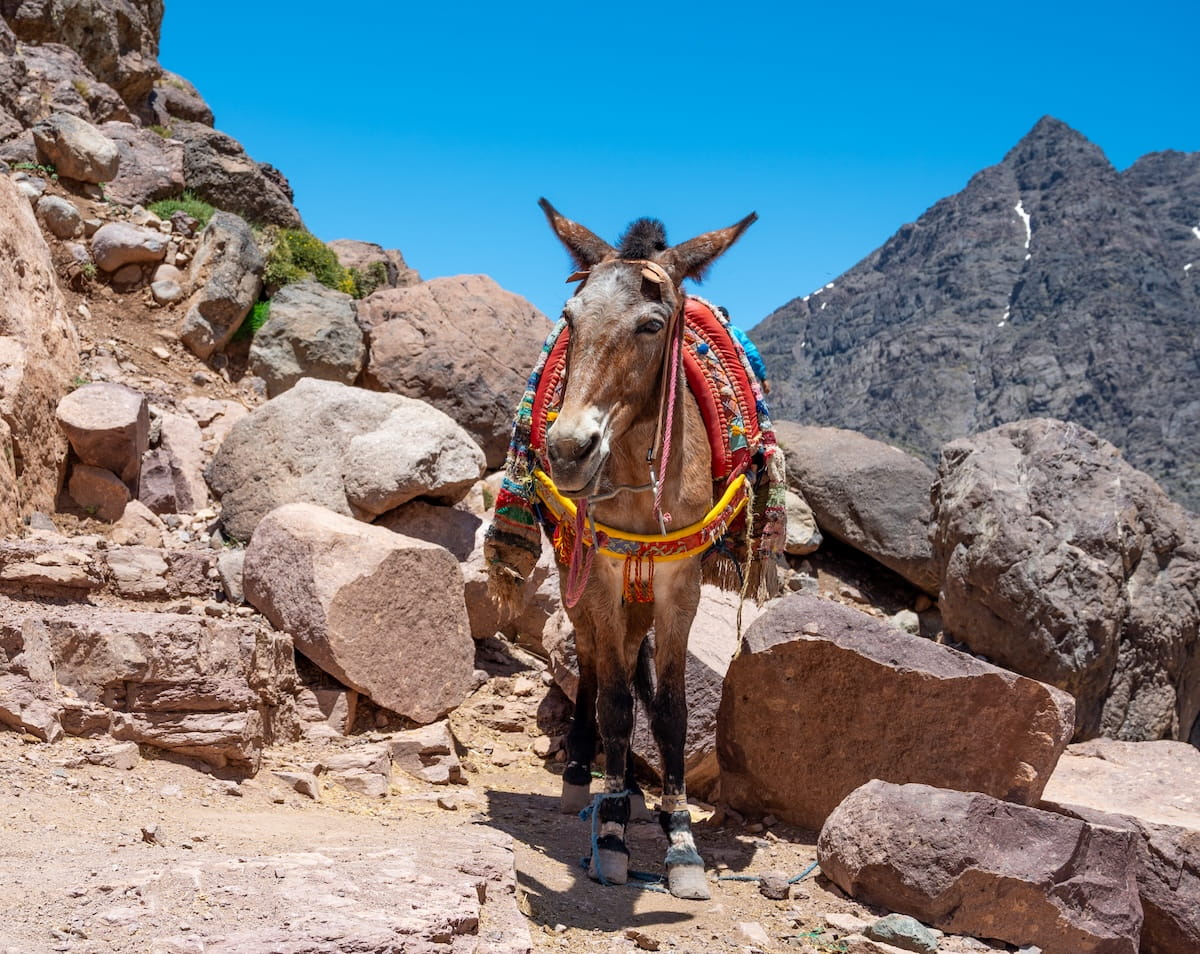
2) Avoid rigid suitcases. You will carry your own daypack, while your main gear is transported by trail mules. Mules cannot carry hard-shell suitcases, so you must use a soft, water-resistant duffel bag (like the North Face Base Camp Duffle).
🫏 Animal ethics: To protect the trail mules from being overloaded, choose a company with strict weight limits. Healthy, well-conditioned mules can carry about 20% of their body weight. For my 3-person trek, Toubkal Guide limited each of us to 15 kg (33 lbs) per person.
3) Use a water bladder. Having a hands-free system like the 3L Platypus Big Zip EVO makes a massive difference. Because the straw sits right over your shoulder, you can easily sip water continuously on the trail without having to stop and pull a bottle out of your pack.
4) Wear waterproof boots. Sizing up your boots by a half or full size is incredibly important to prevent “toe bang”—where your toes repeatedly smash into the front of your boots on the extremely steep, knee-jarring downhill trail from the summit. Personally, I swore by my mid-height waterproof KEEN boots to keep my feet dry and blister-free.
🥾 Tip: Click here for my full, detailed Mount Toubkal packing list!
Determining If Mount Toubkal Is Right For You
If you enjoy a physical challenge, rustic mountain lodge environments, and standing on top of spectacular high-altitude peaks, Mount Toubkal is absolutely for you! It’s one of my favorite treks I’ve ever done.
However, if you have severe knee issues (the downhill is intense!), suffer from intense vertigo, or feel out of shape and aren’t willing to train, you may want to stick to the beautiful but lower valley trails of the High Atlas.
Your Toubkal Trek Action Plan
- Book your guide through a highly-rated tour company. Opt for either a budget-friendly group trek or a private experience through an operator like Toubkal Guide.
- Get the right travel insurance. I used SafetyWing and opted for the “Adventure Sports” add-on, since a hike is classified as mountaineering once you’re wearing crampons.
- Train and acclimate: Spend a few days in Marrakech and consider adding a few extra days of trekking to help your body adjust before your big climb!
Bonus Morocco Travel Resources
🎁 Bonus: Get my free Travel Planning Toolkit with budget calculator, planning cheat sheets, Google Maps (including Morocco) and more!
Also check out:
- 14-Day Morocco Itinerary (Including Mount Toubkal)
- Mount Toubkal Packing List: The Exact Gear You Need To Summit
- Toubkal Refuge: What To Expect + Hacks For A Smooth Stay
- Morocco Solo Female Travel: Ultimate Guide To A Fun & Safe Trip
Would you climb Mount Toubkal?
Enjoyed this post? Pin it for later!