
Ask Jessie: Is South America Safe For Solo Female Travelers?
This post contains affiliate links, including Amazon affiliate links. If you purchase through these links, I may earn a commission at no extra cost to you. As an Amazon Associate, I earn from qualifying purchases. Thank you for your support!
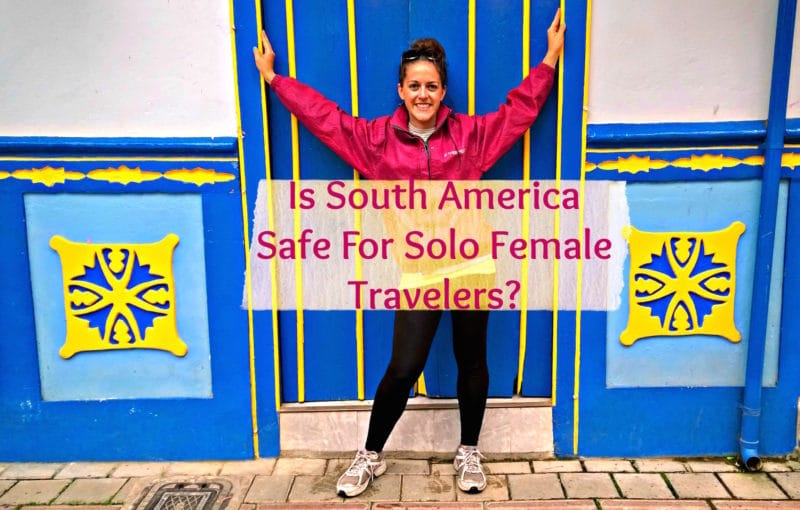
This question was submitted by a Jessie on a Journey reader Kaitlin from Washington, who is planning a trip from Cuzco, Peru, through Bolivia, and ending in Argentina. Here is my reply:
South America is possibly the most popular destination on Jessie on a Journey, and at least a few times every week I get asked about its travel safety.
As a budget and adventure traveler, I love, love, love Latin America.
For the most part it’s extremely economical — I regular stayed in private hotel rooms for under $10 and ate 3-course meals for less than $4.
Moreover, the amount of adventurous options, from hiking and glacier trekking your way through Patagonia to completing the Inca Trail in Peru to kayaking through the Amazon are astounding, and the constantly changing landscapes are unlike anywhere else in the world.
But, the question here isn’t focused on South America’s awesome-ness, but if it’s safe.
Psst! Don’t forget to pin this post for later!

My Experience
I can’t speak for the entire continent as I haven’t been everywhere, though I have done quite a bit of solo travel in South America.
I’ve heard from many people that Venezuela is one of the world’s most dangerous places, although I can’t say from first-hand experience. I’ve also been told Colombia is a very dangerous place to visit and spent two weeks there, no problem (I even avoided getting pickpocketed in Bogota!).
Along with the 2-week trip to Colombia, I’ve traveled solo through Brazil, Argentina, Bolivia, Chile, Peru and Ecuador. The level of safety varies from city to city, but in my experience you’ll be fine if you stay on the backpacker trail (you’ll quickly learn what cities this is comprised of by doing a Google search or by meeting other backpackers along the way). If you want to veer off this trail, talk to locals along the way and get the scoop on where is safe to go.
Overnight Busses & Rough Cities
Moreover, I found the locals to generally be very friendly and helpful, although the one time you definitely need to be cautious is on the overnight buses. I’d recommend getting a money belt or pickpocket-proof clothing to keep valuables on your person, as it’s not uncommon for bags to go missing on these.
I remember while in Banos, Ecuador, I Skyped with a friend from New York, who had never been to South America and had certainly never heard of Banos.
“You’re brave. If I visited South America I would only stick to the major cities like Quito and Rio.”
For me, these were two of the rougher cities on the journey. The globally lesser-known and smaller cities and villages were much safer. I’ve also heard parts of Buenos Aires can be pretty rough, but I actually felt very safe there (keep in mind, though, I’m from New York).
Language
One other thing is that, depending where you go, English may be limited. In bigger cities you’ll certainly find locals who can speak English; however, it’s definitely not everyone. Knowing some basic Spanish will help you a lot.
So, Is South America Safe?
Overall, I’d say if you’re okay with a bit of culture shock and can be adaptable to unfamiliar situations you’ll have a great time in South America. That being said, if the thought of having to visit places where few people speak English and the way of life is very different from your own makes you uncomfortable, you may want to stick with places like the US, Canada, Australia and the United Kingdom.
Traveling to Brazil specifically? Check out this post on safety tips for Brazil!
What is your opinion on if South America is safe for solo travelers? Please share in the comments below.

