
Memories Of Ghana: How A Challenging Trip Can Help You Grow
This post contains affiliate links, including Amazon affiliate links. If you purchase through these links, I may earn a commission at no extra cost to you. As an Amazon Associate, I earn from qualifying purchases. Thank you for your support!
I have a seriously love/hate relationship with Ghana, Africa. Love because, well, I truly loved the country and my time spent there, living with a family, taking day trips, exploring markets and volunteering. Hate because it was truly the most challenging trip I’ve ever been on, from the lack of plumbing and electricity to the diet of rice water and fufu so foreign to my digestive system.
Sometimes when I talk about my trip to Ghana I feel like I sound full of myself, talking about how not having a toilet was so hard, when a local family was nice enough to let me stay with them; however, the truth is this trip made me more grateful than I’ve ever felt in all my time on the road.
When I went to Ghana I was 22. I’d backpacked Europe and Southeast Asia, and was now ready to venture to a new continent: Africa. I’d heard Ghana was sort of the “Africa for beginners” — not to mention the flights were reasonably priced — so I booked a ticket and began preparing for the trip.
Out Of My Element
I remember the week leading up to the trip, how nervous I had been. While this trip I wouldn’t be going alone, but with a co-worker of my boyfriend’s mom, Steph, who I didn’t know very well (but grew close with on the trip), I still felt unsure if I would be able to tackle the unexpected. I’d felt tremendous culture shock when I’d traveled solo to Thailand, although came to truly appreciate the culture shock. My hope was this would be a similar situation, where the feeling of being out of place quickly melded into a feeling of appreciation for having a new experience.
As soon as I stepped off the plane, that familiar feeling of fear — skin hairs prickling, a sheen of sweat coating my back, a nervous tension filling my chest — washed over me. Not that the airport was so unusual, but I could already feel that this trip especially would take me out of my element.
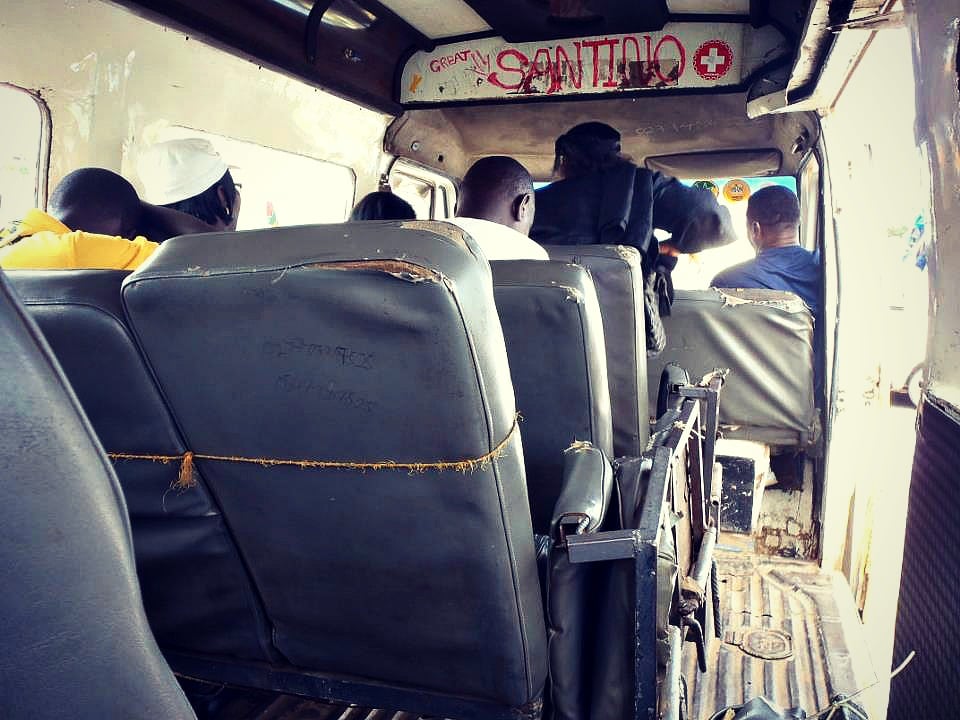
My driver was three hours late to pick us up, and Steph and I sat trying to picture what Ghana would be like beyond the airport doors. When he finally arrived I felt relieved; that is, until we started driving. The roads were filled with aggressive hawkers banging on the car windows, and one man even tried to get in until my driver quickly swung his arm over the passenger seat to lock it. The roads were cracked and full of potholes, and we bounced our way through a mix of stand-still traffic and Mario Andretti-style racing until we reached our hotel.
Going Local
Which is where we met Michael, who quickly became our local pal for our month-long trip. Michael was funny, seemed to be friendly with everyone, was always up to explore and, best of all, he was a local who could show us how to experience Ghana like a local. He was one of the reasons for the Love in my love/hate relationship with the country.
My homestay family in Achiase, a small village in Ghana, was another part of the Love, and another way we immersed ourselves in local culture. Not only did she cook us local meals, she brought us to church on Sundays, let us tag along to a wedding she was attending, talked to us about local life and taught me some words in the local language of Twi.
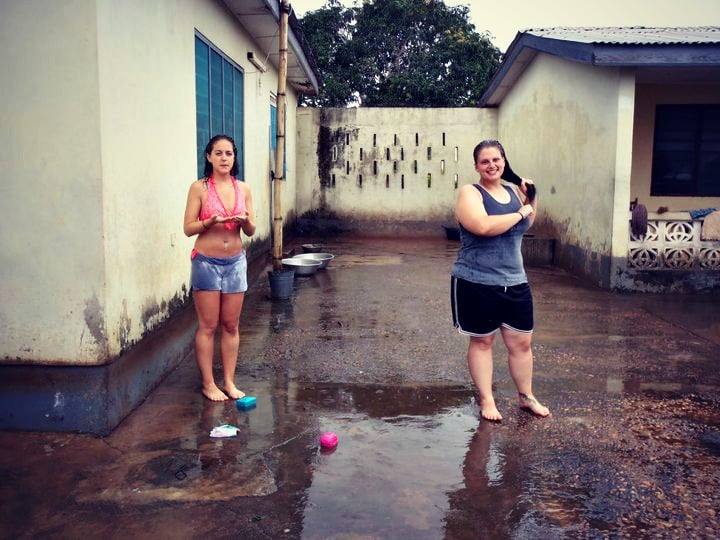
This all being said, the homestay didn’t come without challenges, the hardest for me was not having running water, aside for one hour per week when the community would turn the taps on. During this hour, myself and my housemates would scramble like crazy to fill every cup, bowl and bucket we could find. Then, we would ration it throughout the week, being careful to use only the smallest amounts to wash ourselves and flush the toilet once per day. As there were eight visiting volunteers sharing the toilet — along with my house mom and her daughter — this for me was very difficult.
But, there were moments when having no water turned into a bonding experience. Like when it rained, and people would run from their houses with soap and buckets, lapping up the liquid pearls from the sky. There was a tangible happiness that felt akin to being wrapped in a warm blanket after getting caught in the rain. It felt nice to be a part of that, together.
A Change In Diet
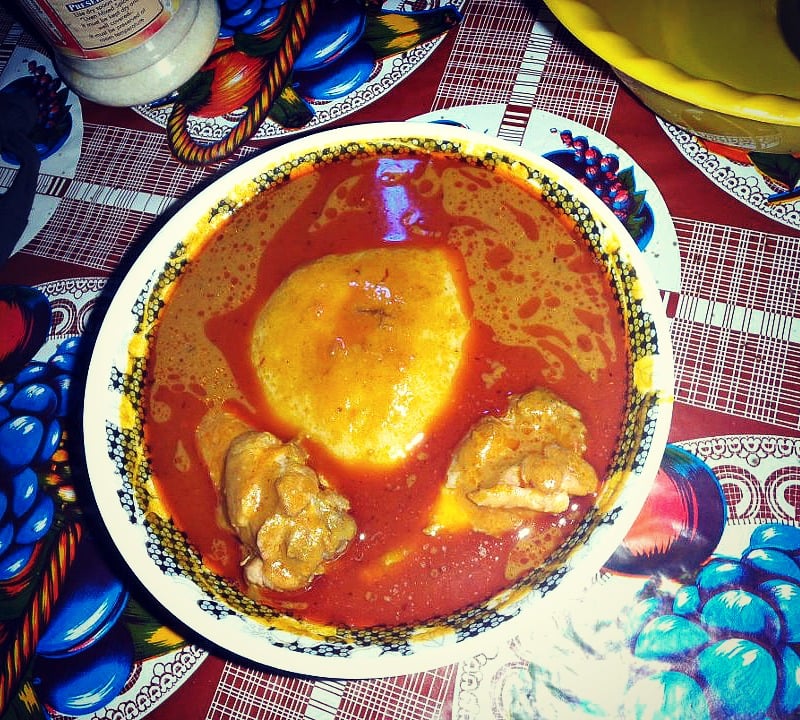
Along with the bathroom issues, the food was challenging. While I usually love trying the food when traveling, rice water, fufu and kenkey did not agree with my taste buds or stomach. I tried all the local foods, even helping my house-mom make some of them; however, I often found myself wolfing down avocados and cereal — two of the very few familiar foods I could find in the local market — and fantasizing about my next cheeseburger. Actually, it got to the point where I took a 2.5-hour bus ride each way just to get a slice of pizza from the mall in the capital.
Don’t get me wrong. I always ate what my house mom gave me, and always thanked her for her hospitality. But when you’re not brought up with certain textures, flavors and ingredients, it can be difficult to feel satiated.
There was one culinary adventure in Ghana, however, that brought me a lot of joy: eating snail. At night, myself and some the children we were volunteering with would put on headlamps and search for snails on the road, as this is a popular snack in Ghana, especially when boiled and put on a skewer. While I always gave all my snails to the children (I’ll stick with the fufu, thanks), one day I told a 14-year-old boy named Isaac that if he made one fried for me, I’d eat it.
“I have a present for you,” he smiled, holding up a fresh snail on a skewer.
I shook my head. “The deal was I’d eat it fried. This still looks like it’s still alive.”
He smiled. “I did fry it. In water.”
“So…you boiled it.”
I grabbed the skewer, not wanting to offend him, but also pretty positive that he knew exactly what he was doing (especially since he was crying he was laughing so hard). Counting to three 23, slowly, I brought the slug-like creature to my mouth and bit.
Then spit.
I didn’t mean to, but the leathery taste and rubbery consistency would not allow my throat to open for the meat to go down.
To get the taste out of my mouth, I grabbed a bag of Sour Patch Kids I’d brought on the trip from NYC.
“What’s that?” Isaac asked, eyeing the unfamiliar candy. I handed him a few.
“Watch out. They’re sour,” I warned.
Too late. Isaac was on the ground, sputtering like he’d been punched.
A classic case of cultural differences.

Being An Oberoni
And lastly, one of the largest challenges I experienced was the cultural differences when it comes to interacting with foreigners. As in, the locals shouted “oberoni!” (“foreigner!”) at me every time they saw me. I’m not exaggerating where I say that walking 10 minutes down the street would incite about 20 oberoni calls.
At first I felt nervous, as the more I heard these shouts the more I felt like a target. Then I felt angry. I hadn’t done anything to attract attention — well, aside for clearly looking like a foreigner — and didn’t feel I deserved to be called out in the crowd. Then, eventually, I felt acceptance. Despite the fact my house-mom explained to me numerous time that the locals calling me oberoni was not meant to be disrespectful, I couldn’t shake the feeling.
Until she instructed me to start striking up conversations with the shouting locals when it happened.
“See what they want,” she instructed. “You’ll realize they’re just curious.”
I’d be lying if I said I went up to every single person that called me the name, or that I eventually found it pleasing to the ears; however, as I started using the shouts as a way to approach locals instead of as a way to become angered by them, I was able to immerse myself in the local culture instead of shielding myself from it.
Lessons Learned From A Challenging Trip
The point of this post isn’t to ramble on about how hard my time in Ghana was, or to sound like an ignorant tourist (so sorry if I do). Instead, I want to show you the value of hardships when traveling. Not only did each of these challenges come with an upside, but my trip to Ghana came with many lessons.
One, to appreciate what I had — but also to not pity those who didn’t. While dollars and cents wise I certainly had more than most in the community of Achiase I stayed in, there were so many beautiful parts of the culture — like how everyone was constantly singing and dancing, and how neighbors knew each other and helped each other out — that I found truly inspiring. Despite a lack of resources, there were so many ways this community was also rich.
I also learned just what I was capable of. I’m constantly touting this as a major benefit of solo travel, as when presented with a dilemma you’ll solve it, even if it’s something you didn’t think you could handle on your own. Traveling solo, you have to rely on yourself and be resourceful. And you will.
This is how I felt in Ghana. Okay, so I wasn’t on my own, and it was nice having others to lean on. But I still felt strong, especially when I moved past the “wow is me” stage and into the adaption phase.
Lastly, I learned the benefits of letting fear act as a guide without letting it overpower you. Sure, I was nervous to go to Ghana and immerse myself in the unknown, so different from what I was used to in NYC; but, I didn’t let that stop me from going. Thankfully. Because despite my love/hate relationship with Ghana, I’m happy to have a relationship at all with this eye-opening place.
What’s been your most challenging trip and why? Please share in the comments below.
Also Check Out:

