How To Build An Algorithm Proof Travel Blog In 2026 (Roadmap!)
This post contains affiliate links, including Amazon affiliate links. If you purchase through these links, I may earn a commission at no extra cost to you. As an Amazon Associate, I earn from qualifying purchases. Thank you for your support!
Let’s talk about how to build an algorithm-proof travel blog in 2026!
From constant algorithm updates to massive changes to organic search to increasing AI advancements, the blogging landscape has changed dramatically—and will continue to change.
Nowadays, it’s important to move beyond posting and waiting for search engines to like you, to treating our blogs like businesses by building an engaged community, serving our audience through aligned revenue streams, and increasing brand visibility across platforms.
I’ll share exactly how to do all of this (and more) in the below blogging roadmap!
The recommendations are based on doing a deep dive into my own blogging business across my three sites, as well as what I’m seeing in my creator student community and the broader creator economy.
Suggestions will be grouped into the following topics:
- Business Planning
- Content Creation
- Artificial Intelligence (AI)
- Traffic & Visibility
- Blog Monetization
Additionally, I’ll share tips and examples to help you implement this 2026 blogging roadmap for success faster and easier.
💻 Bonus: This episode of The Profitable Travel Blogger Podcast includes options for learning through audio, video, or a text guide below!
💡Quick blogging tips:
-Create content that includes personal anecdotes and original media that AI can’t replicate and that proves you were there to build trust with your audience.
-Master SEOx by being active across platforms for increased visibility beyond Google—and within it, as social media, Pinterest, and YouTube content now appear in search results.
-Prioritize growing, nurturing, and monetizing an email list, which you own and which isn’t at the mercy of algorithms.
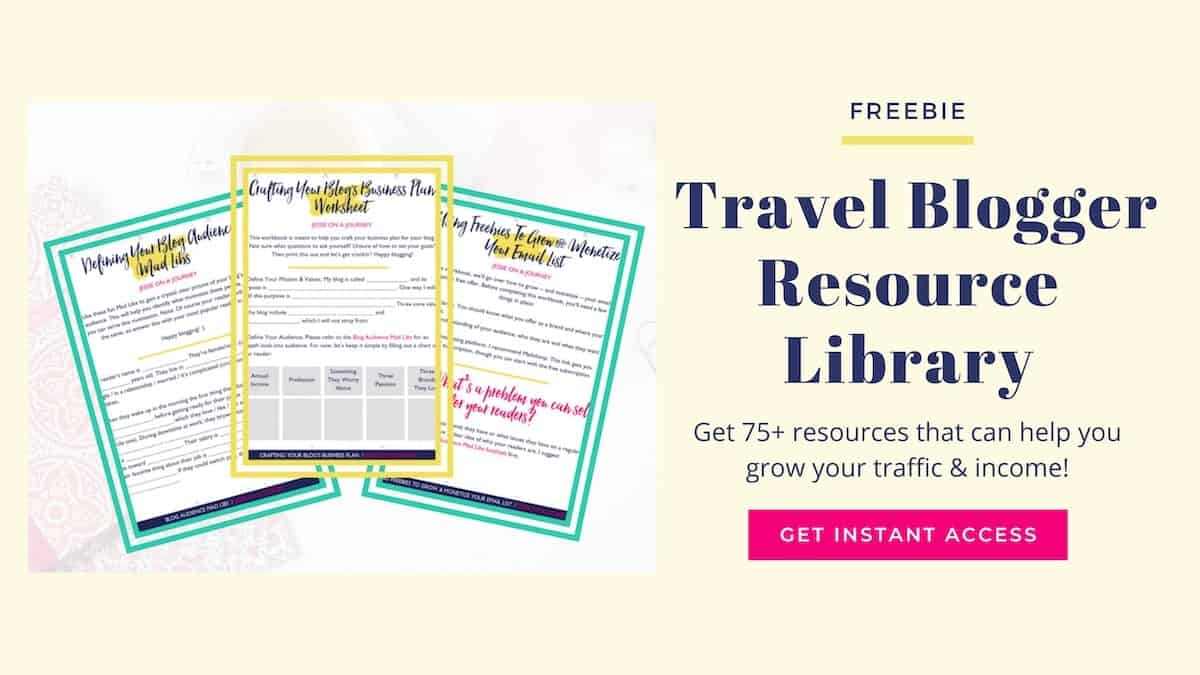
🎁 Bonus: Grab my free travel blogger resource library, which includes a 2026 Algorithm-Proof Action Plan Cheat Sheet based on the tips below. You’ll also get access to 75+ resources that can help you grow your traffic, email list, and income.
💪 AI theft compensation: The free-to-join Copymight Coalition helps bloggers get compensated when their work is used to train AI without permission or is plagiarized. Their team of lawyers scan your content, register it with the U.S. Copyright Office, and negotiate settlements or licensing deals on your behalf, only taking a cut when you receive a settlement.
Your Algorithm-Proof Travel Blogging Roadmap [Audio & Video]
Grow Your Blog’s Traffic, Email List & Income [Detailed Guide]
🗺️ Business Planning
Get Into A Business Mindset
If you only get one thing from this guide, it needs to be this: your blog is a business, and businesses make money.
Don’t be afraid to promote and sell, and stop waiting until you have a certain amount of views or followers to launch your own products or promote affiliate links.
Of course, you want to create a healthy balance between sharing information and selling, but for your blog to be profitable, you need to implement revenue streams—like affiliate marketing, launching your own products, and working with brands.
Treat Content Like A Growth Tool
Let’s discuss this through the lens of creating your own products. I have an entire guide on how to sell products with no audience, but for now, consider traditional businesses:
- They start with a product.
- Then they build a marketing campaign to attract the audience who would benefit from purchasing it.
- While they typically do marketing research, they don’t wait to have an audience first.
As a blogger, your content is the marketing campaign. It’s not the business, but a business building tool that can help you attract your ideal audience, build brand visibility, and increase your income.

Prioritize The Post-Click Experience
If your content is the marketing campaign, your blog is the storefront.
In 2026, you need to also consider the Post-Click Experience—meaning, if a reader clicks your link and is met with five pop-ups and a wall of ads, they won’t stay long enough to learn who you are and what you offer.
Instead, aim to provide a premium user experience that is clean, fast, and focused on the reader’s needs.
🎁 I’ve included some ideas for creating an amazing user experience in the free 2026 Algorithm-Proof Action Plan Cheat Sheet linked in the free Travel Blogger Resource Library.
✍️ Content Planning & Creation
Define Your Authority
In 2026, you should aim to be the premier expert on the topic you cover.
If someone asks what you’re an expert on, and your blog doesn’t make that answer clear within five seconds of landing on the homepage, it’s going to be harder to be memorable and build an audience who looks to you for answers.
Ultimately, you want your mission, your free content, and your paid products to align.
Looking at my NYC Photo Journeys site, it only has about 30 posts, but because it is hyper-niche and offers local, boots-on-the-ground expertise, it has been my easiest site to grow and monetize.
Fill Content Gaps To Stand Out
To stand out now, you’ll want to move away from relying solely on generic tips and lists.
Sure, you’ll still have some broader foundational posts that support your content clusters—the ones that answer the basic questions people frequently type into Google—but you also want to weave in those unique, high-authority angles.
To do this:
- Fill in gaps by covering places and experiences that other bloggers aren’t.
- This is also great for sustainable tourism and promoting under-touristed destinations.
- Cover popular places and experiences in new ways.
In short, find the stories, tips, and angles that aren’t being shared by every other site, and ask yourself: What is the ‘un-Googleable’ detail that only someone who was actually there would know?
Because those are the details that turn a one-time reader into a loyal follower who trusts your voice.
Optimize For E-E-A-T 2.0
This brings us to the topic of E-E-A-T 2.0. As a quick definition, E-E-A-T stands for:
- Experience
- Expertise
- Authoritativeness
- Trustworthiness
It’s essentially showcasing to your audience that you know what you’re talking about.
The first “E” — experience — was added relatively recently, and in my opinion, is the most important part of the equation, particularly for travel bloggers.
This is because it provides evidence that you aren’t just summarizing facts you found online or letting ChatGPT write your entire post, but that you have actually lived the experiences you’re writing about.
This means including:
- Personal stories that show you really did what you claim.
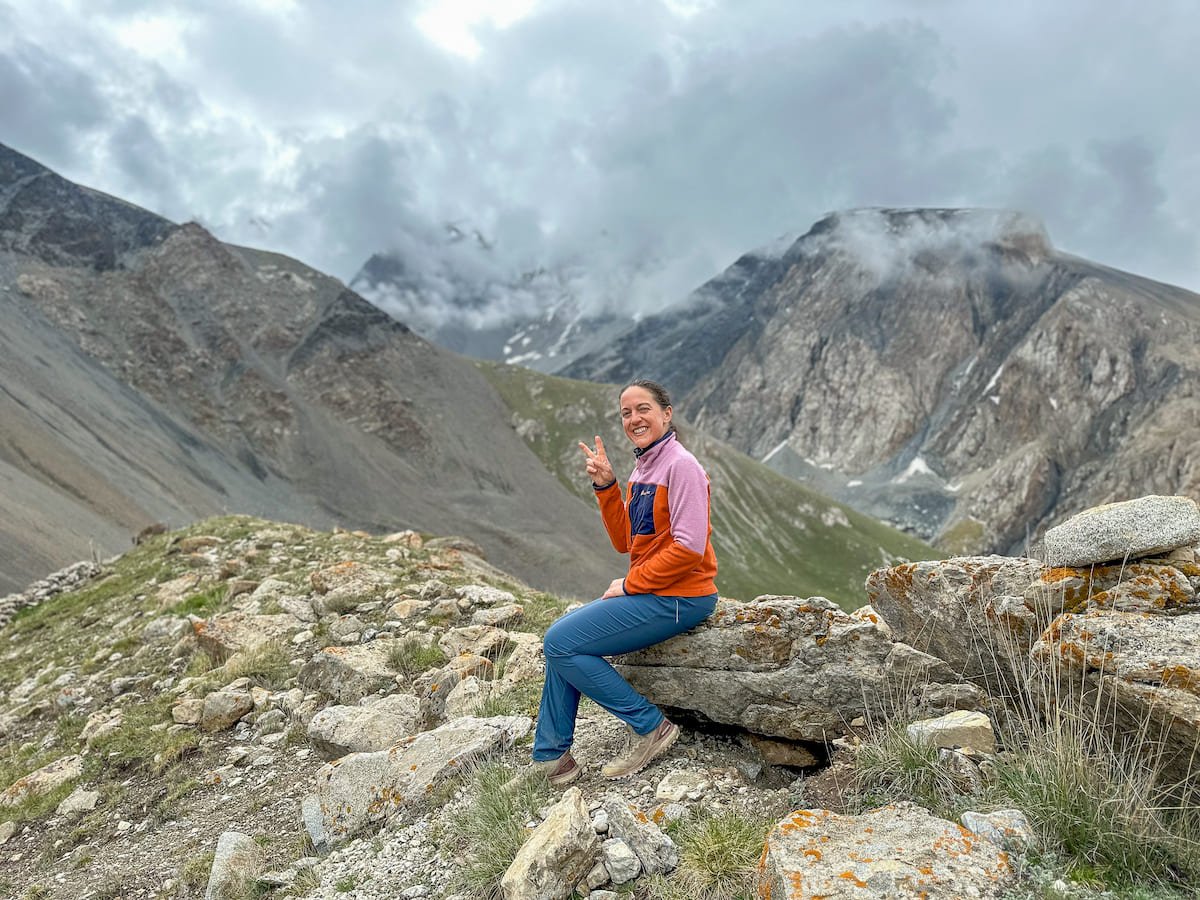
- Original photos and embedded videos (yes, even if they aren’t polished and super professional looking).
- Point of view titles, like “How I Visited Paris for $50 Per Day” vs “Cheap Things To Do In Paris.”
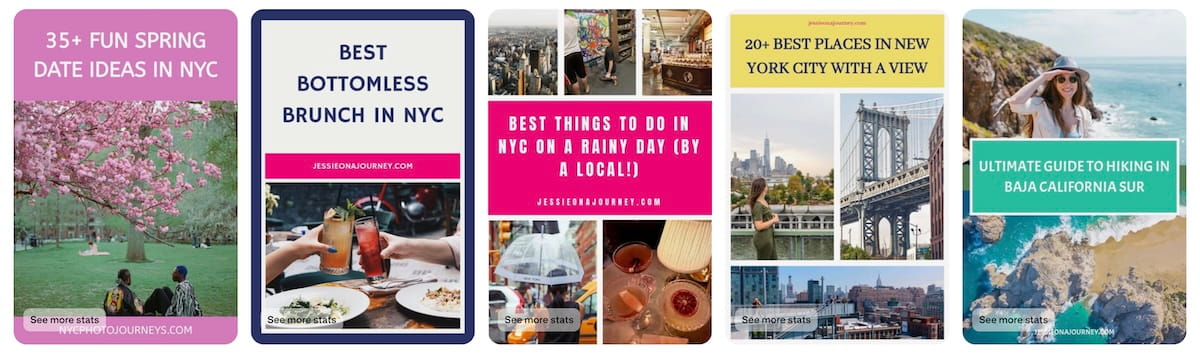
One thing I frequently do with my NYC-related content is put “From a Local” in the title to showcase my lived experience as a New Yorker.
Show Your Face
It isn’t impossible to become profitable as a faceless travel creator, but if you can show your face, it’s going to be much easier to grow because it builds a deeper level of trust.

Build An Engaged Community
We’re moving away from using our platforms as one-way megaphones and toward building micro-communities.
Whether that is through an engaged email list, membership, Patreon, Substack, or Facebook group, having 1,000 true fans is more valuable than 100,000 random visitors who leave your website the second they get their answer.
Why?
Because it’s the key to creating an algorithm-proof blogging business, as you will truly be front-of-mind for an audience who now looks to you for answers.
I also think people feel more isolated nowadays, so having a community to turn to is something people are seeking out.
🤖 Artificial Intelligence (AI)
Use AI As Your Assistant
AI should be used as an assistant, not the author.
Personally, I use AI to speed up my workflow—like feeding a podcast transcript into Gemini or ChatGPT to create an opt-in freebie cheat sheet to pair with the episode—but I never let it take full control of my content creation process.
This also goes back to my E-E-A-T 2.0 point. In the age of AI, people want to hear from other humans and learn from their own personal experiences.

Create Custom GPTs To Grow Your List
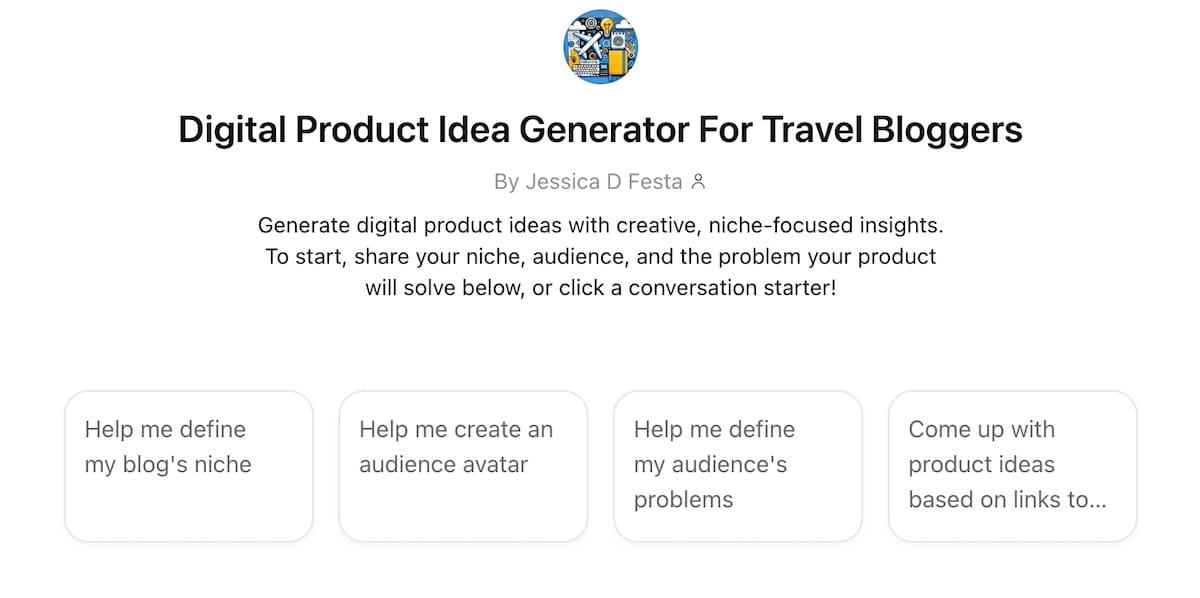
For those of you who are struggling to come up with opt-in freebie ideas or content value adds, here is one growing trend: Custom GPTs.
These are essentially mini, private versions of ChatGPT that you’ve trained or instructed to act as an expert on your specific topic.
You don’t need to know how to code to build one; you just give it instructions on how you want it to help your audience, and ChatGPT does a pretty good job of guiding you through the process.
🎁 I actually offer two GPTs in my free Travel Blogger Resource Library—a Digital Product Ideas Generator and an Opt-In Freebie Ideas Generator—in case you’d like to check out how it works.
Another idea:
If you have your own affiliate program, you can create an Affiliate Swipe Copy Generator GPT that can help your affiliates create promotional content faster and easier.
📈 Traffic & Visibility
Diversify Your Traffic Sources
Putting all of your eggs in the Google basket is highly risky and very much not recommended. You will absolutely want to diversify your traffic strategies so you’re not reliant only on one.
Personally, organic search traffic is still my top source, but I also get solid traffic from my travel newsletter, Pinterest, YouTube, Facebook, and collaborations with other creators and brands.
And these aren’t your only traffic options. For instance, I also know creators getting incredible traffic from Flipboard.
Leverage SEOx
Speaking of multiple platforms, it is also important to understand that SEO is no longer a single-platform strategy. We are moving into an era of SEOx—or Search Everywhere Optimization.
In the past, SEO essentially meant making Google and other search engines happy; but today, content discovery happens everywhere. Someone might use TikTok for travel tips, YouTube for tutorials, and ChatGPT for trip planning.
And while you don’t need to be everywhere, being active on a few key platforms offers the opportunity for increased visibility—especially as content from YouTube, TikTok, Facebook, Instagram, and so on now appear in Google search results.
Plus, when your brand appears across different ecosystems, search engines and AI tools like ChatGPT, Gemini, and Perplexity view you as a more credible, real-world entity.
This reinforces your authority back on your main site and makes it much easier to get discovered.
Repurpose Content To Save Time
Now, I know that sounds like a lot of work, but you can really streamline things with a Content Repurposing Strategy.
This way, you’re not showing up to each platform and starting from scratch, but instead are repurposing your long-form content—like a blog post or YouTube video—into short-form social content and emails.
🎁 To help with this, I added a Content Repurposing Strategy Workflow & Tracking Spreadsheet to the free Travel Blogger Resource Library.
Master AEO
Going back to AI, we also need to talk about AEO—or Answer Engine Optimization (so many optimizations 😅).
Blogging looks different in the era of AI. AI models like ChatGPT and Google’s AI Overviews don’t just rank you anymore; they summarize you. To get quoted and cited by these tools, your content really needs to be ingestible or extractable.
A few ways to do this:
- Start your sections with a concise, bolded summary that an AI model can easily grab (like TL;DR summaries).
- Use clear formatting like descriptive headings, short paragraphs, and bullet points.
Get Backlinks & Brand Mentions
This also shifts how we think about authority. Nowadays, your reputation across the internet is as important as your technical SEO, as we’re seeing a shift from just counting backlinks to also valuing unlinked mentions.
So if you’ve ever been on a podcast or been mentioned in a news article but were upset you didn’t get a backlink, the brand mention itself now tells AI that you are a trusted authority in your blog niche.

Build Verifiable E-E-A-T
Verifiable E-E-A-T is where you don’t just claim to be an expert, but there is actual proof provided.
Notes On Balancing Content Protection & AI Visibility
I want to pause here to acknowledge what I know many of you are thinking: why would I want AI, which has hurt so many blogger livelihoods, to summarize the content I’ve worked so hard to build?
Those feelings are 100% valid and you are definitely welcome to take your own approach to this. You can even partially or fully block AI bots from your site if that is what feels right to you.
The way I see it is, if AI is going to extract from the internet anyway, it’s in our best interest to make sure it’s pulling from us and citing us so that we can get people to click over to our websites.
Looking at my own GA4 dashboard, I’m seeing my ChatGPT and Gemini traffic grow—because you can actually see what pageviews are coming from these tools.
I’ve added instructions on how to view this to the 2026 Algorithm-Proof Action Plan Cheat Sheet in the free Travel Blogger Resource Library., and you can also watch this GA4 tutorial for bloggers for a walk-through on how to use the free analytics tool to grow and monetize:
Protect Yourself From AI Theft
As I mentioned earlier, the Copymight Coalition is free to join and can help you get compensated if your blog posts are used to train AI models without permission as well as for content licensing deals.
They’ve even retained the same law firm that secured a massive $1.5 billion AI-piracy settlement against Anthropic last year.
In short, they handle the heavy lifting:
- they scan your content,
- register it with the U.S. Copyright Office,
- and negotiate settlements or licensing deals on your behalf.
Once you join, you’ll give them your URL(s) and they’ll scan your last 90 days of content to look for potential enforceable copyright violations across major AI platforms.
The way they earn money is by taking a portion of any settlements secured for your infringed articles. So basically they only make money when you make money.
➡️ Click here to sign up for the Copymight Coalition and get your no obligation scan!

Build An Email List You Own
We need to talk about owning your audience—as in, building an email list.
I’ve been saying this for years, but social media platforms and search engines are rented land. If your Facebook gets hacked or Instagram locks you out of your account, you can lose everything.
On the other hand, you own your email list. Make sure you are consistently inviting people to join:
- in all of your long-form content
- in the main menu of your website
- in your social media bios
- regularly in high-converting social posts
- through creator collaborations and cross-promotions
Upgrade Your Opt-In Freebie
One strategy you’ve likely heard me talk about is growing your email list by offering an opt-in freebie—a free resource you give your audience in exchange for their email address.
In 2026, at a time when people can easily have AI summarize things for them, I would add that it is more important than ever to make sure your opt-in freebie goes above and beyond.
It shouldn’t just be a quick PDF with a few tips people can easy have ChatGPT tell them in two seconds.
Instead, aim to provide value that is not easily searchable and summarized—like the custom GPTs I mentioned above!
💸 Travel Blog Monetization
Finally, let’s talk about how this all actually turns into income.
In 2026, the most successful bloggers have moved away from relying solely on display ads and toward diversifying their revenue streams.
A few to focus on include the following:
Selling Your Own Products
In my opinion, this is a missed opportunity for many travel bloggers.
Whether you sell custom travel planning, a pre-made guide, or an online course, owning the product means you keep most of the profit and can get creative on how you market.
It’s also a way to offer your audience a human-to-human solution in the age of AI-generated filler content.

Affiliate Marketing
E-E-A-T will definitely continue to be important with this one. While 10 best lists—like 10 best family-friendly hotels in Paris—are a popular form of buyer-intent content, try also creating personal reviews and tutorials.
And always build trust by including personal experiences and original photos and videos, depending on the type of content.
For example, which of these snippets discussing an NYC food tour would you be more likely to to click?
- “This food tour features 5 stops around NYC’s West Village”
- “A major highlight of my NYC trip was a West Village Food Tour, which left me so full I had to skip dinner. My favorite spot was a bakery that’s been open for over 100 years—especially since they brought us into the kitchen to see how they make their locally-famous cinnamon buns.”
Also note that several travel affiliate platforms also include AI tools that can help you earn without extra work.
For instance, Travelpayouts—an affiliate platform that I’m also an ambassador for—has a tool called Drive that automatically optimizes your blog content in a variety of ways, from showing targeted offers to inserting recommendations and beyond.
➡️ New users can sign up with code “JESSIE” to get a $25 bonus added to their first payout!
Freelancing & UGC
Your blog and social media channels are also your portfolio. You can get paid to create content for brands, tourism boards, and publications to use on their channels through UGC partnerships and freelancing.
This revenue stream depends on your skills, not your follower count, so it’s also a good one for newer creators still building a following.
In fact, I got my start back in 2011 as a freelance writer, which helped me earn money right away, make powerful industry connections, and grow my authority through bylines in top publications.
Paid Newsletters & Memberships
For those 1,000 true fans we talked about earlier, offering a VIP experience through a paid newsletter on Substack or a private community membership is a powerful way to stabilize your monthly income.
I actually run a membership called Travel Blog Prosperity, and it’s such a fun way to really get to know my audience and give them a space to learn and collaborate while earning recurring revenue.

Brand Collaborations
My biggest tip for this is to pitch packages and long-term collaborations vs one-off sponsorships.
Not only does this create more consistent income for you, but it also builds trust with your audience, as it makes it clear that you’re promoting a brand you truly care about.
Tools To Help You Future-Proof Your Blog
Copymight Coalition. This free-to-join legal coalition helps independent creators get compensated when their content is used to train AI models without permission as well as for licensing deals with AI companies.
Travelpayouts (sign up with code “JESSIE” to get $25 added to your first payout). Earn affiliate commission by promoting top travel brands. They also have AI tools that can help you increase your passive income without extra work.
Kit (30-day free trial included). An email marketing and automation tool designed for creators, perfect for growing an engaged list, setting up sales funnels, and selling digital products. They also have a built-in Kit Commerce platform for selling digital products as well as a creator referral network to help you grow your list faster.
ThriveCart. A high-converting checkout platform that allows you to sell digital products, memberships, and courses with built-in upsells and affiliate options.
Launch Profitable Products With These Helpful Past Episodes:
- How To Write An Engaging Travel Newsletter In 20 Minutes
- Tips For Becoming A Successful Travel Vlogger
- How To Do A Blog Content Audit For More Traffic & Income
- How To Create Instagram Reels That Grow Your Email List & Income
- Tips For Coming Up With A Product Your Audience Will Love
➡️ Click here for all profitable blogging podcast episodes.
Get Notified About New Episodes
Don’t miss an episode! Subscribe to The Profitable Travel Blogger Podcast on your favorite podcast platform like Apple Podcasts, Spotify, and Amazon Music.
Prefer email? Click here to sign up for our Podcast Updates newsletter!
If you already grabbed the free Travel Blogger Resource Library, you’re already on the list to get notified. 🎉
Put Your 2026 Blogging Game Plan Into Action
To sum everything up, I think 2026 is ultimately about Authenticity, Authority, and Community.
It’s about leaning into your unique human perspective, showcasing your expertise across platforms, and building a dedicated hub for your audience that no algorithm can take away.
Remember, AI can replicate data, it cannot replicate your unique lived experiences and ability to connect, which is your advantage as a human content creator.
🎁 Don’t forget: Grab my free travel blogger resource library, which includes a 2026 Algorithm-Proof Action Plan Cheat Sheet that can help you put the tips from this guide into practice!