Selling Digital Travel Itineraries in the Age of AI: $80K+ Case Study
This post contains affiliate links, including Amazon affiliate links. If you purchase through these links, I may earn a commission at no extra cost to you. As an Amazon Associate, I earn from qualifying purchases. Thank you for your support!
When ChatGPT can plan a two-week trip in seconds, will travelers still pay for an itinerary written by a travel blogger?
The truth is, yes. Travelers are still buying itineraries, as long as yours offers something AI and free blog posts can’t.
Luckily, Katie Zweber of the travel blog Two Wandering Soles is here to help. Katie and her husband, Ben, have sold more than 2,000 digital itineraries and maps for destinations like Japan, Iceland, and Portugal, bringing in over $80,000 in sales.
In this guide, she breaks down:
- Why travelers still pay for itineraries in the age of AI
- What to keep free on your blog vs. put in your paid itinerary
- Choosing a destination that will actually sell Smart pricing for your itineraries
- Her simple tech stack for creating, selling, and delivering itineraries
- Marketing strategies that work, even with a small audience
- And more!
By the end, you’ll have a clear plan for turning your travel expertise into a digital product that sells again and again.
💻 Bonus: This episode of The Profitable Travel Blogger Podcast includes options for learning through audio, video, or a text guide below!
💡Quick tips for selling digital travel itineraries:
-Lean into what AI can’t offer: firsthand experience, your travel style, and the fact that your itinerary is human-made.
-Choose destinations you live in or visit often, so you can keep talking about them (and updating them) for years.
-Offer Day 1 of your itinerary as a free opt-in. It attracts your ideal customer and shows them the value of the full product.
🎁 Join Travelpayouts to monetize your travel recommendations. Their affiliate platform gives creators access to more than 90 travel brands in one place. New users can get a bonus of up to $100 when they sign up through my referral link — earned in stages as you hit commission milestones.
🎁 Grab my free Travel Blogger Resource Library featuring a How to Sell Paid Itineraries Cheat Sheet based on Katie’s tips! You’ll also get access to 75+ resources that can help you grow your traffic, email list, and income.
How To Sell Digital Travel Itineraries In The Age Of AI [Audio + Video]
How To Sell Digital Travel Itineraries [Step-By-Step Guide]
The following is a summary of the podcast episode sharing tips for selling digital travel itineraries. It is transcribed as best as possible, with paraphrasing included. Answers are in Katie’s words, while tips labeled “Jessie’s tip” are from me, Jessie. For the full strategy, make sure to listen to the audio or video version of the podcast above.
1) How did you get into travel blogging and selling travel itineraries?
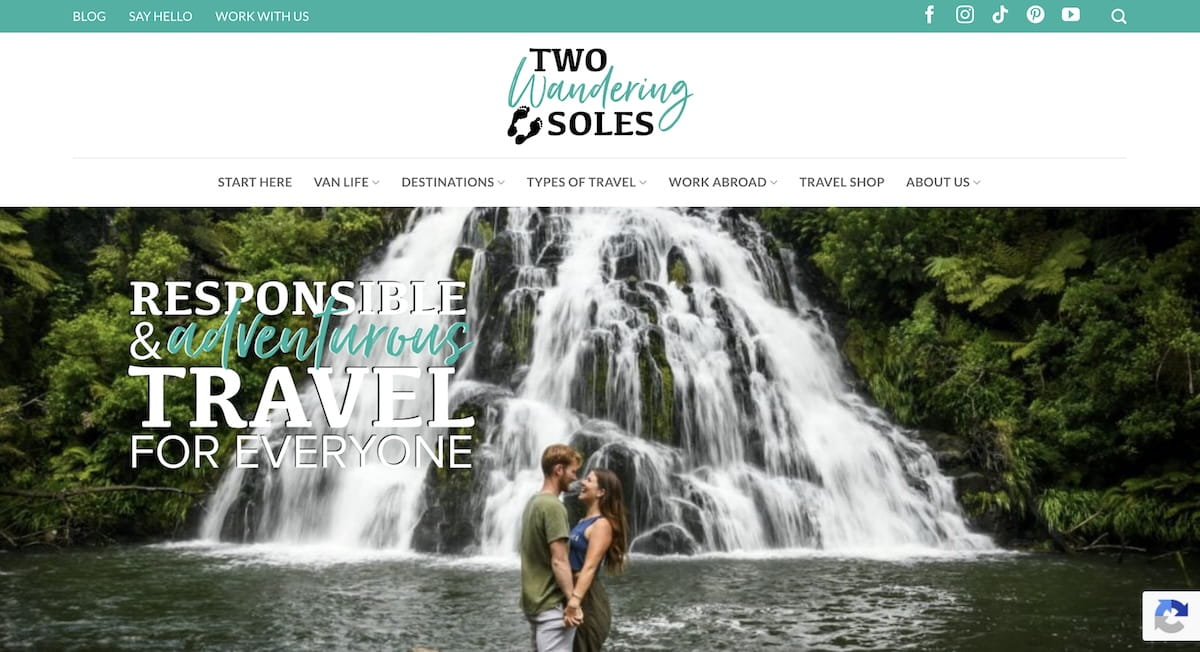
At the beginning of 2014, my husband, Ben, and I quit our jobs to travel the world. Along the way, we started documenting our trips on a blog, as everybody’s origin story goes.
My background is in journalism and graphic design, so it felt like a natural way to share what was going on with friends and family. Eventually we found out you could make money this way, and it snowballed from there.
In 2017, we became full-time creators, and we’ve been full-time on Two Wandering Soles ever since.
In 2022, we realized that it would be smart to come up with a digital product idea, since most of our income was comining from affiliates and ads.
We wanted to diversify for more stable income, especially as traffic can fluctuate. We’ve grown our digital product portfolio from there.
2) If AI can create a free itinerary in seconds, why would a traveler pay for one made by a travel blogger?
It’s a completely valid concern. Everyone is asking what AI means for their job, no matter their profession.
The truth is, AI still isn’t as good as a human. It might get there someday, but I’ve played around with AI for my own travels, and for the experiences I’m looking for, it’s just not there. I even consider it my competition, so I’ll check what it suggests for a route. Sometimes it gives me things that are totally incorrect, or even dangerous.
Your humanness is your biggest selling point. Lean into the fact that your itinerary was created by someone who has been to this place, or even lived there. AI can spit out a list of top places, but it can’t give tips from someone who has actually been on the ground.
Lean into your travel style, too. I love slow travel, hidden gems, and road trips. Some travelers will think, “I love her travel style. I want to emulate it on my trip, I trust her, and I want to support her.” AI isn’t really part of that equation.
Not everyone is your customer, and that’s okay. It’s like cookbooks. Some people will only ever use free recipes online, while others buy cookbooks all the time, even though they know they can get the information for free. They want to support their favorite creators.
Travel planning is the same. People who never paid for an itinerary 10 years ago aren’t going to pay today. But there will always be travelers who want human recommendations, because people travel for connection, not just a robot telling them where to go.
Jessie’s tip: Put “human-made” on your sales pages and in your promotions. At the top of my itineraries, I even thank buyers for supporting a human-made product. It’s a selling point, since anyone can use AI themselves.
3) How do you decide what stays free on your blog and what goes into the paid itinerary? Does free content ever cannibalize sales?
I’ve overthought this one a lot, and it has held me back from charging for things in the past, because I’d think, “I already have that for free,” or, “People can find this information for free.”
Remember that people pay for ease. A lot of travelers will pay for the same information if it’s easier to access. They want:
- All the information in one place
- No display ads
- Something they can print or access offline
- A beautifully presented package
Make your paid itinerary more specific. I don’t feel right charging for something I’m giving away for free, so my blog posts are more general, like “here are the things you can do in this area.”
In my paid itineraries, I lay out each day in order so buyers don’t have to think about how to set it up. For example: eat at this restaurant for the best fish and chips in the area, stay at this hotel, and here’s a tip for staying there.
It’s packed with personal tips and packaged so everything is right at their fingertips. They don’t have to scroll or bookmark a bunch of sites.
4) How do you decide which destinations to turn into paid itineraries?
There are a few things I consider.
Focus on bucket list trips. Most of our itineraries are road trips or bucket list trips, not a weekend in Palm Springs. These are trips people plan a full year in advance, like a road trip in Japan, where they’d otherwise spend hours researching across different websites to piece together their own itinerary. That’s where I can really be of service.
Turn your own trip planning into a product. I’m a travel nerd, and researching before a trip doesn’t feel like work to me. I find so many cool, random places that a lot of people aren’t talking about, so I figured I might as well turn the effort I’d be putting in anyway into something someone else can use.
Choose places you live in or visit regularly. This is where I’d recommend starting with your paid itineraries. If you want to sell digital products, you’ll need to talk about them often and on repeat. If you take a trip and you don’t think you’ll want to talk about it in five years, it might not be the right destination for a digital product. Itineraries also need to be updated, which is hard when you’re not there often.
Jessie’s tips:
- Listen for demand. I started selling NYC itineraries after readers of my local blog kept asking if they could pay me to plan their trip. Being a local who shares tips beyond the Empire State Building and Times Square makes my itineraries more valuable, and it’s a great way to stand out from AI.
- Show your update date. My bestseller is my NYC Christmas itinerary, which people start buying in the summer. As soon as restaurants release their holiday menus, I update it and add the new date to the sales page (e.g., “Updated for [YEAR]”). That’s a reason to buy.
5) How do you decide what to include so your itinerary stands out from free blog posts and AI?
I’m a perfectionist. I want people to download my itinerary and think, “Wow, this is packed with value,” while still finding it concise.
Don’t overwhelm buyers. One of my original itineraries had so much information that it almost felt overwhelming. Now I aim for a happy medium: accessible and skimmable, so travelers can find what they need, where they need it.
Include practical, in-the-moment tips. Add your personal notes, like what you ordered at a restaurant, or where to park when parking is confusing (with a link to the spot). People are so grateful for those little nuggets on their trip. It should feel like someone is right there with them, showing them the cool things.
Jessie’s tips:
- Focus on why it’s worth visiting. You could write endlessly about a single attraction’s history. Instead, share why it’s worth visiting and the highlights, then link out to more info for those who want it.
- Solve real pain points. In NYC, the subway is a huge fear for visitors, so my onboarding form asks if they want subway directions. For a destination like Japan, it might be renting a car and driving on the other side of the road. Logistics hold people back from booking a trip, so making them feel confident is a selling point.
- Lean into your niche. If you run a vegan travel blog or an adventure travel blog, your audience likely has extra fears or need-to-know details. Address them.
🎁 Don’t forget to grab your free How to Sell Paid Itineraries Cheat Sheet inside the Travel Blogger Resource Library! You’ll also get access to 75+ resources that can help you grow your traffic, email list, and income.
6) How did you land on your itinerary pricing, and what tips do you have for creators setting their own prices?
My itineraries range from about $15 to $37, with bundles from $50 to $75. I’ve done some experimenting over the years, and here’s what guides my pricing:
- Keep it accessible. I want people to be able to buy without a ton of thought. With a $200 itinerary, someone has to decide whether it’s worth the investment. A $17 product is much easier to click “buy” on.
- Price by length and complexity. My higher-priced itineraries, around $37, are typically three weeks long. They’re more complex, and travelers truly need more help planning them.
- Do market research. I look at what competitors charge and aim for around the same price point, not a ton more expensive or a ton cheaper.
7) Which add-ons and upgrades have helped you grow your itinerary business, and how can creators decide what to offer?
It depends on the destination.
Create products that work alone and together. For Portugal, I have a two-week road trip itinerary, but many people don’t have two weeks or are only visiting Lisbon and Porto. So I made a separate Lisbon and Porto itinerary. Those travelers don’t need to pay for the full road trip, but if someone is doing both, the two products pair well together. This strategy works for some destinations and not others.
Offer a custom map. For some itineraries, a map is the only add-on I offer, and it’s a really easy sell. Travelers love having every location pinned on one map so they can easily see all the spots they’re visiting without clicking through each link. I think it could be a great add-on for just about anyone who creates a travel itinerary.
Consider custom planning sessions. I’ve done a few, mostly for the Pacific Northwest, where I live. They aren’t as passive, so I’ve focused on pre-made products that can be downloaded right away. But custom sessions can be a great way to offer a higher-priced service and earn a lot more, if they fit your workflow.
Only offer live calls for places you know deeply. People are hiring you for local insight. Live planning sessions are a solid choice if you live somewhere people want to visit, but harder for a place you’ve only visited once.
Think beyond destinations. You can offer calls on travel-adjacent topics you’re truly an expert in, like traveling with kids or packing. Think about what your friends always ask you about.
Jessie’s tip: Selling custom itineraries can earn $1,000+ but take a lot of time. An easier option is a 45-minute planning call. Clients bring their wishlist, and I fill in gaps and rearrange things live while sharing my screen in a Google Doc. It’s time-bound, which I love. I’ve also had solo travelers book calls just for a confidence boost before their trip.
🎥 This video shares a step-by-step tutorial for launching custom itinerary planning:
8) What tech do you use to design, sell, and deliver your itineraries?
My setup is simple:
- Design: Canva. I created my own template and use it for all my itineraries, so it’s basically plug and play at this point. If you don’t love design, there are plenty of templates available.
- Sales and delivery: SendOwl. I started on Gumroad because, at the time, it had no monthly fee and just took a commission. Once I passed a certain sales threshold, the commission got too high, so I switched to SendOwl’s monthly plan. Do the math to see which platform works for you.
- Payments: Stripe, connected through SendOwl.
- Email marketing: Kit. SendOwl integrates with Kit (and most other email platforms).
Together, SendOwl and Kit handle our funnels, email marketing, and product delivery, so purchases happen without us having to do anything. SendOwl also lets you run an affiliate program and create discount codes.
🎁 Bonus: The Kit link above gets you 30 days free of their Pro plan.
9) How do you market your paid itineraries and find new customers?
To be honest, marketing is an area where I can absolutely improve. But here’s what’s working:
Build content hubs around each destination. For Japan, we have tons of free content. When people find our articles on Google, they see sales banners for the itinerary throughout.
Offer opt-in freebies for every stage of planning. I offer a packing list for nearly every destination I sell a product for, and they convert really well. But consider where someone is in the planning cycle. A person downloading a packing list may already have their route planned and not need an itinerary. Create a few different freebies so you can reach people at every stage.
Follow up with a sales sequence. Once people join my email list, they get several sales emails for that destination’s itinerary, plus a discount code if they buy within a certain amount of time. You can set this up through SendOwl.
Promote launches on social media. When I launch a new itinerary, I create a mini-series about the destination on Instagram and offer a limited-time discount code. Carousels are also working well on Instagram right now and you can get very creative with them.
Plan seasonal pushes. I’d like to get more organized with seasonal promotions for each itinerary. It’s a natural, authentic way to keep marketing a destination year after year.
Use a Day 1 preview as your freebie. I give away Day 1 of some itineraries as a free opt-in because:
- It speaks to my ideal customer: someone looking for what to do in that destination.
- It shows the value I provide, so they get Day 1 and want Days 2, 3, 4, and 5.
- There’s no extra work. The freebie is already sitting in your digital product.
Put real value into your freebies. If you put zero effort into a freebie, it won’t convert. People are less willing to give out their email than they were a few years ago, so your freebie needs to earn their trust.
Jessie’s tip: ChatGPT can create a generic checklist in seconds, so make your freebies stand out with your own expertise: your frameworks, case studies, and the specific things you did on your trip. My free NYC guide is framed as tips from a local New Yorker and only includes ideas you wouldn’t find on a top 10 list.

10) If a blogger with a smaller audience wants to launch their first paid itinerary in the next 90 days, what should they do first?
Here is the roadmap I recommend following:
Think long and hard about your destination. I’ve learned the hard way not to put a lot of effort into a product for a trip I took last summer. Choose a place you’re truly an expert on, that people always ask you about, and that you can talk about next year and the year after.
Create a freebie first. This gauges your audience’s interest. If no one downloads your freebie, the product may not align with what people want from you. And if they do download it, you have a direct line to pitch them once your product is ready.
Create the product and do a launch. Launches don’t have to be huge. If you have a social presence, post a mini-series about the destination that teases your launch, and consider offering a discount code.
Collect testimonials right away. For my last two launches, I offered around five 50%-off discount codes in exchange for an honest testimonial. Testimonials are gold, especially now that so many people are selling digital products. I use them in my sales emails going forward.
Tip: I also send post-purchase emails asking for feedback. Remind buyers they don’t need to have taken the trip to respond. Many buy a year in advance, and you don’t want to wait a year for a testimonial.
Jessie’s tip: Feedback emails are great data, too. If buyers are still confused about something, you know what to improve in your next update.
11) What sales page elements help increase conversions?
Jessie’s tips:
- Lead with benefits over features. Share what’s included, but focus on what buyers will actually get out of it.
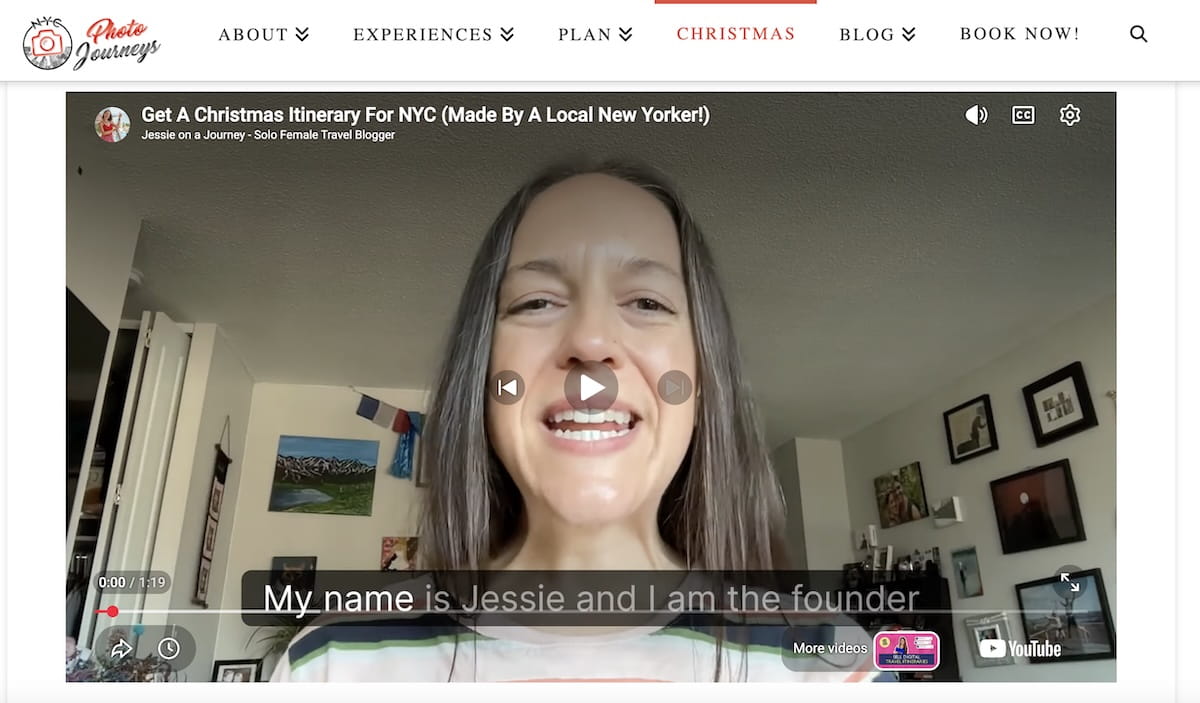
- Add a video. It doesn’t need to be cinematic. A simple talking-head video introducing yourself and why you love the destination builds trust.
- Include a mock-up. Show people what they’ll get, so they can see it’s a quality product.
Katie’s take: I have walkthrough videos for buyers. Also, testimonials have also been huge for me, because they show it’s not just me who thinks the itinerary is great.
12) How can you market your itineraries beyond your own audience?
Jessie’s tips: If you’re still building your own channels, think of collaboration as your umbrella strategy:
- Run ads to your email list. I run Meta ads to my lead magnets, which can be a budget-friendly way to get leads into your sales funnel.
- Do newsletter swaps. Offer to write a guest email for another creator in your niche while they write one for you. Here is a tutorial showing how to pitch newsletter swaps.
- Pay for promotion. If your list is too small for a swap, sponsor another creator’s newsletter or Facebook group. A smaller, engaged audience aligned with your niche often converts better than a bigger, general one.
- Try a referral network. With SparkLoop, you pay other newsletters to recommend yours, and you only pay for qualified leads. Katie believes it’s also integrated into Kit.
Katie’s take: Offer a generous affiliate commission. I created an affiliate program and offer 40% commission, which feels more than fair, since affiliates don’t have to create the product or sales page. My inbox is flooded with affiliate offers, and I tune out anyone offering 10%. Make it truly mutually beneficial. You can always lower rates for new affiliates as your program grows.
Find niche-aligned affiliates. A creator who focuses only on Washington and Oregon, even with a smaller audience, is a much better fit for my Pacific Northwest products than a big world travel website.
Give affiliates a resource package. Share access to the product, sample email copy, and pitch ideas, so promoting it feels like a lighter lift. They’ll tweak it to fit their voice, but it’s an easy way to start.
Jessie’s tip: Don’t forget to do outreach. An affiliate signup form on your website only works if people go looking for it. Research creators who cover your destination and email them an invitation, potentially with an increased commission for someone you really want. Make it a weekly habit, like sending 5 to 10 affiliate pitches every Tuesday morning.
13) Thank you so much for sharing your tips! Before we sign off, can you let everyone know where they can find you?
- TwoWanderingSoles.com (website)
- Two Wandering Soles itineraries
- @TwoWanderingSoles (Instagram)
Recommended Tools For Selling Digital Travel Itineraries
Travelpayouts. A travel affiliate platform with 90+ brands across flights, hotels, activities, tours, eSIMs, and more. New users can get a bonus of up to $100 through my referral link.
Kit (get 30 days free of their Pro Plan). The email platform Katie uses to deliver freebies and run sales sequences for her itineraries.
SparkLoop. A newsletter referral network where you only pay for qualified subscribers.
ManyChat (get 30 days free of their Pro Plan). Turns Instagram comments into DMs with a link to your itinerary freebie or sales page, making it easy to promote launches on social media.
SendOwl. The platform Katie uses to sell and deliver her itineraries, with built-in discount codes and affiliate program features.
Canva. A design tool for creating your itinerary template.
➡️ Click here for a full list of recommended tools and resources for creators.
Bonus Blog Monetization Strategies
Learn how to:
- Grow and monetize a travel blog in the age of AI
- Build wealth with irregular income
- Monetize your creator skills through freelancing
- Audit content for more traffic & income
- Grow a Patreon for recurring revenue
➡️ Click here for the full Profitable Travel Blogger Podcast episode list!

Get Notified About New Episodes
Don’t miss an episode! Subscribe to The Profitable Travel Blogger Podcast on your favorite podcast platform like Apple Podcasts, Spotify, and Amazon Music.
Prefer email? Click here to sign up for our Podcast Updates newsletter!
If you already grabbed the free Travel Blogger Resource Library, you’re already on the list to get notified. 🎉
Your Digital Travel Itinerary Game Plan
To help you implement what you’ve learned, here is your 5-step action plan for launching and selling digital travel itineraries:
1) Choose a destination you can talk about for years. Pick a bucket list destination you live in, visit often, or know better than almost anyone, so you can keep promoting and updating it.
2) Make your paid itinerary more than your blog. Lay out each day in order, add personal tips that AI can’t give, solve logistical pain points, and package it all in one skimmable, ad-free place. Highlight that it’s human-made.
3) Price it for an easy yes. Research competitors, keep it accessible, and charge more for longer, more complex trips. Add bundles or pairable products where they make sense.
4) Build a simple sales system. Design in Canva, sell through a platform like SendOwl, and connect it to Kit so freebies, sales emails, and delivery run on autopilot.
5) Market it on repeat. Offer a valuable freebie (like a Day 1 preview), launch with a mini-series and discount, trade discount codes for testimonials, and grow through affiliates offering a generous commission.
🎉 Don’t forget: You can grab my free How to Sell Paid Itineraries Cheat Sheet inside the Travel Blogger Resource Library, which also includes 75+ resources for growing a profitable blogging business.
➡️ Click here to access the free Travel Blogger Resource Library!
Are you planning to sell digital travel itineraries?