
Build Systems In Your Blog’s Backend For Sustainable Revenue
This post contains affiliate links, including Amazon affiliate links. If you purchase through these links, I may earn a commission at no extra cost to you. As an Amazon Associate, I earn from qualifying purchases. Thank you for your support!
Building backend systems for your travel blog is the fastest way to increase your profits while spending less time tied to your laptop.
As creators, it’s exhausting trying to keep up with 101 different tasks and projects while feeling stuck in a constant cycle of overwhelm.
To run a sustainable business efficiently, you need to shift to a CEO mindset and construct an operational foundation that works for you even when you’re offline.
To help, travel content strategist Laura Haley shares the exact roadmap she uses to organize workflows and drive growth for mega-influencers with over 1 million followers.
In this guide, Laura breaks down:
- The important first steps to transition from a content creator to a business owner
- How to audit your schedule to eliminate time-wasting tasks and protect your creative joy
- A strategic approach to choosing high-converting lead magnets for steady list growth
- Tips for setting up an Airtable or spreadsheet CRM for predictable income growth
- The easy way to build a sustainable newsletter template you can batch and reuse for years
- And more!
Plus, you’ll get a behind-the-scenes look at how to prioritize your blogging to-do list, avoid shiny object syndrome, and set up a weekly business audit that drives maximum ROI.
💻 Bonus: This episode of The Profitable Travel Blogger Podcast includes options for learning through audio, video, or a text guide below!
💡Quick tips for systemizing your blog:
-Put your shiny object ideas in a “parking lot” dashboard or Google Sheets to let them sit for a few days before disrupting your core goals.
-Look at your monthly recurring revenue versus one-off gigs to prioritize and capitalize on predictable income over sporadic payouts.
-Audit your client “time to delivery” once a month to ensure a lucrative project isn’t secretly destroying your profit margins by taking too long.
🎁 Subscribe to my VIP Opportunities for Travel Bloggers Newsletter to get five lucrative leads sent to your inbox every Monday at 8am ET. Bonus: Claim one past issue of your choice as a free sample.
🎁 Grab my free Travel Blogger Resource Library featuring a Systemize Your Travel Blog Cheat Sheet based on Michael’s tips! You’ll also get access to 75+ resources that can help you grow your traffic, email list, and income.
How To Systemize Your Travel Blog [Audio + Video]
Tips For Creating Repeatable Processes As A Blogger [Step-By-Step Guide]
The following is a summary of the podcast episode sharing tips for adding organized workflows to your creator business. It is transcribed as best as possible, with paraphrasing included. For the full strategy, make sure to listen to the audio or video version of the podcast above.
1) To start, can you share more about yourself, your business, and how you became a travel content strategist?
I am the girl on the other side of travel influencer marketing, and it honestly happened completely by accident.
Back in 2022, I signed up to receive a prominent travel influencer’s newsletter because I loved her stories and wanted to know how she built her life. When it hit my inbox, I was shocked to find it was just a massive paragraph in Times New Roman font—with zero photos.
I knew she had stunning imagery from all over the world, so I replied to the email with a direct critique:
“I know you take pride in your work and are always working to improve. Can I write your newsletters for you?”
She immediately said yes, and I have been working with her behind the scenes to this day.
Managing the backend of her business opened my eyes to a massive gap in the industry. I realized that if a mega-creator with a giant audience lacked basic email infrastructure, there had to be thousands of other bloggers drowning in the same technical gap. That single cold email completely changed my trajectory.
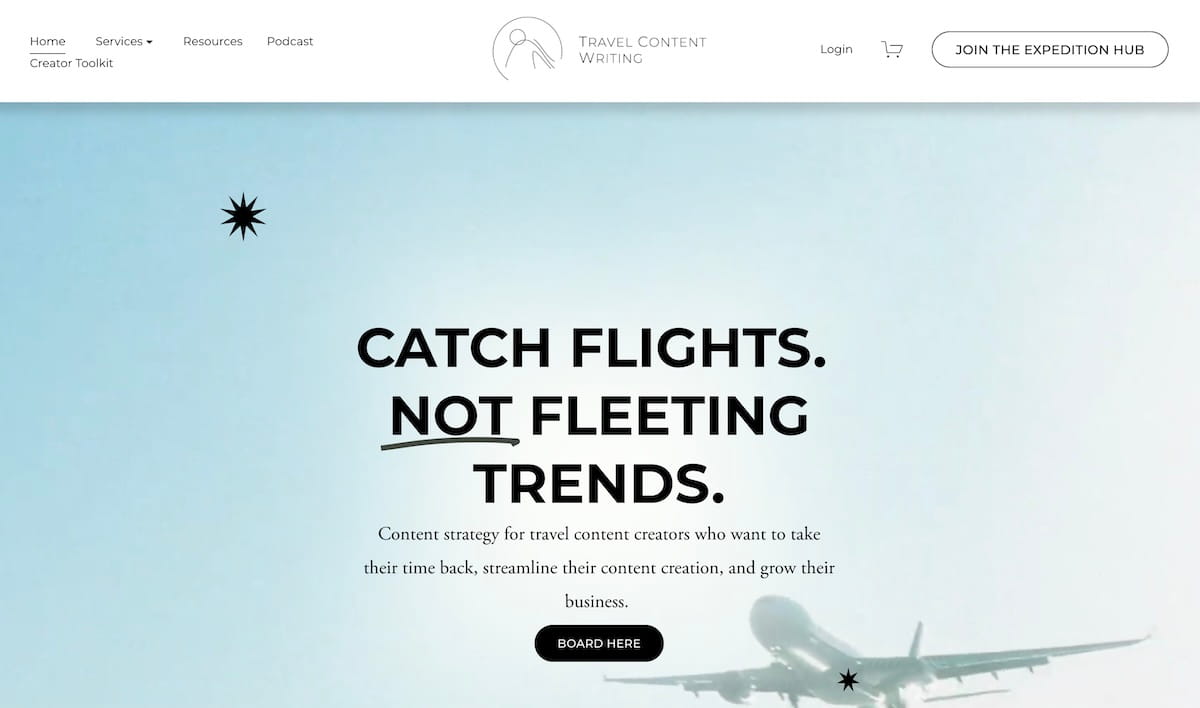
Today, through my business Travel Content Writing and The Travel Creator Podcast, I help travel creators stop chasing endless trends and start building sustainable operations that generate income even when they are completely offline.
2) Can you share more about what it means to go from thinking like a creator to thinking like a CEO and what the first step with this process would be?
The core difference comes down to how you view your content. When you are just a creator, you are the business; if you stop working, your income completely stops.
A CEO views content as simply one tool used to run a larger business ecosystem.
Moving from a fly-by-the-seat-of-your-pants creator to a structured business owner requires five foundational shifts:
The Content Shift: Stop trying to reinvent the wheel. A CEO reuses and repurposes their top-performing pieces because constant content creation is no longer your most important job.
The Revenue Shift: You must know your numbers inside and out. Analyze exactly what is coming in, what is going out, which low-lift revenue streams you can introduce, and which tasks are dragging down your profit margins.
The Time & Enjoyment Audit: Track every single task you perform on a daily or weekly basis. Identify if a chore is truly within your zone of genius, if it can be outsourced with simple instructions, and whether it actually brings you personal joy.
The Systems Shift: Standardize your daily operations. Take note of your recurring tasks and write down the exact steps required to complete them so they can eventually be automated or delegated.
The Identity Shift: You have to actively choose to run your business like a real business. When you work for yourself, it’s easy to push a deadline back to tomorrow. If your old boss told you a project was due on Thursday, you would get it done. You have to bring that same discipline and professional boundaries to yourself.
3) You see the backend of big creator businesses. What is the most common task travel creators waste hours each week on that adds zero value to their bottom line?
It isn’t one single task; it’s the collective trap of creators stepping out of their zone of genius and doing basic intern work inside their own companies.
My advice: avoid the intern trap.
Creators waste dozens of hours every week manually writing social media captions, handling cold pitch follow-ups, and manually repurposing graphics.
Anyone can write your next Instagram caption. Spending 40 hours a week on tiny, menial administrative tasks will completely stall your financial growth.
Your time is far better spent on high-level strategy—like pitching brand deals, mapping out digital products, or hosting list-building events like a free challenge.

4) Creators have 101 different tasks and projects to get done, which often leads to overwhelm. How can listeners start prioritizing and organizing their to-do list?
To break free from operational paralysis, I highly recommend reading the book Essentialism: The Disciplined Pursuit of Less by Greg McKeown. It teaches you how to work less, but better.
When you are staring at a massive, overwhelming mountain of projects, use these frameworks to regain absolute clarity:
Align tasks to your current financial goal: If your specific goal this quarter is to make $10,000 from your blog, every single daily task must directly move the needle toward that number. If a project doesn’t explicitly drive that goal, it is a distraction.
Use the “Idea Parking Lot” strategy: As creative people, we get shiny object syndrome constantly. When a fun new idea pops into your head, do not drop everything to build it. Throw it into a dedicated “Parking Lot” list inside a project management platform like Asana or a simple Google Sheet. Let it sit there for a few days; often, you’ll realize it was just a temporary distraction.
Create an energy-based schedule: Identify the time of day when your brain functions at its highest level. Do your hardest, most intense strategic work—like writing detailed, SEO-optimized content—during those peak hours. Save easy, low-energy tasks like editing photos or replying to emails for later in the day.
5) As someone who sees the backend of big creator businesses, are there certain revenue streams that tend to work well for travel creators—especially in terms of systemizing?
Digital products like pre-made travel itineraries and online courses are some of the easiest revenue streams to systemization because they allow you to separate your time from your income.
With a digital product, you:
- Spend the necessary hours upfront creating your premium digital asset.
- Once the sales page, delivery funnel, and automated email welcome sequence is built in your backend, your only job is to promote it. The system handles the rest while you sleep!
💡Tip: Be cautious about launching high-maintence communities like memberships and group trips. While they can be very profitable, they require a massive, ongoing exchange of your personal time.
If your ultimate CEO goal is to drink a margarita on the beach on a Tuesday at 1:00 PM without checking your phone, it will be better to double down on evergreen digital products.
🎥 Need help deciding what to sell? This video tutorial shares how to come up with the perfect digital product:
6) Another important part of running a travel blog business is building an email list—which is an asset you own that isn’t algorithm dependent. As someone who recommends lead magnets, why do you think these are so powerful for list growth, and how can creators choose a high-converting format and topic?
Lead magnets are a powerful bridge to business growth because they establish instant trust. In today’s digital landscape, a reader requires roughly 27 distinct touchpoints before they feel comfortable buying from you.
An email list allows you to hit those touchpoints automatically. To design a lead magnet that actually converts, look at your existing data:
Audit audience questions: Stop guessing what your audience wants based on a gut feeling. Look at the exact questions people repeatedly ask you in your comments, emails, and direct messages. Those exact pain points are your next lead magnet topics.
Mine your top-performing content: Look at your analytics to find your highest-traffic blog posts. Because these posts already have steady traffic, create a deeper, highly actionable resource related to that exact topic to easily capture those readers’ email addresses.
Provide a quick win: Do not send your subscribers a 60-page PDF; nobody has the time to read it, and it creates friction. Instead, give them an immediate, high-value cheat sheet, template, or spreadsheet that saves them time right away.
🎁 Don’t forget to grab your free Systemize Your Travel Blog Cheat Sheet inside the Travel Blogger Resource Library! You’ll also get access to 75+ resources that can help you grow your traffic, email list, and income.
7) It’s great to build a list, but what really matters is what creators actually do with that list. How can listeners get started sending newsletters in a way that is sustainable and builds their business?
To stay consistent with email, reframe your newsletter as a casual message to a trusted friend.
Step away from corporate, stiff language and treat it like a personal update. Here’s how:
Create a 5-section content bank: Open a Google Doc and establish 3 to 5 permanent topic pillars you could talk about forever that relate to your blog niche, like your favorite travel hacks, cultural experiences, or luxury stays.
Whenever you think of a cool tip, drop it into this bank. When it’s time to write, simply pull from your pre-written database.
Follow the 80/20 rule: Your newsletter should consist of 80% repurposed content you’ve already created and only 20% brand-new updates. Instead of digging through your inbox for old newsletters, use your blog as your single source of truth.
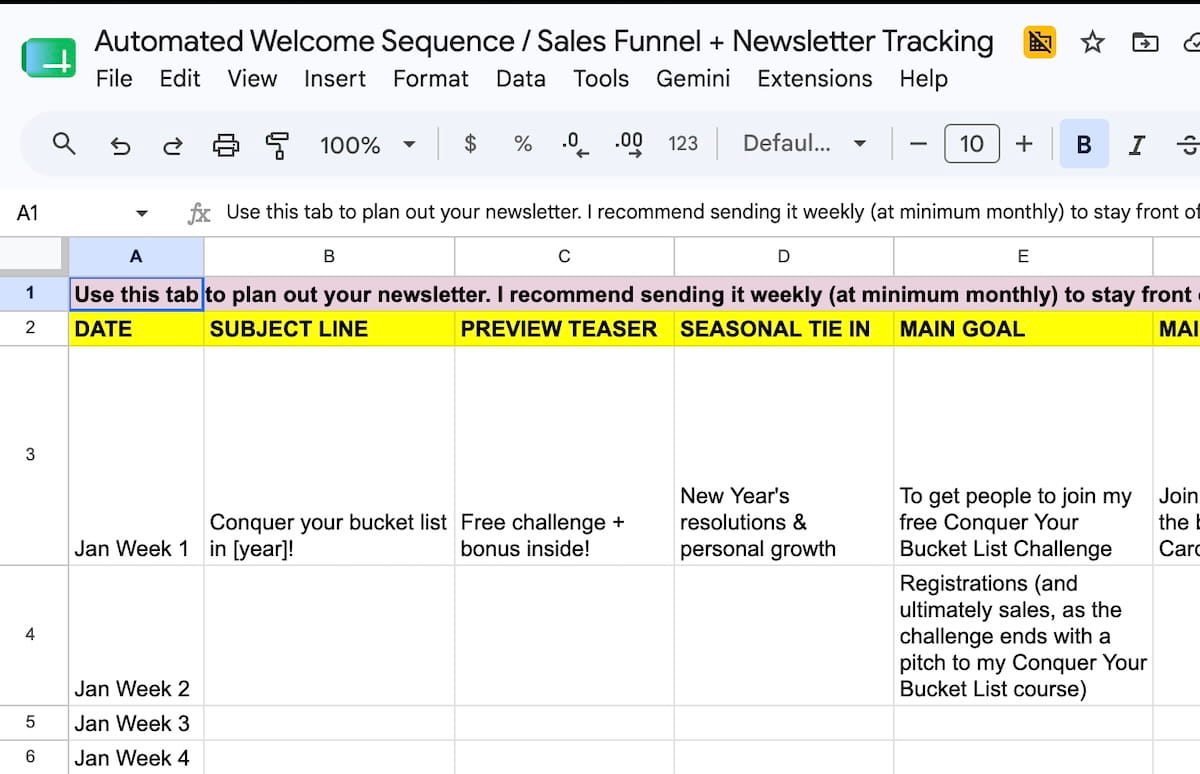
I built a 52-week rotation for a creator using a single master document packed with a year’s worth of evergreen tips. The 80% evergreen content stays exactly the same year after year—we are on year two of sending the exact same broadcast rotation.
To keep it feeling fresh, the creator simply steps in once a week to update the remaining 20%—which is just a quick personal update about where she is and what she’s up to that week as well as links to her most recent blog posts for increased traffic.
Pace yourself to avoid burnout: If you haven’t emailed your list in months, do not commit to a weekly schedule. Start by sending a valuable email twice a month to build the operational muscle before increasing your frequency.
8) How does having a Customer Relationship Management (CRM) allow a creator to better predict their income? How should they set this up?
Operating without a CRM means you are leaving thousands of dollars on the table. When your pitches, follow-ups, and relationship histories live entirely inside your head, your income becomes more unpredictable.
A CRM transforms your inbox from a chaotic filing cabinet into a proactive sales pipeline. Here are some tips to implement one:
Keep your tech stack simple: A CRM doesn’t need to be expensive or overly complicated. If you love a clean spreadsheet, use a free Google Sheet. If you want advanced automation that automatically calculates your math, use Airtable. The most important thing is that you actually use it.
Create your home base: You’ll want to have some type of umbrella home base for your business, with folders and spreadsheets to organize each project.
Create your organizational assets: For instance, if you work with brands, you’ll want to create a Brand Outreach spreadsheet. Your columns might be something like:
- Brand Name
- Contact Person
- Deal Status (Pitch Sent, Pending, Approved)
- Follow-Up Date
- Potential Deal Value.
💡Tip: Focus on warm leads first: Having a clear tracking system allows you to look back at your data and see exactly who you partnered with last October. Because data shows past clients are 5 to 12 times more likely to work with you again than a cold lead, you can use your CRM to systematically pitch repeat business and stabilize your yearly income.
9) Most creators are operating with limited budgets. How can they set up systems while keeping costs as low as possible? Are there times when splurging on a pricier tool is worth it?
My baseline philosophy is simple: be anti-another-login.
Do not sign up for an expensive software platform just because you saw a beautiful screenshot of it on social media. Instead:
Respect your brain: If your brain naturally understands basic Google Sheets, do not force yourself to become a complex Notion person. You will not stay consistent with a tool that goes against your natural workflow.
💡Tip: Many bloggers already pay for Google Workspace, which comes with a lot of tools like Gemini, Google Drive, and Google Meet.
Splurge on humans over software: When you are finally ready to invest money back into your business, splurge on human help rather than software features.
Hiring a virtual assistant (VA) for even just 5 hours a month to handle the tasks you absolutely detest or struggle with will completely free up your creative energy. I also recommend hiring support right before you think you are completely ready!
10) When a CEO blogger audits their business, what are 3-5 Key Performance Indicators (KPIs) they should actually be looking at? And how often should they be doing an audit?
A true CEO blocks out non-negotiable time on their calendar to evaluate their high-level business analytics. I recommend setting up a fun, weekly routine—like heading to your favorite coffee shop every Friday morning to check your operational dashboard.
During your monthly and weekly audits, keep a strict eye on these three metrics:
Monthly Recurring Revenue vs. One-Off Income: Track exactly how much of your money is predictable cash flow (like affiliate payouts or digital product funnels) versus sporadic payments like one-off brand deals. Focus your energy on growing the recurring side.
Email List Growth Velocity: Constantly monitor where your new email subscribers are coming from. Your email list represents your highest-intent buyers, so prioritize traffic strategies and creative collaborations—like newsletter swaps or podcast guest spots—that directly feed your subscriber pipeline.
Time to Delivery Ratio: Evaluate how long a client project actually takes you to complete from start to finish. If you accepted a brand sponsorship because it paid well, but it ultimately took you 10 grueling hours of manual edits and back-and-forth emails to deliver, your profit margin was completely destroyed. Use this data to adjust your future pricing or delete the service entirely.

11) Thank you so much for sharing your tips! Where can readers find you?
- TravelContentWriting.com (website)
- The Travel Creator Podcast
- @TravelContentWriting (Instagram)
Recommended Tools For Creating Blog Business Systems
Kit (30-day free trial of their Creator Plan included, no credit card required). This platform manages your entire subscriber lifecycle by allowing you to sell digital products, run a paid newsletter subscription, set up custom landing pages, and tap into a built-in recommendation network to grow your audience through other creators.
Essentialism: The Disciplined Pursuit of Less by Greg McKeown. This book offers a powerful framework for helping creators cut out the operational noise so they can focus entirely on the few tasks that actually drive growth.
Zapier. This software connects your different apps together, meaning it can automatically copy a new lead from an email form and paste it into your sponsor tracker without manual data entry.
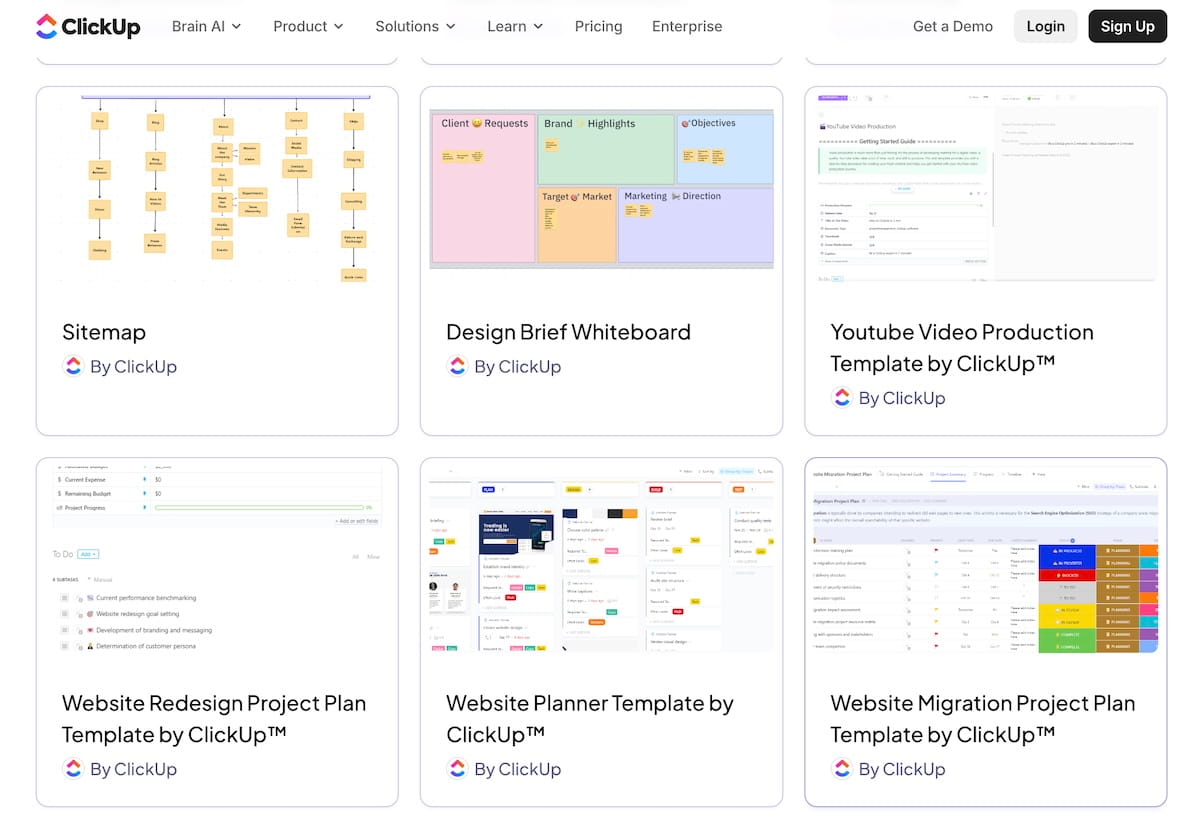
Project management tools (ClickUp, Asana, etc). Unlike databases, these platforms are designed specifically for daily action items, allowing you to map out your editorial calendar, check off writing tasks, and store your step-by-step operating procedures.
Airtable. Unlike a project manager, this is a relational database designed to store structured business data, making it ideal for building a custom sponsor CRM to track brand contracts, campaign rates, and past warm leads.
Google Sheets. This is a free spreadsheet tool useful for keeping a centralized list of evergreen content ideas, formulas for tracking monthly ad revenue, and simple content banks.
➡️ Click here for a full list of recommended tools and resources for creators.
Bonus Blog Scaling Strategies:
Learn how to:
- Create a streamlined blogging schedule in 3 steps
- Turn 1 piece of content into 10+ quickly
- Write your travel newsletter in 20 minutes or less
- Audit your blog content for more pageviews and profits
- Use a streamlined podcast workflow to save time
➡️ Click here for the full Profitable Travel Blogger Podcast episode list!

Get Notified About New Episodes
Don’t miss an episode! Subscribe to The Profitable Travel Blogger Podcast on your favorite podcast platform like Apple Podcasts, Spotify, and Amazon Music.
Prefer email? Click here to sign up for our Podcast Updates newsletter!
If you already grabbed the free Travel Blogger Resource Library, you’re already on the list to get notified. 🎉
Your Streamlined Blog Backend Game Plan
To help you implement what you’ve learned, here is your 5-step action plan for organizing your blog business systems:
1) Audit your current tasks. Before touching any software, track your daily activities for one week. Toggl Track can help with this and offers a generous free plan. Identify the repetitive, low-value administrative tasks and manual data entry that are currently eating up your time so you know exactly what needs to be systemized or automated first.
2) Set up a “Parking Lot” to fight shiny object syndrome. Stop dropping everything to build every creative idea or PDF that pops into your head. Create a dedicated space—like a “maybe one day” board in Asana or a simple list—to safely park new ideas. Commit to the specific business goals you’ve already set for the quarter, and let those parked ideas sit until you have the disciplined time to revisit them.
3) Map out your repeatable workflows into SOPs. Look at the essential tasks you must keep doing and write down the exact steps required to complete them. You can use a process-capturing Chrome extension like Scribe to watch you work and automatically generate Standard Operating Procedures (SOPs). Documenting these steps builds the necessary foundation that allows you to easily hand tasks off to a VA down the road.
4) Build your 52-week newsletter calendar. Move away from writing weekly broadcasts completely from scratch. Set up a master document containing a year’s worth of evergreen tips and stories pulled directly from your existing top-performing blog posts, leaving just a short 5-sentence section to manually update with your latest personal news each week.
5) Track your numbers to identify predictable vs. active income. Set up a central tracking sheet or Airtable base to audit your business metrics monthly. List your hands-off recurring income (like digital product funnels) alongside a CRM log to track active relationships (like sponsorships, affiliates, and warm leads). This lets you see at a glance which streams are dragging down your time versus which ones are building a predictable bottom line.
🎉 Don’t forget: You can grab my free Systemize Your Travel Blog Cheat Sheet inside the Travel Blogger Resource Library, which also includes 75+ resources for growing a profitable blogging business.
➡️ Click here to access the free Travel Blogger Resource Library!