How To Grow A Blog Without SEO: My HCU Pivot To Authenticity
This post contains affiliate links, including Amazon affiliate links. If you purchase through these links, I may earn a commission at no extra cost to you. As an Amazon Associate, I earn from qualifying purchases. Thank you for your support!
Worried about the latest Google algorithm update?
Good news: it’s possible to grow your blog without obsessing over Search Engine Optimization (SEO).
Yes, SEO can bring long-term traffic. And there are many SEO best practices that you should keep in mind—like having a speedy and secure website, weaving in your own expertise and experience to build trust, and optimizing for search intent.
That said, it is possible to grow and scale a travel blog without over-analyzing keywords or chasing trends, and instead focusing on creating content that is truly authentic to you and serves your audience.
Melissa Byron of A Solo Woman Traveling is proof of this. After being impacted by the Google Helpful Content Update (HCU), she pivoted from SEO-focused posts to reader-first storytelling and aligned offers. In a way, HCU ended up helping her create a more joyful, sustainable business!
Today, Melissa will share:
- What blogging authentically actually means
- How to plan your blog posts without doing keyword research
- Tips for getting eyes on your content (Google and beyond)
- How to properly align your posts with your audience for increased profits
- And more!
💻 Bonus: This episode of The Profitable Travel Blogger Podcast includes options for learning through audio, video, or a text guide below!
💡Quick authentic blogging tips:
-Define the reader’s identity immediately so your audience recognizes themselves in your content and knows it isn’t a generic guide.
-Establish expertise early in your introductions by explaining the why behind your choices, not just the what.
-Diversify your traffic sources and launch your own paid products and services to create more reliable income that isn’t dependent on pageviews.
🎁 Sign up for the free 5-day Travel Blog Prosperity Open House, which gets you access to daily live workshops and coaching calls—replays included—as well as our private Facebook group to ask questions in a safe and nurturing environment.
🎁 Grab my free Travel Blogger Resource Library featuring an Authentic Blogging Cheat Sheet based on Melissa’s tips! You’ll also get access to 75+ resources that can help you grow your traffic, email list, and income.
Authentic Blogging Beyond SEO [Audio + Video]
Grow Your Blog Without SEO Through Authentic Content [Guide]
The following is a summary of the podcast episode sharing tips for scaling your blog through authentic storytelling. It is transcribed as best as possible, with paraphrasing included. For the full strategy, make sure to listen to the audio or video version of the podcast above.
1) What made you shift from writing for algorithms to more authentic blogging?
I’m the founder of A Solo Woman Traveling, a brand I built after traveling solo to over 40 countries.
For a long time, I wrote strictly for robots, algorithms, and SEO optimization—which actually did help me grow my pageviews.
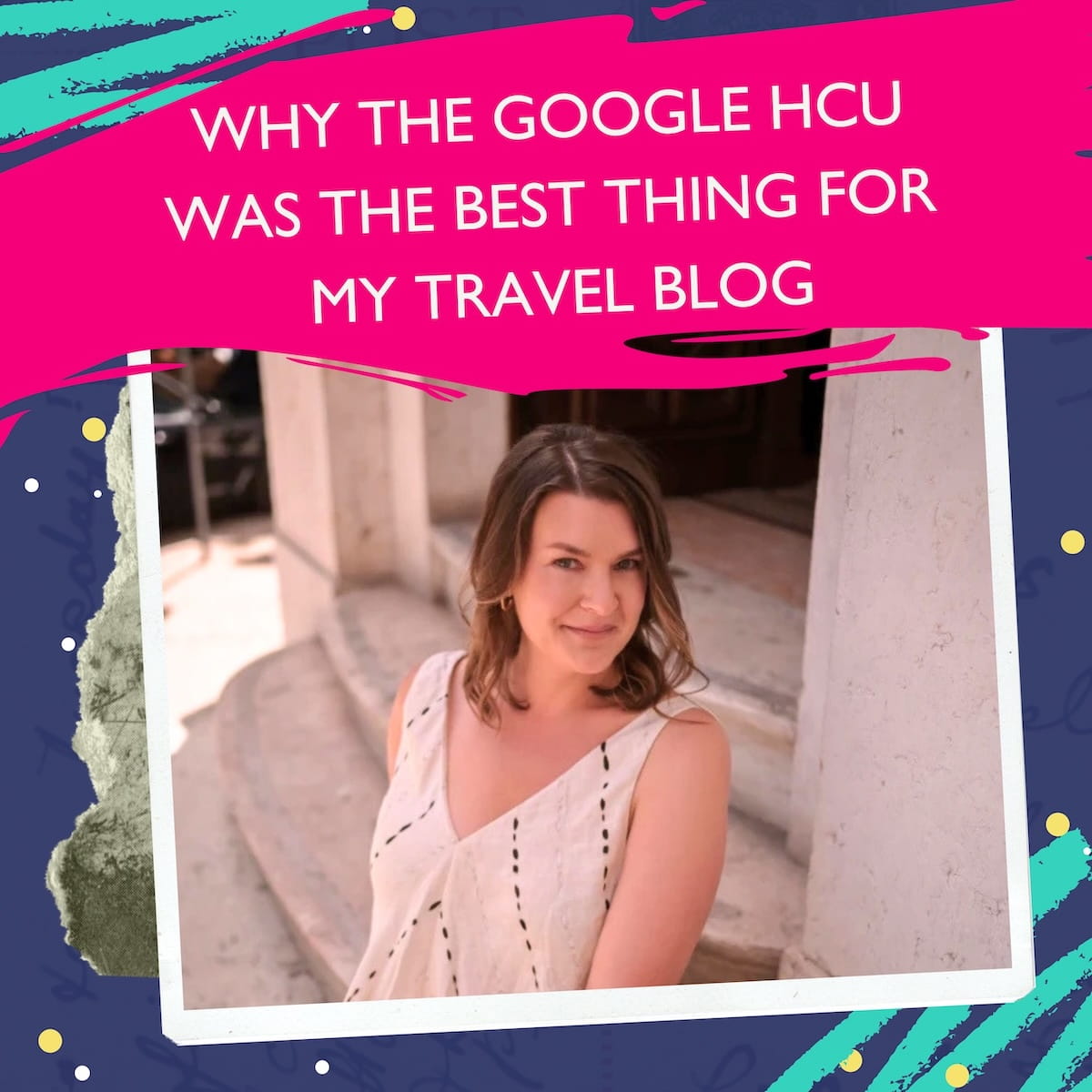
That is, until the 2023 Google Helpful Content Update (HCU) hit and I lost a massive amount of traffic. Luckily, it was actually a blessing in disguise because it forced me to stop writing for Google and start writing for myself and my readers again.
The shift has been incredibly freeing. I’ve moved away from a traffic-dependent model to a search-proof business that Google can’t destroy.
I’ve also seen a huge increase in profit by focusing on my own offers. Launching multi-day group tours in particular allows me to earn much more even with a smaller but engaged audience.
2) The word “authenticity” gets thrown around a lot to the point where I think it can be confusing. Can you explain what it means in a business context, and why so many bloggers misunderstand it?
Authenticity is really about alignment, clarity, and honesty. Many bloggers misunderstand it by trying to cover everything for everyone, which results in generic content that blends in.
Authenticity isn’t just being nice, but about having a clear opinion and sharing the heart behind your brand.
True authenticity in blogging means:
Defining a specific identity: I write for a very specific reader so they recognize themselves in my work immediately.
Leading with opinions: I am clear about who will love a destination and who probably won’t, rather than trying to please everyone.
Sharing lived experience: I focus on the honest context of a trip—including personal trade-offs, mistakes made, and what is skippable—rather than just checking SEO boxes. This helps people relate to me on a human-level too, and makes it more likely that they’ll join my community through my email list, Facebook group, or group tours.

3) How do you go about creating your content plan if you don’t do keyword research or intense SEO optimization?
My content planning is now driven by reader intent and logic rather than just chasing high keyword volume.
I want every piece of content to serve a specific purpose for my business. My process looks like this:
The flow test: If I start writing a topic and it feels like a chore or requires hours of generic research, I scrap it. If the words don’t flow, it isn’t aligned with my true expertise. Building on this, the content should sound like me when I read it back.
Content purpose: I ensure the topic aligns with my actual expertise and passion so that the writing feels effortless. It’s almost like talking to a friend who enjoys the same things as you. I want readers to feel like my tips are doable, and see their travel style in mine.
Offer alignment: I map out content that naturally leads people into my specific products, like my group tours or personalized travel planning services.
4) How do you go about creating your outlines and deciding what to include if you don’t optimize for SEO? Do you do any keyword research?
I’ve ditched the “skyscraper” method where you create content that is longer or includes more list items than the others ranking. In fact, I no longer analyze top-ranking posts to decide what to include at all.
Instead, I build my outlines based on my own lived experience and what I know a traveler actually needs to stay safe and have a great time.
As for my workflow, it involves:
Lived experience outlines: While in the past I tried to include every possible option, today I build my structures based on my actual trip and the real-world choices I made. This creates value that AI summaries simply can’t replicate—at least not with authenticity. Even when AI cites me, readers are more likely to click through because they want the full story from someone whose style they actually trust.
Direct answers: To successfully blog in the AI era, I look at the core question the reader has and make sure I am providing a clear, fluff-free solution in the very first paragraph. This can also help your content get cited by AI platforms like AI Overviews and ChatGPT, as it makes the answer easier to extract.
Minimal keyword research: While I might still look at search terms to understand how people phrase their problems or what people are searching, I never let a keyword dictate my structure or what I include. I’ve also quit adding secondary keywords entirely and just write naturally.
Ditching the checkpoints: I don’t care about hitting a specific word count or anything else on a typical SEO checklist. Again, I write from a place of genuine sharing about the things I truly did and provide my honest opinions and reasoning behind why I picked the hotels and activities I chose.

5) Content can be a powerful tool for growing our business profits. How do you go about monetizing your content, and how do you balance promotions with staying authentic?
I’ve evolved beyond the blog because growth can’t rely on traffic and ads alone anymore. I focus on relationship-driven outcomes, where my content naturally leads to high-ticket offers like group tours or relevant affiliates.
To balance promotions and authenticity when monetizing content, I recommend:
Delivery of value first: I only ask for engagement or a sale after I have delivered real value and established my authority through helpful content.
Strategic alignment: I only pitch an offer when it feels like the most natural next step for the reader’s specific journey. For instance, if I’m writing a guide to a destination I have a tour in, I’ll let the reader know that I lead tours there. I won’t awkwardly force the promotion.
Authenticity as a sales tool: Because I share unfiltered, sometimes critical opinions, my audience trusts me much more when I do recommend a service or a trip. They can see I’m not just saying something is great to promote affiliate links.
🎁 Don’t forget to grab your free Authentic Blogging Cheat Sheet inside the Travel Blogger Resource Library! You’ll also get access to 75+ resources that can help you grow your traffic, email list, and income.
6) How can a blogger tell when their content or offers are misaligned with their real expertise or audience?
The biggest indicator is friction in the creation process. If you are staring at a blank screen or you feel like you have to research a topic for hours just to have something to say, you are likely out of alignment with your actual experience.
Other signs of misalignment include:
Hiding your unique traits: If you are avoiding the parts of your life that shape how you travel, you aren’t fully showing up. In my blogging business, this meant sharing more about my age and relationship status, which helped people relate to me.
Interchangeable voice: If someone could swap your blog name with a competitor’s and the post would still make sense, your voice is too safe and neutral.
Low engagement: If you are getting traffic but no one is following you or working with you, your content isn’t reflecting real experience or clear values.

7) If someone listening feels stuck creating content that gets seen but does not convert, what is the first practical step they should take to realign their business?
The first step is to perform an identity audit and ask: Who is this site actually for—and would that person recognize themselves immediately?
You need to move away from trying to be liked by everyone and toward being useful to someone specific.
To do this, I recommend you:
Audit your intros: Rewrite them to establish your expertise early by explaining the why behind your choices, not just the what. For instance, who is the post for, what kind of experience does it cover, and why did you choose it?
Frame decisions: Help readers understand the personal trade-offs of a choice rather than just telling them what to do. For example, why did you book a certain tour or hotel?
Acknowledge emotional comfort: Travel isn’t always the highlight reel Instagram leads us to believe. Include notes on things like solo safety or social anxiety to normalize the real-life discomforts of travel instead of just ignoring them.
8) How can bloggers continue getting eyes on their content when they’re not optimizing for SEO, algorithms, and trends?
Visibility comes from building a search-proof brand where people seek you out specifically as the expert.
My more authentic, opinionated content actually ranks better than my generalized guides because it provides the kind of depth search engines now favor.
Beyond Google, I focus on:
Community platforms: I use my blog to answer specific audience questions and build loyalty, and then invite readers to join my Facebook group for solo female travelers.
Social storytelling: I use Instagram Stories to share why a place was unique to me before linking the full article to drive intentional traffic. By building the narrative first, you’re sending warm traffic to your blog, as these people are there for your unique perspective.
Email engagement: I prioritize building something people return to repeatedly, turning one-time readers into a long-term community by growing an email list. Remember: you own your list! This isn’t true for your social media channels.
🎥 Need help writing emails? This video shares how to write travel newsletters that get read and clicked:
9) For a blogger who has hundreds of SEO-heavy posts, would you recommend they go back and edit them for authenticity, or should they just start fresh with this new philosophy moving forward?
I don’t think you have to go back and fix everything at once, but you should prioritize your most important funnels.
It was incredibly freeing for me to stop caring about crossing things off an SEO checklist and just start writing whatever I wanted to say.
My advice for older content:
Focus on your offers: Go back to the posts that are tied to your digital products or services and optimize for authenticity to boost trust. These posts will be extra important for showing your humanity and building connection, since they directly tie to your income.
Fix generic descriptions: Look for vague, interchangeable sentences and replace them with specific details and honest takeaways.
Apply the “flow test” to every new post: If it doesn’t feel authentic or easy to write, it’s a sign the topic isn’t right for your unique blog brand.
10) Thank you so much for sharing your authentic blogging tips! Where can people find you?
- A Solo Woman Traveling (website)
- @ASoloWomanTraveling (Instagram)
Recommended Tools For Authentic Content Creation
Google Search. A tool used not for chasing keywords, but for identifying the specific questions and intent of your audience so you can provide direct, fluff-free answers in your content.
Kit (includes 30 days of their Pro Plan free). Growing an email list is essential as a blogger, and Kit is one of the top-rated email marketing platforms. Along with newsletter templates, landing pages, smart automations, and a platform for selling digital products, they have unique features like a Creator Network for collaborations and a referral system to help you grow faster.
Mailerlite. Another popular email marketing platform option, though with a few less creator-focused features than Kit (at least at the time of writing).

Bonus Content Creation Strategies
Learn how to:
- Turn 1 piece of content into 10+
- Write a travel newsletter in 20 minutes
- Audit blog posts for traffic and income
- Use AI to write blog posts ethically
- Sell Products With A Small (Or No) Audience
➡️ Click here for the full Profitable Travel Blogger Podcast episode list!
Get Notified About New Episodes
Don’t miss an episode! Subscribe to The Profitable Travel Blogger Podcast on your favorite podcast platform like Apple Podcasts, Spotify, and Amazon Music.
Prefer email? Click here to sign up for our Podcast Updates newsletter!
If you already grabbed the free Travel Blogger Resource Library, you’re already on the list to get notified. 🎉
Your Authentic Blog Writing Action Plan
The best way to build a blog that withstands algorithm updates and AI advancements is to move away from writing for robots and returning to your unique, lived experience.
By defining your reader’s identity and establishing expertise early, you create content that builds immediate trust rather than just chasing a one-time click.
When you lead with honest, opinionated context, you provide value that generic AI summaries simply cannot replicate.
This foundation of authority allows you to naturally evolve beyond the blog, layering in profitable offers that align with your true expertise and what your audience actually wants from you.
In short, stop checking SEO boxes, trust your own voice, and start building a resilient blogging business that you enjoy running.
🎉 Don’t forget: You can grab my free Authentic Blogging Cheat Sheet inside the Travel Blogger Resource Library, which also includes 75+ resources for growing a profitable blogging business.
➡️ Click here to access the free Travel Blogger Resource Library!