
How To Use AI To Write Blog Posts (Ethically) [Ep. 90]
This post contains affiliate links, including Amazon affiliate links. If you purchase through these links, I may earn a commission at no extra cost to you. As an Amazon Associate, I earn from qualifying purchases. Thank you for your support!
By Jessie Festa. This episode on how to use artificial intelligence for blog writing is sponsored by Ahrefs and contains affiliate links to trusted partners I think you’ll love!
Want to learn how to use AI to write blog posts ethically and authentically?
Well, you’re in luck, as in this episode of The Profitable Travel Blogger Podcast, we’ll be going over how to use artificial intelligence for blog writing while still keeping your own voice.
Our guest for the episode is AI blogging expert Nina Clapperton of She Knows SEO, who will be sharing her best tips. By the end of this episode, you’ll understand:
- How to create the best AI prompts for blog posts
- A step-by-step strategy for using AI to write blog posts ethically
- Tips for properly training your AI tool for blog writing
- The best AI tools for blogging
- Mistakes to avoid when using AI for blog writing
- And more!
In short, if you’re confused about how to grow your blog traffic and are looking for a new strategy that doesn’t require a ton of time, this episode can help.
How To Use AI To Write Blog Posts [Podcast Episode Audio]
Click here to listen on Apple Podcasts/iTunes
Click here to listen on Spotify
Click here to listen on Amazon Music
Click here to listen on TuneIn
Improve Your SEO & AI Content With Ahrefs (For Free)
Ahrefs creates SEO tools and free educational materials to help you rank higher in organic search results and get more traffic.
And, you can get started using Ahrefs for free.
Along with their premium paid SEO and keyword research tools, they also offer free access to Ahrefs Webmaster Tools—which offers a comprehensive solution for monitoring and enhancing your website’s SEO health.
This powerful tool not only performs detailed site audits to identify over 140 common SEO issues and provide details on how to fix them but also monitors backlink data and analyzes the keywords driving traffic to your site.
Additionally, it allows you to compare your site against competitors in search engine results pages to help you better understand your website’s SEO potential through metrics like Search Volume, Keyword Difficulty, and Traffic Value.
🎁 To get started for free, head to ahrefs.com/awt.
Invite: Free Content Planning Workshop
While we’re on the subject of content creation: Want to learn how to create a profitable plan? Make sure to grab your seat in my free workshop: How To Create A Profitable Content Plan In 3 Steps.
By the end of our hour together, you’ll understand how to:
- Overcome myths related to monetizing a blog that may be holding you back
- Strategically choose a niche with high traffic & earning potential
- Create an SEO-friendly site structure to help your blog posts rank in search results
- Craft a strategic content plan that leads to increased traffic & income
- Find keywords you can actually rank for
- Increase your passive affiliate income through your content
- And more!
Bonus: Those who stay until the end will get a copy of my “41 Clever Ways To Monetize Your Travel Blog (With Examples) PDF!” This is a fan favorite for those who want to monetize quicker!
Click here to grab your free seat in the workshop.

Write Quality Content With AI With These Helpful Tools:
Jasper AI (free trial included). This premium AI blog writing tool assists bloggers by generating high-quality, engaging content quickly and efficiently. It offers features like topic generation, content optimization, and language enhancement, enabling bloggers to create compelling posts that resonate with their audience. Many agree that this is the best AI for blog writing.
ChatGPT. This free blog writing AI tool, which also offers a paid premium option, can help you generate topic ideas, provide insights on various subjects, assist in content creation by offering suggestions and revisions, and even help in optimizing content for search engines, thereby enhancing productivity and quality of blog posts.
Nina’s AI Tools & Products. Nina offers several resources that can help you better use AI to write articles, including:
- AI-Powered Site Boosters. Get unique coded elements that will make your site stand out to Google and your audience!
- Jasper AI Course For Bloggers. 10x your content creation with the help of this step-by-step course.
- ChatGPT Blogging Blueprint. Snag 350+ ChatGPT prompts specifically built for bloggers, customizable AI commands, and Nina’s exact workflow for creating SEO-optimized content.
- AI Blogging Bundle. Get all of the resources mentioned above (and more!) for a discounted, bundled price.
How To Use AI For Blogging [Episode Transcript]
The following is a summary of the podcast episode sharing how to write with AI for bloggers. It is transcribed as best as possible, with paraphrasing included. For the full strategy on how to use AI to write blog posts, make sure to listen to the audio version of the podcast above.
Artificial intelligence (AI) is a hot topic in blogging—and for good reason, as it can seriously help you be more productive.
Google loves high-quality, in-depth content, which takes a lot of time to write, and AI can help you increase your blogging output.
But, how do you use AI while still creating authentic content? That is exactly what we’ll be covering in this episode!
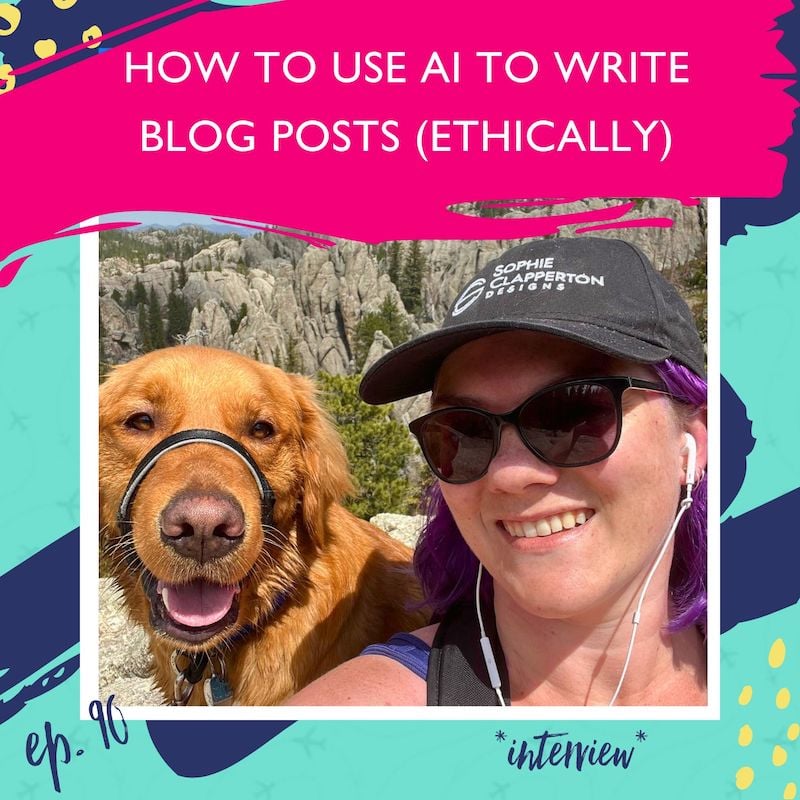
Our guest for this episode is Nina Clapperton, the founder of She Knows SEO, a full-service SEO and content creation agency for travel bloggers by travel bloggers.
Along with SEO, Nina credits AI as being one of the main tools that helped her reach 6 figures in her blogging business, and today she’ll be sharing her best tips to help you do the same!
1) Thank you so much for taking the time to share your tips on how to write content using AI! To start, can you tell us more about yourself, your business, and how you got into AI content creation?
Absolutely! I’m thrilled to be here. My journey into AI content creation began after blogging for about four years without much success.
Like many bloggers, I found myself overwhelmed, trying to juggle various strategies from different platforms without a clear understanding of what was working. I attempted to bootstrap everything, avoiding investments in quality education or proper platforms.
As my workload increased—I was working four jobs, including being a law clerk and managing several freelance gigs—I realized I needed assistance with content creation for my blog.
In October 2021, I stumbled upon Jasper AI, an AI blog writer, at a time when AI for content creation wasn’t as widely discussed.
Despite some skepticism from a few early adopters, I decided to take the risk and gave it a try. The results were game-changing—I managed to write over 100,000 words in just a week.
While I don’t replicate this level of output every week, AI, for me, became a way to accelerate content creation. It’s like having a tool to “clone” myself—not to replace, but to augment my abilities and increase efficiency.
Using AI to create content has allowed me to focus more on quality and strategy in my blogging journey.

2) What is artificial intelligence, or AI, and how can it be beneficial to bloggers?
Artificial Intelligence, or AI, comes in various forms, but one of the most familiar ones in the blogging sphere is AI writers, such as ChatGPT.
Essentially, AI is a computer program designed to perform tasks that typically require human intelligence. It utilizes natural language processing to mimic human speech and generate content.
While the concept of AI has been around for years, it has evolved, and its applications have become more prevalent.
In blogging, AI can offer significant benefits. For instance, tools like Rank IQ or Yoast, which assess and provide feedback on SEO optimization, incorporate AI elements. These tools help speed up processes that might be time-consuming for humans, like keyword analysis and SEO optimization.
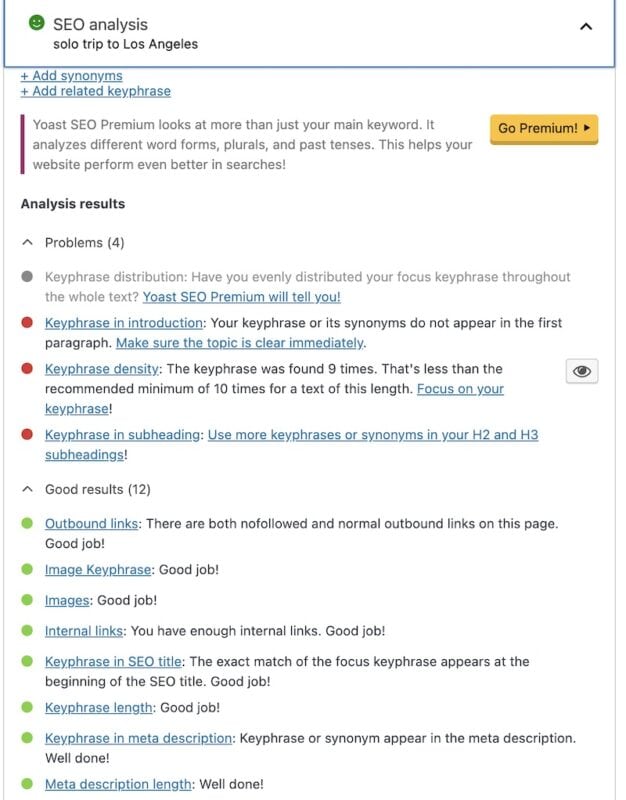
AI can be a game-changer for bloggers, essentially democratizing blogging and entrepreneurship. Instead of requiring massive teams and extensive training, bloggers can leverage AI to enhance productivity.
For example, in comparison to hiring and training dozens of writers, AI can be a co-writer, helping to speed up content creation with just a few words. It’s important to note that opinions on AI vary, and some may feel apprehensive or resistant to its use.
However, when used correctly—more as a collaborative tool rather than a replacement—AI has proven to be a valuable asset for bloggers, streamlining processes and boosting efficiency without compromising quality.
3) There are so many different AI tools bloggers can utilize. What are your favorite AI tools specifically for creating blog content?
I’ve experimented with a whopping 170 AI writers; but, I’ll narrow it down to a few that align with my work style.
It’s crucial to find what works for you and stick to one or two tools, rather than getting lost in the multitude. My top picks are:
ChatGPT. I love it for informational content. It’s excellent when I provide it with all the details on a topic (like a post on spring in Ottawa), and it turns that information into coherent content.
Jasper AI (free trial included!). For content that requires more attention, like affiliate-based posts or longer-form content such as creating an ebook, Jasper AI is my go-to. It allows me to write with the AI, and I prefer its style when I need to micromanage the syntax and details closely. In my opinion, it’s the best AI for writing blogs.
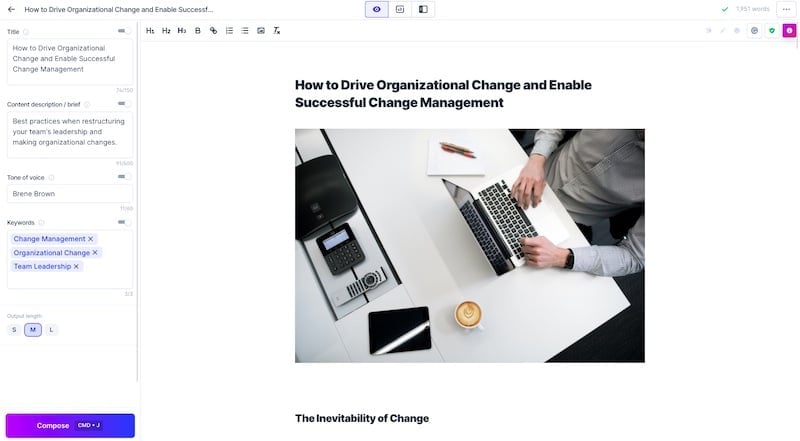
A quick note of caution. One-click AI tools might seem enticing, promising to generate SEO-optimized content with just a keyword; however, based on my experience (I’ve tried 10 of them), they often create subpar content. The artificial intelligence in blog writing will be very obvious.
In the travel niche, you can’t infuse your personality or share your unique experiences, leading to a need for extensive rewriting. It’s advisable to skip one-click AI tools and opt for more robust platforms like ChatGPT or Jasper AI.
Always remember, the effectiveness of AI is heavily dependent on the prompts you provide, so if you find a tool challenging, it might be worth tweaking your approach or exploring other options that better suit your blogging workflow.
4) Are there any ethical considerations when using AI for blog content creation, and how can bloggers make sure they are ethically creating content?
Ethical considerations with AI, especially in content creation, are essential. While I can’t speak to the legalities, the concerns are more prominent with AI-generated images, where issues of inspiration and proper crediting arise.
When it comes to AI writers, the key is to ensure you’re not letting it write for you, but are instead writing with it. Here are some ethical guidelines:
Coach the AI. Start by coaching the AI through your style and expectations. Don’t just throw it a generic topic; guide it with the information and style you want.
Research and fact-check. Be actively involved in the research and fact-checking process. AI should be a tool to assist your writing, not replace your input in terms of accuracy and reliability.
Avoid complete content generation. Don’t solely rely on AI to generate complete content. It might synthesize information available online, but you need to add your unique voice and perspective to contribute meaningfully to the conversation.
Beware of unethical practices. Be cautious not to engage in unethical practices like mass content rewriting from other sites. AI can enable scale, but using it to spin content at a large scale, especially without adding value, can lead to penalties from search engines.
Create quality content. Use AI to expedite your content creation without compromising on quality. Ensure your content adds value, reflects your voice, and fosters a sense of community with your audience.
Avoid mass production without substance. AI-generated blog posts shouldn’t be fully generated by the tool. They should also include you in them. Steer clear of using AI for mass production of content without substance. Instead, focus on creating thoughtful, valuable pieces that genuinely engage your audience.
Remember, AI is a tool, and its ethical use depends on how bloggers integrate it into their content creation process. The key is to find a balance where AI enhances efficiency without diluting the authenticity and quality of your content.

5) I run a membership called Travel Blog Prosperity that helps bloggers grow their traffic and income, and inside Nina taught an amazing workshop on how to use AI to create content. Nina, one thing I found fascinating was how you actually train your AI tools to really understand what you’re assigning them. Can you share a bit more about your process for this and why it’s important?
Sure! When we talk about how to write articles using AI, this is a very key piece of the strategy.
I approach AI as if it’s a new intern joining the team on their first day. Imagine the AI Googling “What is a blog?” on the bus ride over—it needs that level of introduction to understand our goals and style.
So, I start by providing the AI with foundational information: who we are, who our audience is, and what our business is about. I clarify our mission statement and explain why certain aspects matter for a specific post.
Essentially, I’m trying to communicate why we’re doing what we’re doing, even though the AI can’t truly “care” like a human. Then, I dive into the structure and style of the content.
I break it down into sections, like the introduction, body, and conclusion, and explain what each should entail. Instead of overwhelming the AI with the entire post structure at once, I focus on one section at a time.
For example, I’ll start with the intro and provide examples of what a good intro looks like, including tone, style, and voice. Additionally, I give the AI examples of my tone of voice and style, tailored to each of my websites, which may vary from formal to humorous.
This helps the AI understand the nuances of language and tone specific to each site. It’s crucial to approach AI training patiently and methodically.
Many people skip this step, but it’s essential for ensuring the AI produces content that aligns with your brand and objectives.
If you’re dissatisfied with the output, it often boils down to the quality of training and the context provided to the AI. By investing time in training and guiding the AI, you’ll ultimately spend less time editing and refining the content it generates.

6) One fear that often comes up when discussing AI and content creation is that content will lose its authenticity. How can bloggers ensure they are still creating content authentically and in their own voice while still utilizing the powers of AI?
Authenticity is key in content creation, and while AI can assist in generating content, it requires guidance to maintain that authenticity.
The crucial aspect lies in the prompting—providing the AI with clear instructions, context, and personal experiences.
When assigning tasks to AI, bloggers should conduct thorough research, offer their unique insights and perspectives, and outline the purpose and audience for the content.
For instance, if creating an affiliate post about wine tours in the South of France, the blogger should inform the AI about the target audience, what makes each wine tour unique, and any personal experiences or preferences. This ensures that the AI incorporates relevant details and avoids generic content.
Authenticity also involves specifying what not to include. For example, if the blogger doesn’t drink alcohol, they should instruct the AI to refrain from expressing personal enjoyment of wine tours but instead mention alternative perspectives, such as a family member’s enjoyment.
Moreover, bloggers should break down the content creation process into manageable sections and edit the AI-generated content paragraph by paragraph.
By providing feedback and making adjustments, bloggers can guide the AI toward producing content that aligns with their tone, style, and preferences.
Lastly, bloggers can integrate their own writing into AI-generated content, especially for sections that require a personal touch. By setting the initial tone and style, the AI can then emulate and build upon the blogger’s voice and authenticity.
In essence, authenticity is cultivated through careful guidance, personalization, and ongoing interaction with AI, ensuring that the content remains genuine and reflective of the blogger’s voice and brand.
7) Okay, so you’re sitting down to write a blog post. What does your process look like for creating this content using AI?
When it comes to how to use artificial intelligence for blog writing, my process follows a structured approach that incorporates keyword research, outlining, writing, editing, and formatting. Here’s a breakdown of my process:
Keyword research. I begin by conducting keyword research to identify topics relevant to my niche and audience. This helps me plan content clusters around specific themes or keywords.
Outlining. I outline each blog post manually, ensuring it aligns with my audience’s interests and needs. I prefer to create outlines myself rather than relying on AI to maintain authenticity and clarity.
Batch working. I batch work by creating multiple outlines in one session, which helps streamline the planning process. I may seek inspiration from competitors’ outlines to ensure comprehensive coverage of the topic.
Writing day. On a designated writing day in my blogging schedule, I focus solely on writing content. I use AI tools like ChatGPT to assist in content generation, providing it with detailed prompts and instructions for each section of the blog post.
Prompts & instructions. I provide AI with specific prompts and instructions tailored to my writing style, audience, and objectives. These prompts include relevant information, personal experiences, and the overall goal of the content.
Research integration. I integrate relevant research findings and personal experiences into the content to enhance its quality and authenticity. This approach reduces the need for extensive research during the writing process.
Section-by-section writing. I work through the blog post section by section, providing AI with prompts for each part and guiding its content generation process. This allows for a structured and cohesive flow of information.
Iterative editing. While writing, I edit and refine the content iteratively, ensuring it aligns with my voice, style, and preferences. I provide feedback and adjust prompts as needed to improve the quality of the AI-generated content.
Final editing & formatting. Once the AI-generated content is complete, I transfer it to a Google Doc for final editing and formatting. I add finishing touches, make any necessary revisions, and prepare the content for publishing.
Tool-specific adaptations. Depending on the AI tool used (e.g., ChatGPT or Jasper), I adapt my workflow accordingly. For instance, I utilize Jasper’s feature that tracks the cursor position to streamline the writing process.
Overall, my process involves a combination of manual outlining, AI-assisted writing, and iterative editing to create high-quality, authentic blog content tailored to my audience’s needs and preferences.

8) Of course, Search Engine Optimization, or SEO, is an important consideration when creating blog content. Can AI help with this aspect of blogging, or do you do your SEO research separately?
AI can certainly assist with various aspects of SEO, but it’s essential to understand its limitations and use it as a tool rather than relying on it entirely. Here’s how AI can help with SEO:
Keyword research. AI can generate keyword ideas based on given topics or niches; however, it lacks the ability to assess keyword competitiveness or relevance to your specific audience. Therefore, it’s crucial to use AI-generated keyword suggestions as a starting point and conduct further research to validate their effectiveness.
Content organization. AI can help organize keyword clusters and identify content themes that align with your audience’s interests. By grouping related keywords into topic clusters, you can create comprehensive content that addresses various aspects of a subject, improving your site’s overall SEO strategy.
Content optimization. AI can assist in optimizing content for target keywords by suggesting natural ways to incorporate them into your writing. It can also help identify opportunities to add internal links, anchor text, and LSI keywords (latent semantic indexing; also called “Must Words” in Keysearch) to improve content relevance and search visibility.
Content updates. AI can identify gaps in existing content or outdated information that needs to be addressed. By analyzing your content inventory, AI can suggest updates or additions to improve SEO performance and user experience.
Secondary opinion. AI can provide a secondary opinion on SEO strategies or content optimization efforts; however, it’s essential to validate AI-generated recommendations with human expertise and industry best practices.
While AI can streamline certain aspects of SEO research and implementation, it’s crucial to maintain human oversight and judgment throughout the process. Ultimately, SEO success relies on a combination of data-driven insights, human creativity, and strategic decision-making.
9) What are the biggest mistakes you see bloggers who are trying to use AI for blogs make?
Lack of instructions. The biggest mistake I see bloggers make when using AI to write articles is not providing clear and specific instructions.
Just like giving a third grader an essay assignment without any guidance, expecting AI to produce quality content without proper direction leads to disappointment.
Bloggers need to treat AI as beginners in the subject matter and provide detailed prompts to guide its output effectively.
Not learning the tools. Another common mistake is jumping on the AI bandwagon without taking the time to learn how to use it properly.
AI tools offer incredible capabilities, but they require understanding and practice to yield useful results.
It’s like owning a microscope but not knowing how to use it for scientific research. Blaming AI for poor outcomes often stems from inadequate training and utilization.
To avoid these pitfalls, bloggers should invest time in training AI on their style and voice. By teaching AI to understand their tone, preferences, and language, bloggers can effectively communicate their expectations and achieve better results.
It’s essential to translate oneself to the AI’s understanding, ensuring clear communication and productive collaboration.
In essence, the key to successful AI-powered content creation lies in providing precise instructions, investing in learning and mastering AI tools, and effectively communicating one’s style and preferences to the AI.

10) Thank you so much for sharing your AI and blogging wisdom! Before we sign off, can you let everyone know where they can find you?
- She Knows SEO (website)
- Nina’s SEO & AI courses & resources
- @NinaClapperton (Twitter)
- SEO for Travel Bloggers (Facebook group)
Thank you!
Alright now I hope you enjoyed this episode. I hope you feel inspired and empowered to utilize the powers of artificial intelligence to streamline your content creation process.
I’d also like to thank our sponsor one last time, Ahrefs, for helping to make this episode possible. You can get free access to Ahrefs Webmaster Tools, which can help you improve your site’s SEO.
Also, don’t forget to grab access to the free profitable content plan workshop – which will teach you how to create a traffic-generating, income-growing content plan in 3 steps.
And of course, make sure to subscribe so you don’t miss future episodes sharing these bite-sized strategies for bloggers who want to turn their blogs into profitable full-time businesses.
Happy blogging!
Create Better Content With These Helpful Past Episodes:
How To Find Niche Keywords By Doing Competitor Research
How To Update Website Content For Increased Traffic
How To Plan Out A Year Of Content In One Week
How To Write Blog Posts Faster
How To Create Content That Sells & Converts On Social Media
How To Write SEO-Friendly Blog Posts From Start To Finish
How To Create An Effective Blogging Workflow In 7 Steps
How To Overcome Creative Block As A Blogger
Best Laptop For Travel Bloggers & Influencers
How To Find Keywords That Drive Traffic With Competitor Research
Why You Need A Drone & How It Can Help You Grow
Click here for all profitable blogging podcast episodes.
Get Notified About New Episodes
Don’t miss an episode! Subscribe to The Profitable Travel Blogger Podcast on your favorite podcast platform like Apple Podcasts, Spotify, and Amazon Music.
Prefer email? Click here to sign up for our Podcast Updates newsletter!
If you already grabbed the free Travel Blogger Resource Library, you’re already on the list to get notified. 🎉