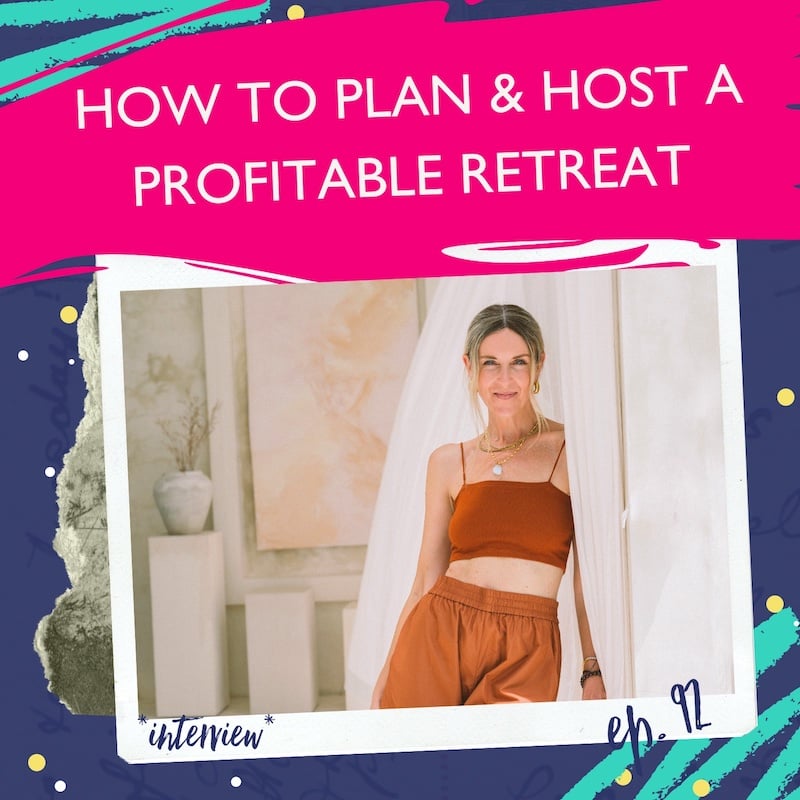
How To Plan & Host A Profitable Retreat [Ep. 92]
This post contains affiliate links, including Amazon affiliate links. If you purchase through these links, I may earn a commission at no extra cost to you. As an Amazon Associate, I earn from qualifying purchases. Thank you for your support!
Want to learn how to host a retreat?
Well, you’re in luck, as in this episode of The Profitable Travel Blogger Podcast, we’ll be going over tips for planning a retreat that is both unforgettable for your guests and profitable for you.
Our guest for the episode is retreat host Andi Eaton Alleman of Oui We Studio, who will be sharing her best advice. By the end of this episode, you’ll understand:
- The first step you should take when organizing a retreat
- How to design a retreat your guests will love
- Advice on finding the best places to host a retreat
- Tips for marketing your retreat so that it’s profitable
- How to use collaboration to enhance your retreat
- And more!
In short, if you’re confused about how to run a retreat successfully, this episode can help.
Host To Host A Retreat [Podcast Episode Audio]
Click here to listen on Apple Podcasts/iTunes
Click here to listen on Spotify
Click here to listen on Amazon Music
Click here to listen on TuneIn
Invite: How To Make Money As A Travel Blogger [Free Workshop]
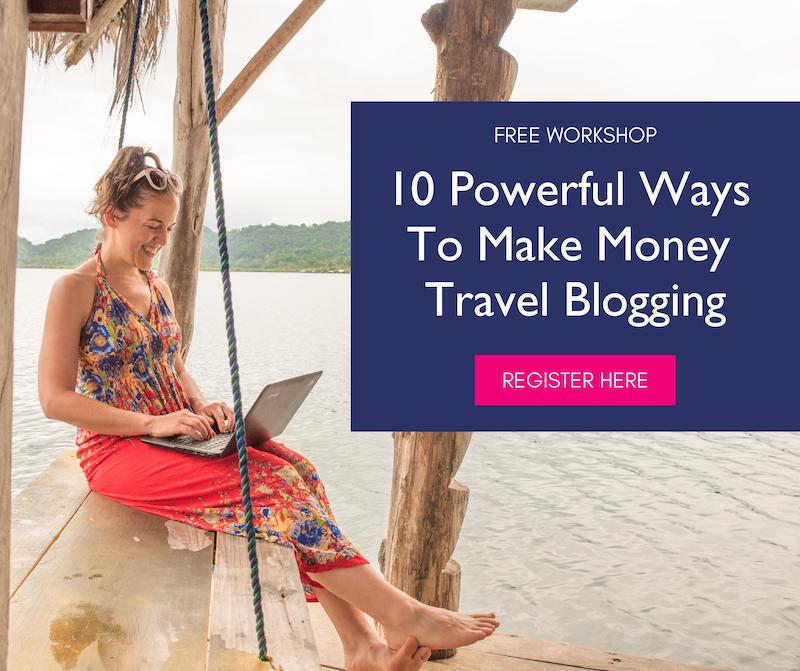
While we’re on the topic of blog monetization, I’d love to invite you to my free workshop: 10 Powerful Ways To Make Money Travel Blogging.
During the 60-minute on-demand workshop, you’ll learn:
- Myths related to monetizing a blog (that may be holding you back!)
- Strategies for creating profitable content (so those blog posts, emails & social shares lead to income!)
- Tips for earning recurring passive revenue as a blogger (so your income grows even when you’re away from your laptop!)
- How to create products that you know your audience will buy (so you don’t waste your time!)
- Advice for growing your affiliate income (with a strategy that truly works!)
- And more!
Plus, your free ticket to this actionable workshop also includes a Q&A, limited-time replay, and special bonuses.
Click here to grab your seat in the free travel blog monetization workshop.
Build A Retreat Business With These Helpful Tools:
Take A Chef. This platform makes it easy to find and hire a chef who can cook meals during your retreat.
Airbnb Experiences. When you create your retreat plan, you’ll likely want to include a few local activities. This platform makes it easy to find fun local tours and experiences hosted by locals.
BookRetreats. One of the various retreat marketplaces you can list your retreat on to gain additional visibility. Just note that they do take a cut of your booking revenue.
Retreat Planning Guide [Episode Transcript]
The following is a summary of the podcast episode sharing how to plan a retreat. It is transcribed as best as possible, with paraphrasing included. For the full strategy on how to start a retreat business, make sure to listen to the audio version of the podcast above.
As a travel blogger, you’re simultaneously growing an audience while working to grow your income.
Well, why not combine the two by launching retreat experiences in your favorite destinations around the world?
To help us break down what it looks like to successfully launch your first retreat through your blog, I’m excited to chat with Andi Eaton Alleman–founder of Oui, We Studio, an innovative education company focused on personal and professional development, exploring the future of work, and challenging traditional norms—and this includes through their Oui, We Retreats.
Andi started leading retreats in 2018, and since then has brought her community to Tulum, Mallorca, Bali, New Orleans, Palm Springs, Joshua Tree, and other amazing places around the world.
In this episode, she’ll be sharing details on how to go from blog to engaged real-life community of retreat goers, and how she uses Instagram to sell out her retreats and other programs.
1) Thank you so much for taking the time to share your tips on how to host a retreat! To start, can you tell us more about yourself, your business, and how you got into planning retreats?
Certainly! Thank you, Jessie, for having me.
I’ve been in the blogging world for over 12 years now. Initially, my blog wasn’t focused on travel, but it gradually evolved into a travel-centric platform.
My professional background lies in the beauty industry, where I spent about a decade in corporate roles.
However, I made the decision to transition to being my own boss, exploring various avenues of monetization, with blogging being one of my main focuses.
As my blog expanded to cover topics like wellness, creativity, and entrepreneurship, I felt a strong desire to foster real-world connections among my community.
This led me to the idea of organizing retreats—spaces where my followers could meet face-to-face, collaborate, and engage in personal and professional development.
While the blog remains a cornerstone of my work, it serves as a gateway for readers to become students at Oui, We Studio, my platform for both online and offline experiences, including our retreat offerings.

2) For a travel blogger who might be thinking about launching retreats, what are some of the pros and cons they should be aware of?
Pros of running a retreat
One of the most remarkable aspects of organizing retreats is the opportunity to connect with your readers on a personal level.
It’s an unparalleled chance to spend quality time with them, get to know them, and introduce them to your favorite destinations.
Leading them through curated travel experiences is incredibly rewarding and fosters a sense of community around shared interests.
So, if you thrive on in-person interactions and enjoy building communities, this is undoubtedly a major advantage.
Cons of running a retreat
However, there are logistical challenges to consider as a retreat host traveling with a group. Before diving in, it’s important to clarify the type of travel experience you’re offering.
Whether it’s adventure travel, vacation-style relaxation, spa visits, or cultural excursions, defining the vibe upfront is essential.
Additionally, being far from home can lead to unexpected situations.
While I’m not one to dwell on worst-case scenarios, it’s essential to anticipate and prepare for potential challenges. From flight mishaps to unforeseen accidents, there’s a lot to manage when participants are out of their comfort zones.
Moreover, first-time organizers often underestimate the expenses associated with hosting retreats. It’s vital to carefully calculate costs to avoid undercharging and potentially losing money.
Being mindful of both the financial and logistical aspects is crucial for a successful and sustainable retreat venture.
3) Now, let’s say this travel blogger has decided, yes, I want to move ahead with launching my first retreat. What should their first step be?
Poll your followers
The first step in launching your first retreat is to engage with your community. Take the time to poll your followers and gauge their interest in potential destinations.
When it comes to where to host a retreat, it’s crucial to ensure that the location you’re considering aligns with their preferences and excites them.
This initial step sets the foundation for a successful venture as it’s easier to market and sell a retreat when you know your community is enthusiastic about the destination.
Research your retreat destination
Once you’ve identified a promising location based on community feedback, the next step on your retreat checklist should be doing thorough research.
Dive deep into understanding the logistics, amenities, and attractions of the chosen destination. If possible, having personal experience with the location is invaluable.
This firsthand knowledge enables you to anticipate challenges and tailor the retreat experience for your participants, many of whom may be visiting the destination for the first time.
By investing time in meticulous planning and preparation, you’ll set yourself up for success when guiding your group to this new and exciting destination.

4) One of the most important aspects of leading a retreat is choosing where you’ll go. How do you determine the ideal location and theme for a retreat that aligns with your niche and resonates with your audience?
Engage with your community
First and foremost, engaging with your community is key. It’s important to create retreats that they would be interested in, so begin by asking them about their preferences and interests.
Keep it broad initially—whether they prefer beach or mountain settings, local or international destinations. This initial feedback provides valuable insights for narrowing down potential locations.
For instance, when planning my last retreat, I presented several destination options to my community, and overwhelmingly, they expressed interest in Mallorca, Spain.
This direct input from your audience can be incredibly valuable and may even lead to immediate sign-ups for your retreat.
Consider retreat costs
As you gather feedback and ideas from your community, it’s essential to consider the financial aspects. Assess what both you and your potential participants are willing to invest in the retreat.
Researching the costs associated with different locations, whether it’s the rental of a retreat center or accommodations like Airbnb, is crucial for aligning expenses with budget expectations.
Understanding whether your audience leans towards luxury or budget travel will inform your decisions regarding the ideal location.
Pinpoint retreat goals
When it comes to determining the theme of your retreat, consider your audience’s challenges and aspirations related to travel.
Are they aspiring solo travelers seeking companionship? Are they craving collaborative adventure experiences?
Reflect on your community’s needs and desires, and craft a theme that addresses those concerns.
For example, if your audience consists of content creators and brand builders, a theme centered around creativity and collaboration could be highly appealing.
By identifying the challenges your audience faces and the solutions your retreat can provide, you can create a theme that resonates deeply with your community and aligns seamlessly with your niche.

5) What are the key logistical considerations and challenges bloggers should be aware of when planning and organizing a retreat?
Building a comprehensive retreat budget is extremely important when considering how to set up a retreat.
This budget serves as the backbone of your planning process, allowing you to meticulously assess and address various logistical aspects. Here’s a breakdown of key considerations:
Venue selection. Determine the ideal venue for your retreat. Consider factors such as location, amenities, and capacity. Whether it’s a retreat center, hotel, or Airbnb, ensure it aligns with your theme and budget.
Food and beverage. Plan out your meals and refreshments for the duration of the retreat. Consider dietary restrictions and preferences to accommodate all participants.
Event programming. Outline what happens at the retreat, including the activities and workshops you’ll offer. From yoga sessions to creative workshops, curate a diverse and engaging program to cater to your audience’s interests.
Financial logistics. As a retreat organizer, it’s important to establish clear payment policies, including deposit requirements, refund policies, and payment plans. Determine how payments will be processed and managed to streamline the financial aspect of the retreat.
Travel arrangements. Coordinate travel logistics for both yourself and your participants. Consider transportation to and from the retreat location, airport transfers, and any excursions or outings planned during the retreat.
On-site support. Determine if you’ll need assistance on-site during the retreat. This could involve hiring local guides or coordinators to help facilitate activities and ensure smooth operations.
By mapping out these logistical considerations within your budget plan, you can proactively address potential challenges and ensure a well-organized and successful retreat experience for both yourself and your participants.
6) Speaking of logistics, how do you go about pricing your retreats so that they’re profitable but also affordable for your audience?
Create a retreat budget worksheet
The first step in pricing your retreat is to meticulously fill out a budget worksheet.
Let’s take the example of planning a weekend retreat in Palm Springs, as I did last summer. I’d start by listing out all anticipated expenses like:
- the cost of renting the venue (such as an Airbnb)
- hiring a chef for meals
- breakfast supplies, snacks, and beverages
- any planned activities or excursions
- your own travel expenses
These are just a few of the expenses to consider.
Pinpoint your retreat profit margin
Once you have a clear picture of all costs involved, it’s time to determine your desired profit margin.
Ask yourself what compensation you expect for hosting the retreat and factor that into the overall pricing structure.
This step allows you to work backward and set a price point that covers expenses while providing a satisfactory return for your efforts.
Evaluate your retreat pricing
Before finalizing anything, it’s crucial to evaluate whether the proposed pricing aligns with your audience’s expectations. Consider whether the projected cost is reasonable and affordable for your community.
If the pricing seems out of sync with their preferences, you may need to reassess and potentially adjust your plans.
This could involve reconsidering the destination or making modifications to the retreat offerings to better match your audience’s needs and budget constraints.
Ultimately, by carefully considering all costs, setting a fair profit margin, and ensuring alignment with your audience’s expectations, you can confidently price your retreats in a way that balances profitability with affordability.

7) Do you work with someone to help you find collaborators, like a chef, for your retreat, or are you doing the research yourself?
In terms of how to create a retreat, this is important to consider. Initially, I handled all the research myself, but now I have a dedicated team to support me in these endeavors.
In the early stages, I relied on various tools and platforms to find collaborators. For instance, I utilized Airbnb Experiences and services like Take a Chef to explore different chef options across various communities worldwide.
These platforms often feature well-vetted professionals, making it easier to find reliable collaborators.
When sourcing excursion companies or other collaborators, I prioritized those with proper licensing and insurance. This ensured a smooth and safe experience for all participants.
Additionally, I strategically chose retreat locations where such services are readily available and where retreats are common. This way, I could leverage the expertise of local professionals who are experienced in catering to retreat groups.
While I now have a team to assist with these tasks, my approach remains focused on ensuring a seamless and enjoyable experience for all participants by working with trusted collaborators who understand the unique dynamics of retreat settings.

8) Now let’s get a bit more into promoting your retreat. How do you go about building a community around your blog so you can sell a retreat?
Building community with social media
For me, the most effective approach is to leverage social media as a community-building tool. While it’s a common strategy, I’ve found it invaluable for fostering direct conversations with potential retreat participants.
Platforms like Instagram provide a space for meaningful interactions through direct messages and comments, allowing me to engage directly with individuals interested in my offerings.
While my blog and podcast also play a role in promoting retreats, social media offers a unique opportunity to nurture relationships in a more personal and immediate way.
Sharing compelling content
I’ve developed a strategic approach to creating social content aimed at building connections with my audience.
It’s not just about announcing retreats; it’s about showcasing my travel style and experiences to pique interest and attract like-minded individuals.
By sharing compelling content that resonates with my audience’s interests and aspirations, I can establish a rapport with them, making them more inclined to consider joining me on a retreat.
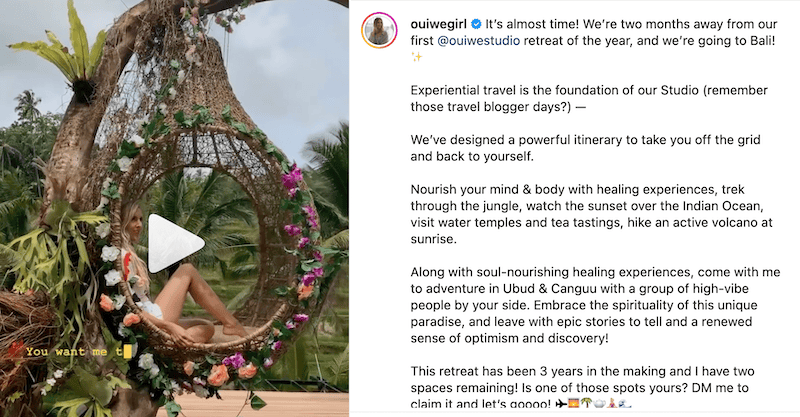
This approach has been central to my marketing strategy, and you can see examples of it on my Instagram page.
Rather than merely making announcements, I focus on creating content that inspires and invites conversation, ultimately leading to increased interest and engagement around my retreat offerings.
9) Do you plan out how you’ll promote your retreats on Instagram or is your social media promo plan more off the cuff?
I use a structured approach to promoting my retreats on Instagram, while still allowing room for spontaneity and intuition in content creation.
I set clear timelines for when information needs to be communicated, such as announcements on my podcast, blog, and newsletter, alongside regular updates on social media platforms like Instagram.
While I have this framework in place, I also tap into my intuition to craft content that resonates with my audience’s needs and challenges. I consider what struggles my ideal participant might be facing and tailor my messaging accordingly.
This combination of structure and flexibility allows me to effectively promote my retreats while maintaining authenticity and relevance in my social media content.

10) Along with building community on social media, what other marketing strategies have you found most effective in promoting retreats?
Paid advertising
One approach that has had positive results is utilizing paid advertising, particularly on platforms like Facebook and Instagram.
However, the key here is targeting warm audiences—individuals who have previously engaged with my blog, business, or personal brand.
By retargeting these warm leads with paid ads, I can effectively re-engage them and keep my retreats top of mind.
Strategic collaborations
Another strategy I’ve explored is collaborations with other creators or influencers.
By partnering with individuals who have highly engaged communities that align with mine, I’ve been able to tap into new audiences and expand my reach.
While collaborations can sometimes be hit or miss, they offer a valuable opportunity to experiment and potentially attract a broader audience beyond my own.
Hosting press dinners
I’ve also hosted press or influencer dinners for brands, which indirectly connects to promoting retreats.
By nurturing relationships with brands or influencers at these events, I’ve had the opportunity to introduce them to my retreat community.
This approach has led to partnerships where brands provide items for gift bags or sponsor aspects of the retreat experience, such as beverages, activewear, or breakfast foods.
It’s been a rewarding way to deepen relationships beyond the initial event and enhance the retreat experience for participants.
Affiliate marketing
As for affiliate marketing, while I haven’t extensively utilized it for my retreats, I did experiment with it once; however, the results were not as significant as I had hoped.
Offering affiliate commission for retreat sign-ups didn’t yield a substantial return, especially considering the small size of my retreats, typically hosting around 12 participants.
That being said, it could be a smart marketing strategy if you plan to host larger retreats.

11) In your experience, what role do partnerships and collaborations play in the success of a retreat, and how do you go about forming meaningful connections in the industry?
Benefits of retreat partnerships
Collaborations and partnerships can significantly contribute to the success of a retreat, particularly in the early stages of development.
It’s all about identifying potential collaborators, whether they’re individuals, brands, or organizations, whose values and audience align closely with yours.
These partnerships can take various forms, from financial support to providing products or services for the retreat experience.
How to form connections with retreat partners
Forming meaningful connections within the industry often starts with reaching out to potential partners who resonate with your vision and audience.
Craft a compelling pitch email outlining the benefits of collaborating with your retreat.
Just as you would pitch collaborations with hotels or other brands as a travel blogger, approach potential partners with professionalism and enthusiasm.
Highlight how their involvement can enhance the retreat experience and align with their own objectives and target audience.
Ultimately, forming successful partnerships in the industry involves identifying like-minded individuals and brands, initiating open and genuine communication, and working together to create mutually beneficial opportunities that elevate the retreat experience for all involved.

12) Can you share a retreat success story you’ve had and what made it such a positive experience for you as a business owner?
There are numerous success stories I could recount, but it really boils down to the profound transformations I’ve witnessed in participants after their retreat experience.
While we, as travel bloggers, understand the personal growth that comes from travel, witnessing it firsthand in others is incredibly rewarding.
For instance, I hosted a retreat in Bali last year, and by the end of the retreat, three of the attendees had made plans to live together in Bali for the next six months. Seeing how the retreat facilitated such bold life decisions was truly remarkable.
I’ve also had participants attend one retreat and then become devoted regulars, joining me on retreats every year thereafter.
It’s immensely gratifying to see how these relationships extend beyond the retreat setting, influencing both personal and professional development.
13) Thank you so much for sharing your tips on how to organize a retreat! Before we sign off, can you let everyone know where they can find you?
- Oui, We Studio (website)
- Oui, We Girl (blog)
- @OuiWeGirl (Instagram)
Thank you!
Alright, now I hope you enjoyed this episode. I hope you feel inspired and empowered to monetize your blog through leading retreats.
Before you go, don’t forget to grab access to the free 10 Ways To Make Money Travel Blogging workshop that I’ve linked in the show notes. If you’re looking to monetize your blog, this powerful training can help.
And of course, make sure to subscribe so you don’t miss future episodes sharing these bite-sized strategies for bloggers who want to turn their blogs into profitable full-time businesses.
Happy blogging!
Monetize Your Blog With These Helpful Past Episodes:
How To Create Content That Sells & Converts On Social Media
Why You Need A Drone & How It Can Help You Grow
How To Create A Free Email Course That Grows Your List & Income
How To Increase Your Amazon Affiliate Income As A Travel Blogger
6 Ways To Validate An Online Course Idea
How To Make A Resource Page That Grows Your Blogging Income
How To Make Money Travel Blogging In One Year Or Less
How To Monetize Your Blog From Day One
Click here for all profitable blogging podcast episodes.
Get Notified About New Episodes
Don’t miss an episode! Subscribe to The Profitable Travel Blogger Podcast on your favorite podcast platform like Apple Podcasts, Spotify, and Amazon Music.
Prefer email? Click here to sign up for our Podcast Updates newsletter!
If you already grabbed the free Travel Blogger Resource Library, you’re already on the list to get notified. 🎉