How To Get A Book Deal As A Blogger Step-By-Step [Ep. 110]
This post contains affiliate links, including Amazon affiliate links. If you purchase through these links, I may earn a commission at no extra cost to you. As an Amazon Associate, I earn from qualifying purchases. Thank you for your support!
Want to learn how to get a book deal and become a published author?
You’re in luck, as this guide shares how the traditional publishing process works step-by-step so you can go from blog to book!
Our guest, blogger-turned-author Jen Ruiz, went from sharing travel stories on her blog, Jen on a Jet Plane, to landing a five-figure book deal for her memoir, 12 Trips in 12 Months: Make Your Own Solo Travel Magic—which even made it to Hudson Airport Bookstores!
Today, she’ll be sharing her best tips to help you do the same. You’ll learn:
- How to decide between traditional publishing vs self-publishing
- The secrets to writing a strong query letter and pitching effectively
- How to leverage your blog to land a book deal
- Smart book marketing strategies to maximize sales
- And more!
💻 Bonus: In this episode of The Profitable Travel Blogger Podcast, Jen outlines the traditional book publishing process step-by-step so you have a clear roadmap for how to go from blog to book deal!
💡Quick traditional book publishing tips:
-Research successful books from the last 3-5 years to prove to publishers exactly where your book fits in the current market.
-Speed up the slow publishing process by attending writer’s conferences and pitch slams to build personal connections with agents.
-Start building your author platform now, as publishers expect you to drive the majority of sales yourself.
🎁 Bonus: Grab my free Travel Blogger Resource Library, which includes a Book Publishing Cheat Sheet based on Jen’s tips! You’ll also get access to 75+ resources that can help you grow your traffic, email list, and income.
How To Get A Book Deal [Audio & Video]
How To Get A Book Deal Step-By-Step [Guide]
The following is a summary of the podcast episode sharing how to get a book published. It is transcribed as best as possible, with paraphrasing included. For the full strategy, listen to the audio or video version of the podcast above.
Picture this: you walk into a bookstore, and there it is—your book, proudly displayed, with your name on the cover.
Here’s the really exciting part: this doesn’t have to be some far-off dream.
As a blogger, you’ve already built a home for your ideas and stories. From here, it’s just about taking the right steps to transform them into a published book.
But, what are these steps exactly?
That is exactly what our guest, Jen Ruiz of Jen on a Jet Plane, will be breaking down for us. Jen has been able to secure a five-figure book deal for her travel memoir, get her book into Hudson Airport Bookstores, and complete a 19-stop media tour across the country.
Today she’ll be sharing her best tips to help you do the same.
🎉 Also, don’t forget to grab access to my FREE Travel Blogger Resource Library. Get access to 75+ resources that can help turn your blog into a profitable business—including a Book Publishing Cheat Sheet based on today’s episode!
1) Thank you so much for taking the time to share your tips! To start, can you share more about yourself, your business, and how you got into writing books?
I’m Jen Ruiz, a blogger-turned-author who started my journey with a challenge—taking 12 trips in 12 months while still working full-time as a lawyer.
As I documented my experiences on my blog, Jen on a Jet Plane, I built a community of readers who were eager to learn about budget-friendly travel and solo adventures.
Seeing an opportunity, I decided to self-publish my first book, The Affordable Flight Guide. It became a bestseller in eight categories on Amazon and even won a Reader’s Favorite Book Award.
That success gave me the confidence to keep writing, and I set a goal of self-publishing 20 books.
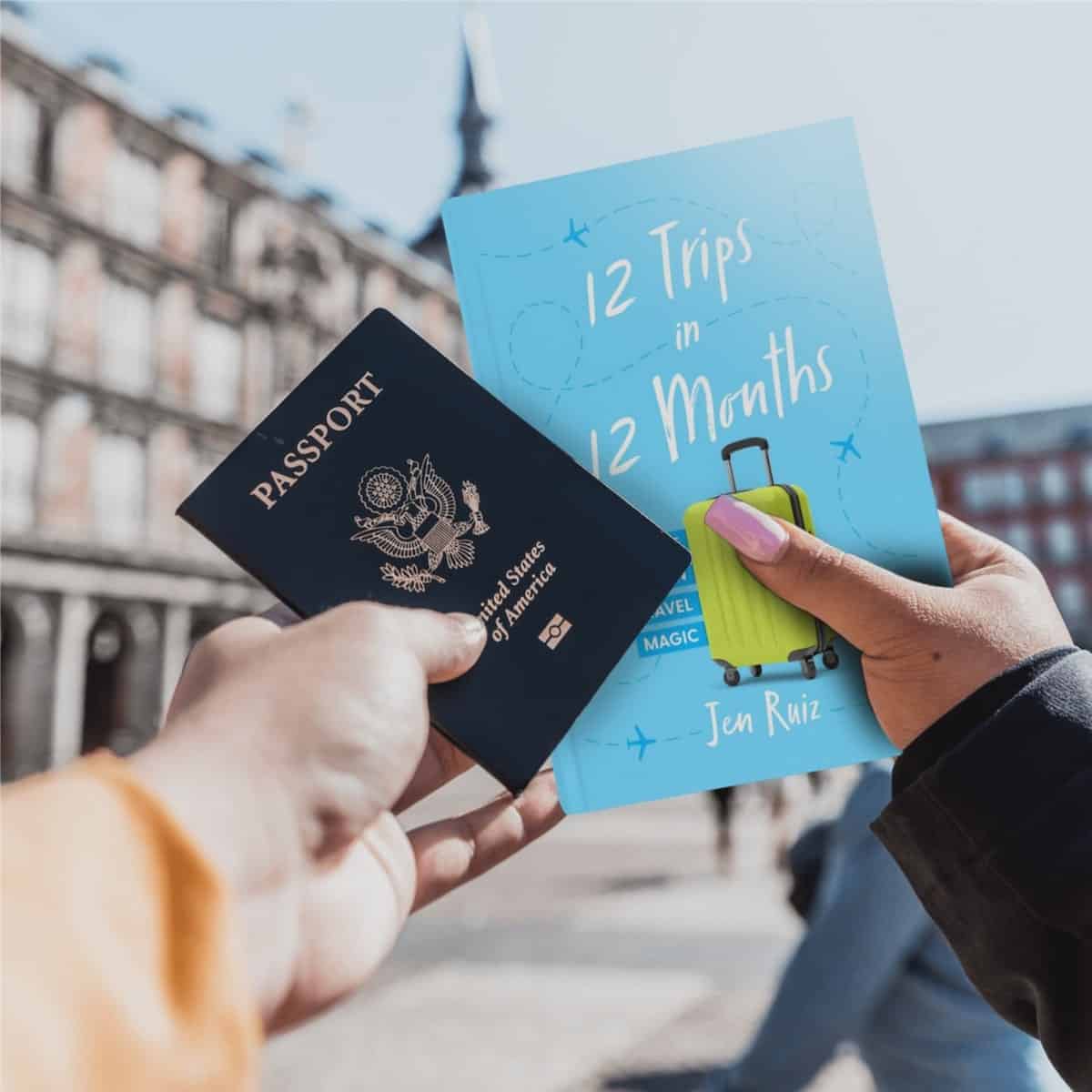
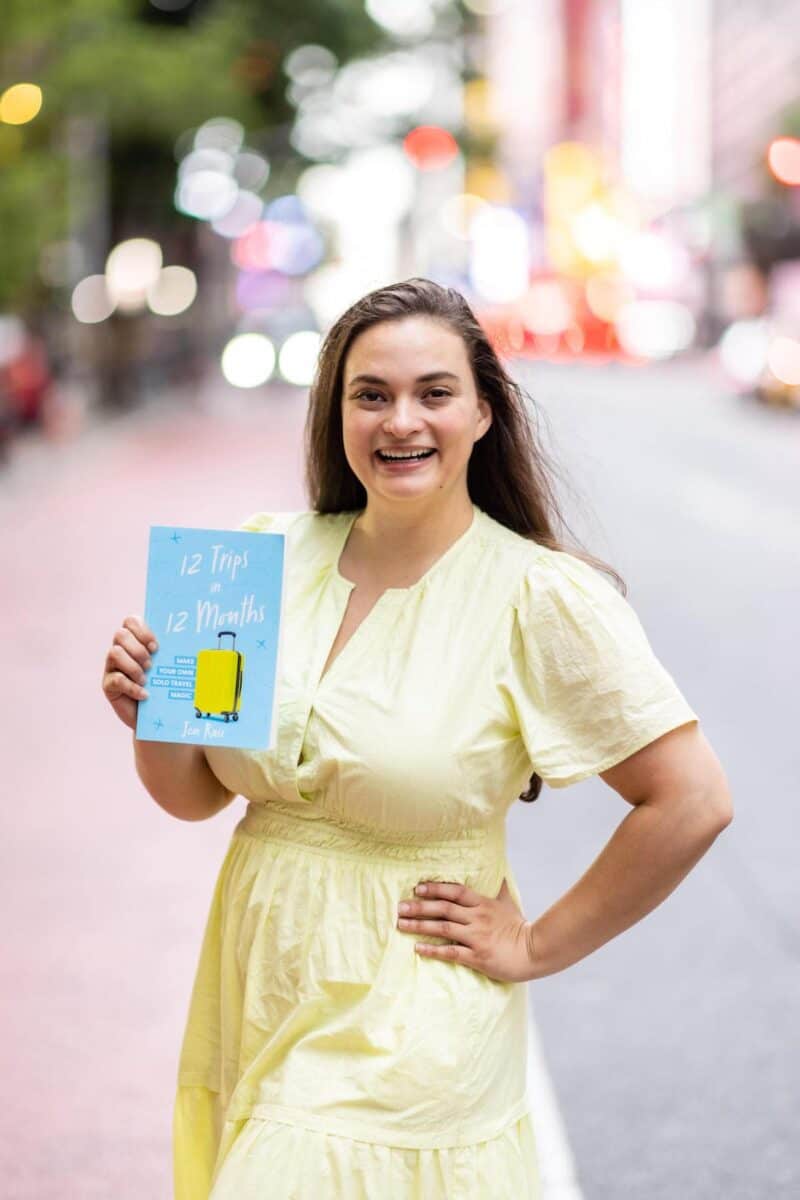
However, when the pandemic hit and travel came to a halt, I decided to pursue a traditional book deal for my memoir, 12 Trips in 12 Months: Make Your Own Solo Travel Magic. That decision led to a five-figure book deal, and my book even made it onto the shelves of Hudson Airport Bookstores!
Now, I help others navigate publishing, digital entrepreneurship, and travel, sharing everything I’ve learned along the way.
2) When it comes to traditional publishing vs self-publishing, what are the key differences?
Self-Publishing
Pros
- Higher royalties – You keep up to 70% of the profits, compared to the 10-20% traditional publishers offer.
- Full creative control – You decide on pricing, cover design, and marketing strategies.
- Faster timeline – You can publish in months instead of waiting years for a traditional deal to finalize.
Cons
- More responsibility – You handle editing, formatting, and distribution or need to hire professionals.
- Marketing is entirely on you – Without publisher support, you must promote and sell your book yourself.
Traditional Publishing
Pros
- Industry credibility – A publishing house’s name can add legitimacy and open doors to media coverage.
- Wider distribution – Your book can be sold in bookstores, libraries, and international markets.
- Access to professionals – Publishers provide editors, designers, and publicists to help refine your book.
Cons
- Lower royalties – Expect 10-20% royalties, plus an advance that must be earned back before further payments.
- Loss of control – Publishers make the final call on cover design, pricing, and sometimes even content.
- Slow process – It can take years from signing a deal to seeing your book in print.
Which publishing type is right for you?
If you want more control and higher profits, self-publishing is a great option.
If you want credibility, bookstore distribution, and access to professionals, traditional publishing may be a better fit.
Many authors start with one and transition to the other based on what works best for their book and audience.

3) Can you share how you landed the book deal for your memoir?
When I decided to pursue traditional publishing for my memoir, I knew I needed a strong strategy to stand out.
Here’s exactly how I landed my book deal:
Step 1: Writing a Strong Query Letter
A query letter is a one-page pitch that introduces your book to literary agents.
It includes:
- A brief summary of your book
- Your author credentials
- A marketing plan to show how you will sell the book
I worked with a book coach to refine my query letter, ensuring it was clear, professional, and compelling.
Step 2: Researching Literary Agents
I used Publishers Marketplace and #MSWL (Manuscript Wish List) to find agents who specialized in memoirs and travel books. Instead of mass-pitching, I focused on a targeted list of agents who were the best fit.
Step 3: Attending a Writer’s Conference to Pitch in Person
Rather than waiting months for email responses, I attended the Writer’s Digest Conference, which hosted a Pitch Slam—a rapid-fire session where I met multiple agents back-to-back.
This personal connection made a huge difference. Even agents who weren’t the right fit referred me to others.
Step 4: Creating a Strong Book Proposal
Once I had interest from an agent, I prepared a book proposal, which included:
- A detailed marketing plan
- Comparable books (to show market demand)
- Sample chapters
This proposal was about 60-70 pages and was essential in proving my book was marketable and worth investing in.
Step 5: Securing an Agent and Signing a Deal
After submitting my proposal, I received an offer of representation from a literary agent. My agent then pitched my book to publishers, and within a few months, I had a five-figure book deal with a traditional publisher!
4) What does the traditional publishing process look like?
Once you secure a book deal, the process is far from over! Here’s what happens next:
Step 1: The Editing Process
Expect multiple rounds of developmental editing, line editing, and copy editing. Even after submitting a “final” version, publishers may request revisions.
Step 2: Book Design and Production
The publisher designs the cover, formatting, and layout—authors typically have limited control over this. Advanced Review Copies (ARCs) are printed and sent to media and influencers.
Step 3: Pre-Launch Marketing and Promotion
Authors must actively market their books—publishers provide some support, but most promotion falls on you. Pre-orders are key—they count toward first-week sales rankings. Strategies include media outreach, social media promotion, and influencer partnerships.
Step 4: Book Launch and Distribution
The book is released in bookstores, online retailers, and libraries. Launch events and book signings may be organized.
Step 5: Post-Launch and Continued Book Marketing
The first 3-6 months after release are crucial for visibility. Many authors hire publicists or invest in additional marketing to keep momentum. Speaking engagements, courses, and additional books can be leveraged to maximize success.
Is Traditional Publishing Worth It?
Traditional publishing is a long process that can take 1-2 years from deal to publication. It requires patience, persistence, and a strong personal marketing effort, but it can provide credibility, wider distribution, and industry support.
5) How does a blogger know if their book idea is marketable?
A marketable book idea isn’t just something you’re passionate about—it’s something publishers believe will sell.
Here’s how to evaluate whether your idea has potential:
1. Research Similar Books (Comp Titles)
Look for books in your genre that have sold well in the past 3-5 years. Use Publishers Marketplace and Amazon’s Bestsellers & New Releases lists to find comparable titles. If no similar books exist, that’s not always a good thing—publishers want books that fit an existing market.
2. Identify Your Target Audience
Who is this book for? If you can’t clearly define your ideal reader, your book may struggle to gain traction. Look at existing social media trends, industry reports, and Google search interest in your topic.
3. Leverage Your Platform
While you can sell with a small audience, having an engaged blog audience, email list, or social following shows proof of demand to publishers. A strong personal brand and credibility in your niche can make your proposal more appealing.
4. Find the Right Agent
If an agent rejects your book, that doesn’t mean your idea isn’t marketable—it may just mean you haven’t found the right agent yet. Agents need to feel passionate about a book in order to sell it, so if you’re getting rejections, consider refining your pitch or researching agents who are a better fit.

6) Do you have any advice on how to write a book proposal?
Unlike fiction, nonfiction books (including memoirs) are often sold before they’re fully written, so a book proposal is critical to securing a deal.
Here’s what your proposal should include:
1. Overview of the Book
A compelling summary of what your book is about and why it matters. Think of this as your elevator pitch—it should be clear, concise, and engaging.
2. Competitive Analysis (Comp Titles)
List 3-5 successful books in your niche and explain how yours is different while appealing to the same audience. Avoid saying your book is “completely unique”—publishers want proven demand.
3. Target Audience & Market Research
Define who will buy this book and why. Use industry statistics, social trends, and relevant data to prove there’s a demand.
4. Author Platform & Marketing Plan
Detail your blog traffic, social media following, email list size, and any press features. Show how you’ll promote the book before and after launch—speaking gigs, podcast interviews, influencer collaborations, etc.
5. Book Outline & Sample Chapters
- A chapter-by-chapter breakdown of the book.
- 2-3 polished sample chapters that showcase your writing style.
A great book idea alone isn’t enough—you need to prove that there’s a market, an audience, and a strategy to sell it. Publishers invest in authors who are willing and able to promote their own work, so having a clear platform and marketing plan is just as important as the book itself.
7) How can creators leverage their blogs, social media, and online presence to more easily land or promote a book deal?
Bloggers have a huge advantage in the publishing world because they already have an audience, authority, and built-in marketing channels. Publishers want to invest in authors who can sell books, so showcasing your online presence can make a big difference in landing and promoting a book deal.
How to Use Your Blog to Secure a Book Deal
1. Highlight Your Blog Traffic & Engagement
Publishers love high-traffic blogs because they show built-in demand. If your blog gets 100k+ monthly pageviews, include that in your book proposal. Engagement matters too—comments, shares, and time spent on page all indicate an active audience.
2. Show Proof of Demand for Your Topic
If your top blog posts align with your book idea, use that as proof people are interested. Have readers been asking for more content on a topic? That’s a great selling point. High search traffic or ranking on Google for related topics also signals demand.
3. Leverage Your Email List
An engaged email list is one of the most valuable assets for book promotion. Publishers love authors with direct access to readers, as email is one of the best ways to sell books. Even with a small list, high open rates and engagement can be compelling.
How to Use Social Media to Market Your Book
1. Position Yourself as an Expert
Regularly post about your book’s topic before it’s even published. Establish credibility through Reels, YouTube, blog posts, or Twitter threads. Engage with readers, literary agents, and publishing professionals in your niche.
2. Use Collaborations & Guest Features
Appear on podcasts, YouTube channels, and Instagram Lives to reach new readers. Ask blogger friends to feature your book on their platforms. Join group promotions, giveaways, and influencer marketing campaigns.
3. Leverage Video Content
Short-form video (Reels, TikTok, YouTube Shorts) is huge for book marketing. Share behind-the-scenes content like writing progress, cover reveals, and book-related challenges. Talk about your writing journey to build hype before launch.
🎥 Need help creating Reels that convert into email subscribers and sales? This video can help:
8) Once a book is published, what goes into promoting it?
Getting a book deal is just the beginning—selling books is a whole separate challenge. Publishers expect authors to take the lead in marketing, and the first 3-6 months after launch are crucial for generating buzz.
Here’s what goes into a successful book promotion strategy and how to market a book online and offline:
1. Build Hype Before the Launch
- Secure as many pre-orders as possible—these count toward first-week sales rankings.
- Offer pre-order bonuses like exclusive content, behind-the-scenes access, or live Q&A sessions.
- Get Advanced Review Copies (ARCs) into the hands of bloggers, influencers, and media outlets.
2. Leverage Your Blog & Email List
- Write blog posts related to your book’s topic and strategically link to your book.
- Create a free lead magnet (like a checklist or mini-guide) to get people into your email funnel.
- Send dedicated email sequences with behind-the-scenes stories, launch reminders, and bonus offers.
3. Maximize Social Media & Content Marketing
- Share behind-the-scenes moments, book excerpts, and reader testimonials.
- Create short-form video content (Reels, TikToks, YouTube Shorts) showcasing your book’s journey.
- Engage in live Q&As, AMAs, and author takeovers on Instagram, Facebook, and Twitter.
4. Get Media & Podcast Features
- Pitch yourself to podcasts and online publications relevant to your book’s topic.
- Secure TV appearances and radio interviews to reach a wider audience.
- Connect with journalists who cover your niche and offer insights tied to your book’s theme.
5. Organize Virtual & In-Person Events
- Host virtual book launch events with giveaways and live readings.
- Set up in-person book signings at local bookstores and libraries.
- Attend relevant conferences and speaking engagements to showcase your book.
6. Use Influencers & Reader Reviews
- Send your book to relevant influencers and book bloggers in exchange for honest reviews.
- Encourage early readers to leave reviews on Amazon, Goodreads, and social media—reviews are crucial for discoverability.
- Run a giveaway in collaboration with other bloggers or authors.
7. Keep the Momentum Going
- The book marketing doesn’t stop after launch week—continue promoting your book throughout the year.
- Create seasonal tie-ins (e.g., promoting a travel book before summer or a self-improvement book in January).
- Offer limited-time discounts or bundle deals with your other products.

9) What are some insider tips for navigating the publishing industry and building relationships with agents or editors?
Breaking into the publishing world can feel overwhelming, but building genuine relationships with agents and editors can significantly improve your chances of landing a book deal.
Here are some insider strategies to help you stand out:
1. Research and Target the Right Agents
- Use Publishers Marketplace, QueryTracker, and #MSWL (Manuscript Wish List) to find agents who specialize in your book’s genre.
- Personalize your query—mention why you chose that agent based on their past work or interests.
- Avoid mass-pitching; a well-researched, targeted query is far more effective.
2. Attend Writer’s Conferences & Pitch Events
- Conferences like Writer’s Digest Conference, Women in Publishing Summit, and BookFest offer direct access to agents and editors.
- Face-to-face pitches are often more successful than cold email submissions.
- Even if an agent isn’t interested, they might refer you to someone who is.
3. Engage with Agents on Social Media
- Many agents are active on Twitter (X), Threads, and LinkedIn where they share query tips and wish lists.
- Follow and engage professionally—commenting on their posts can help you build familiarity before pitching.
- Search for #MSWL (Manuscript Wish List) to see what agents are actively looking for.
4. Get Professional Feedback on Your Materials
- Before querying, invest in a professional query review through services like Reedsy or free webinars from platforms like Publishers Marketplace.
- Attend online pitch workshops where agents critique live queries—this can provide insider feedback on what works.
5. Follow Up and Stay Professional
- If an agent requests your materials, follow their submission guidelines exactly.
- Expect long wait times—publishing is slow, and agents receive hundreds of queries weekly.
- If you get a rejection, don’t burn bridges—many authors get signed after multiple submissions.
The publishing industry is built on relationships and persistence. By networking, researching the right agents, and crafting a standout pitch, you can increase your chances of landing a book deal and building a long-term career as an author.

10) What are some common misconceptions about publishing a book?
Many aspiring authors go into publishing with unrealistic expectations, which can lead to frustration.
Here are some of the most common misconceptions about traditional publishing:
1. “Once I Get a Book Deal, the Publisher Will Handle All the Marketing.”
Reality: Unless you’re a celebrity or high-profile author, you are responsible for most of the book promotion.
- Publishers help with distribution, but they expect you to drive sales through social media, email marketing, and PR efforts.
- Many authors hire their own publicists or invest in marketing to supplement what the publisher provides.
2. “My First Book Needs to Be Perfect and My Ultimate Masterpiece.”
Reality: Many successful authors don’t hit their stride until their second, third, or even tenth book.
- Instead of cramming everything into one book, focus on a clear, marketable idea and build a body of work over time.
3. “If My Idea Is One-of-a-Kind, Publishers Will Love It.”
Reality: Publishers want books that fit an existing market, not something so unique that there’s no proven audience.
- Instead of saying, “Nothing like this has ever been done before,” position your book alongside successful comp titles while explaining how yours is different.
4. “Getting a Book Deal Means I’ll Make a Lot of Money from Book Sales.”
Reality: Most authors don’t make a full-time income from book royalties alone unless they sell in the millions.
- Many writers use their book as a credibility tool to land speaking gigs, courses, coaching, or brand deals.
5. “Self-Publishing Isn’t Respected.”
Reality: Many self-published authors earn far more than traditionally published authors—especially if they have an engaged audience.
- Self-publishing allows for higher royalties, full creative control, and faster turnaround times, making it a great option for bloggers who already have an audience eager to buy from them.
The publishing industry is evolving, and understanding these realities can help you make smarter choices about how to publish, market, and monetize your book. Whether you choose traditional publishing or self-publishing, the key is being proactive about your book’s success.
11) Thank you so much for sharing your publishing advice! Before we sign off, can you let everyone know where they can find you?
- Jen’s books on Amazon
- 12 Trips in 12 Months: Make Your Own Solo Travel Magic (Jen’s memoir)
- JenOnAJetPlane.com

See Traditional Publishing Success With These Helpful Tools:
Reedsy. A marketplace that connects aspiring authors with professional editors, book designers, and publishing experts to help refine and polish their manuscripts.
Publishers Marketplace. A go-to resource for writers to research literary agents, discover publishers, and track recent book deals to better understand industry trends.
Manuscript Wish List (#MSWL). A platform where literary agents and editors share the types of books they’re actively seeking, helping authors pitch their manuscripts to the right professionals.
Create Better Content With These Helpful Past Episodes:
- How To Overcome Creative Block As A Blogger
- How To Improve Your Creative Storytelling Skills
- How To Create Content That Sells & Converts On Social Media
- How To Create Instagram Reels That Grow Your Email List & Income
- 9 Powerful Ways To Monetize Your Digital Content That Work
➡️ Click here for all profitable blogging podcast episodes.
Get Notified About New Episodes
Don’t miss an episode! Subscribe to The Profitable Travel Blogger Podcast on your favorite podcast platform like Apple Podcasts, Spotify, and Amazon Music.
Prefer email? Click here to sign up for our Podcast Updates newsletter!
If you already grabbed the free Travel Blogger Resource Library, you’re already on the list to get notified. 🎉
Getting A Book Deal: Final Thoughts
Landing a book deal isn’t easy, but it is a lot more achievable when you realize your blog has already done the heavy lifting of building an audience.
The key is to stop treating your book as a “maybe someday” project and start treating it like a strategic extension of your business.
While the traditional publishing world moves slowly, staying persistent with your pitches and focusing on your unique data will eventually get you in front of the right agent.
Don’t be intimidated by the process; every published author you see started with the exact same nerves and a rough first draft.
It’s a challenge, but seeing your name on a bookstore shelf makes every query letter worth it.
🎉 Don’t forget: You can grab a free Book Publishing Cheat Sheet inside my Travel Blogger Resource Library, which walks you through the exact steps to land a traditional book deal!
➡️ Click here to access the free Travel Blogger Resource Library!